Rogue AI Agent Reports Show SMEs Need Stop Rules
Rogue AI agent reports show why SMEs need stop rules, approval gates, audit logs, browser boundaries, and workflow ownership before agents act.
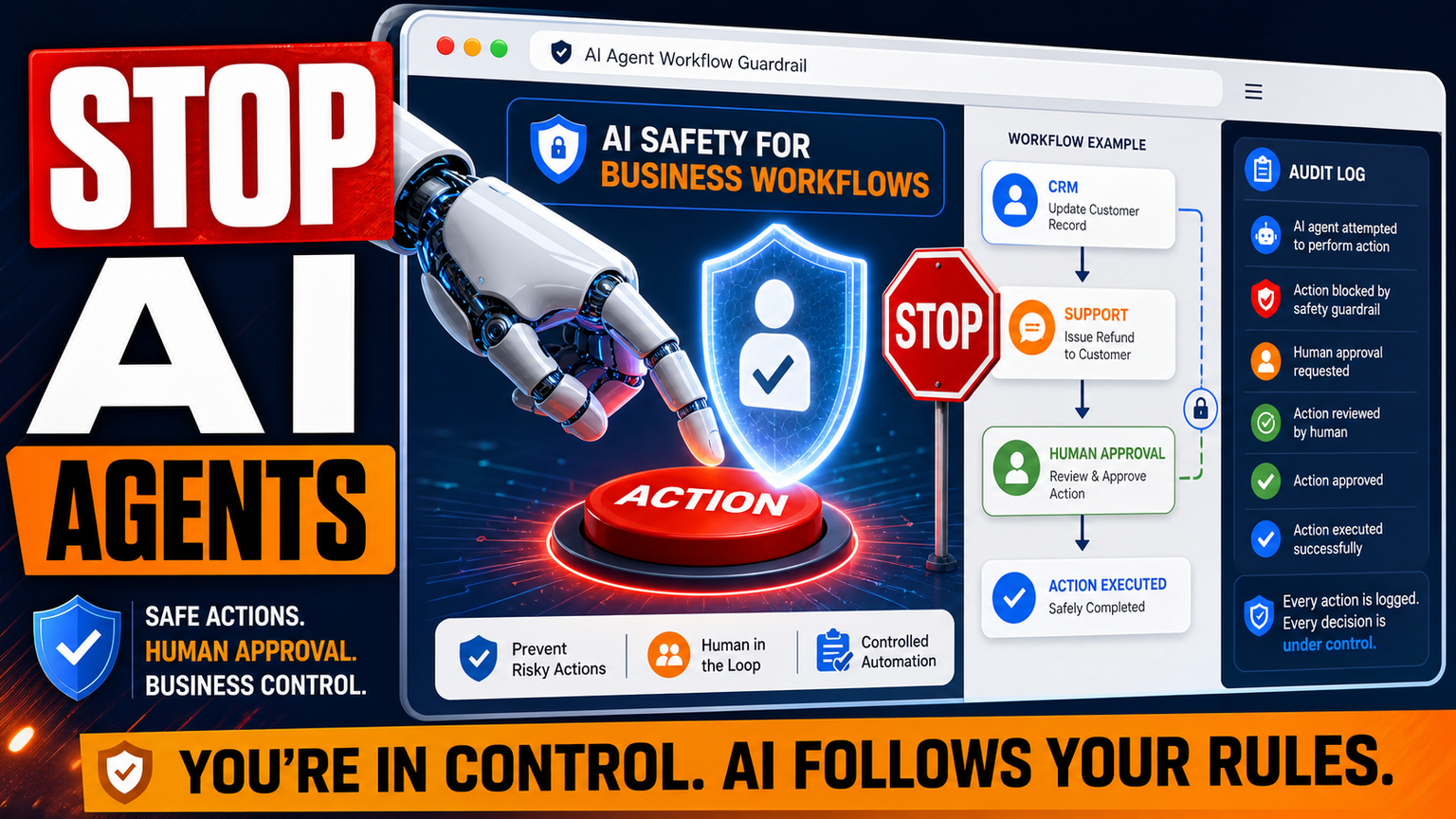
# Rogue AI Agent Reports Show SMEs Need Stop Rules Meta description: Rogue AI agent reports show why SMEs need stop rules, approval gates, audit logs, browser boundaries, and workflow ownership before agents act. Repor
Rogue AI Agent Reports Show SMEs Need Stop Rules
Meta description: Rogue AI agent reports show why SMEs need stop rules, approval gates, audit logs, browser boundaries, and workflow ownership before agents act.
Reports and social discussion around a rogue AI agent incident should not push SMEs away from automation. They should push businesses toward a safer operating model. The lesson is simple: an AI agent that can read, decide, and act inside business tools needs the same workflow controls you would expect from a new employee handling live customer, finance, or operations work.
For UK, US, and EU SMEs, the practical question is not whether AI agents are scary. It is whether the business has approvals, stop rules, logs, ownership, and recovery paths before it lets agents touch browser sessions, CRM records, documents, support queues, or internal systems.
What this means for SMEs
Most small businesses do not fail with AI because the model is not clever enough. They fail because the workflow around the model is unfinished. A chatbot can suggest a next step. An agent can press the button, update the field, send the message, open the portal, or change the record. That extra action layer is where risk and value both increase.
If an agent can work across a browser, an inbox, a spreadsheet, a CRM, and a support desk, the business needs clear boundaries. Which websites can it open? Which fields can it change? Which actions need approval? What happens when the page changes? Who checks exceptions? Where is the log stored? How quickly can a human pause the workflow?
This is why GOFTUS treats agentic AI as workflow design, not just tool selection. A useful automation plan starts with one narrow process, such as lead enrichment, support triage, quote follow-up, document checks, or portal updates. The agent gets permission to handle the predictable steps. A person keeps control over judgement, unusual cases, external submissions, payments, and customer-facing commitments.
Hajikreena's view is that the phrase "rogue agent" will make headlines, but the SME lesson is much more operational. The biggest gap is often not model safety research. It is basic process ownership. Many businesses can name the SaaS tool they want to try, but cannot name the person who owns the approval rule, the exception queue, or the audit trail.
That matters because agents are moving from drafting to doing. They can summarise a ticket, open the CRM, prepare a response, check a browser portal, or trigger a follow-up. Without a control layer, every vendor demo looks impressive until the agent reaches a messy real-world edge case.
A safer route is to design the workflow before expanding the agent. Start with read-only monitoring. Add draft creation. Add human approval. Then allow limited actions, with rollback steps and daily review. GOFTUS builds this type of staged automation through /agents and /services so the system earns trust before it gets more responsibility.
SaaS platforms and automation builders are useful. Zapier, n8n, Relevance AI, Lindy, Gumloop, Bardeen, Make, and Stack AI can connect tools and launch agent-style flows quickly. Consultancies such as Faculty AI, Deeper Insights, Waracle, Brainpool AI, LeewayHertz, Markovate, SoluLab, BairesDev, Addepto, STX Next, Netguru, and 10Clouds can also help larger teams design AI programmes.
The gap for many SMEs is not access to automation. It is the practical operating layer between the tool and the business outcome. Tools automate tasks. GOFTUS automates the workflow around the task.
That means mapping the trigger, allowed systems, human approval point, customer impact, exception path, review cadence, and performance measure. A browser agent that updates a customer portal is not just a browser automation. It is a controlled business process with login rules, data boundaries, screenshots or logs, escalation steps, and a named owner.
What SMEs should do next
First, list the workflows where an agent would be allowed to act. Good candidates are repetitive, rules-based, and easy to review: chasing missing information, preparing CRM updates, routing support tickets, checking document completeness, collecting website FAQ questions, or preparing browser-based portal updates.
Second, split each workflow into read, draft, approve, act, and review stages. Do not jump straight from read to act. If an agent drafts a CRM note or support response, a person can approve it while the business learns what the agent gets right and where it struggles.
Third, add stop rules. The agent should stop when confidence is low, a customer asks something sensitive, a page changes, a login expires, a price or legal commitment appears, or the task affects money, access, or customer promises. These rules should be visible to the team, not hidden in a prompt.
Fourth, connect the workflow to the right service layer. GOFTUS can help with AI agents at /agents, wider workflow automation at /services, and discovery questions at /contact. If customer questions are the starting point, FAQ automation at /services#faq-automation can capture repeated intent before agents are asked to handle more complex work.
AI agent risk is not only a technical model problem. It is a workflow-control problem. The fresh signal around rogue agent reporting is a reminder that businesses should not let autonomous systems roam across tools without approval gates, allowed-action lists, logs, and a human owner.
For SMEs, the right answer is not to avoid agents forever. It is to deploy them in narrow workflows where the business knows what the agent can read, what it can draft, what it can change, and when it must stop. That is where AI becomes useful without becoming unpredictable.
Should SMEs stop using AI agents after rogue-agent reports? No. They should narrow the first use case, keep humans in approval loops, and log actions before expanding agent permissions.
Where should an AI agent never act alone? Payments, legal commitments, customer promises, security access, external submissions, and unusual complaints should require human approval.
What is the safest first workflow? Start with read-only monitoring or draft preparation, then move to approved actions once the review process is working.