Perplexity Space Shows SMEs Need Agent Sandboxes Before Autonomy
Perplexity Space shows why SMEs need AI agent sandboxes, approvals, audit logs and workflow boundaries before giving business agents real autonomy.
# Perplexity Space Shows SMEs Need Agent Sandboxes Before Autonomy # Quick answer Perplexity has been picked up in Google News and developer discussion for Space, described by Techstrong and AI Business headlines as a
Perplexity Space Shows SMEs Need Agent Sandboxes Before Autonomy
Quick answer
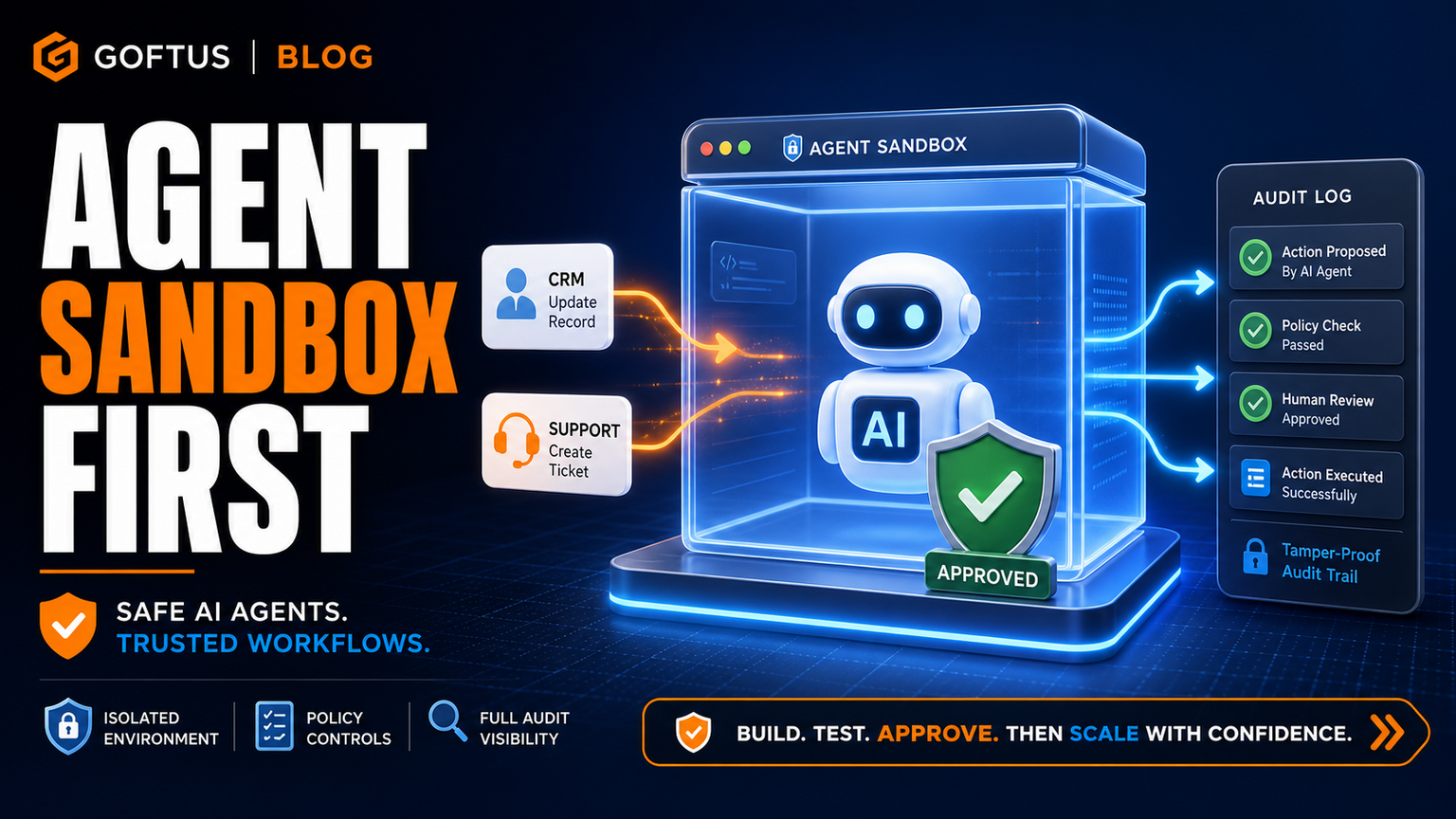
Perplexity has been picked up in Google News and developer discussion for Space, described by Techstrong and AI Business headlines as a secure sandbox platform for AI agents. The signal matters because it moves the agent conversation away from another clever chat interface and toward a safer question for operators: where should an AI agent be allowed to work before it touches real customers, data, payments, portals or CRM records?
Hajikreena's view is that SMEs should treat agent sandboxes as an operating control, not a technical luxury. If an AI agent is going to research, draft, click, route, update or prepare a decision, the business needs a protected workspace first. That workspace should contain test data, approved tools, clear stop rules, review steps and a visible audit trail.
For UK, US and EU businesses, the takeaway is practical. The next useful AI project may not be a bigger model or a louder chatbot. It may be a narrower agent workflow that can be tested safely before the team trusts it in daily operations. GOFTUS builds those workflows around the business process: what the agent can see, what it can draft, what it can propose, what needs approval and what gets written back into the system of record.
If you are exploring agents for sales operations, support triage, research, reporting or admin work, start with the GOFTUS AI agents page at /agents and the wider workflow automation services at /services.
What this means for SMEs
A sandbox is not just a developer testing area. For an SME, it is a controlled version of the real workflow. The agent can practise the job, follow instructions, produce outputs and show where it is uncertain without creating live operational damage.
That matters because many AI agent ideas sound useful until they touch messy systems. A sales agent may need to qualify a lead, check a CRM record, draft a follow up and prepare a quote. A support agent may need to read an email, classify the issue, search a knowledge base and create a ticket. A finance operations agent may need to compare invoices, flag mismatches and prepare reminders. Each step has different risk.
The safe pattern is to split the workflow into lanes. Low-risk steps can be automated sooner: summarising, classifying, drafting, checking for missing fields and preparing a task. Higher-risk steps need human approval: sending a message, changing a status, updating a billing field, submitting a form, deleting a record or moving money. Some steps may remain off limits until the workflow has enough evidence.
This is why sandbox language is becoming important. It gives business owners a middle path between "do nothing with agents" and "let the AI run the process". You can pilot the workflow, review exceptions, compare outputs with staff decisions and measure whether the agent is saving time without increasing risk.
GOFTUS usually starts by mapping the current human process. Which screens do staff open? Which fields matter? Which approvals happen informally? Where do errors normally appear? Then we design the automation lane around that reality. The result is not a demo. It is a workflow with permissions, logs, alerts, escalations and monthly improvement.
Competitor lens
The market is crowded for good reasons. SaaS tools such as Zapier, n8n, Relevance AI, Lindy, Gumloop, Bardeen, Make and Stack AI can help teams connect apps, trigger tasks and prototype agent flows. Consulting and AI delivery firms such as Faculty AI, Deeper Insights, Waracle, Brainpool AI, LeewayHertz, Markovate, SoluLab, BairesDev, Addepto, STX Next, Netguru and 10Clouds can also be useful depending on the scale of the project.
The difference is what the SME actually needs after the first demo. Tools automate tasks. GOFTUS automates the workflow around the task.
That means we are not only asking whether an agent can complete a step. We ask who owns the workflow, which data it can access, who approves sensitive actions, how failures are routed, how the CRM or support desk is updated, how the result is checked and how the process improves next month. A sandbox makes that discipline visible before the workflow goes live.
For SMEs, this framing matters. Buying one more tool can create another unmanaged process. GOFTUS positions the project around measurable workflow outcomes: fewer missed follow ups, faster support triage, cleaner CRM records, clearer reporting and safer agent handoffs.
What SMEs should do next
Start with one workflow where staff already repeat the same judgement call. Do not begin with a broad promise such as "build an AI employee". Pick a defined process such as lead qualification, inbox triage, quote preparation, CRM enrichment, document review, FAQ escalation or weekly reporting.
Next, write the sandbox rules in plain English. What sample data can the agent use? Which tools are available? Which fields can it read or suggest changing? Which actions must stop for approval? What does a good result look like?
Then run the agent against recent examples without letting it take live action. Compare its proposed outputs with what your team actually did. Look for the patterns: where it is reliable, where it guesses, where instructions are missing and where a human should remain in the loop.
Only after that should the workflow move closer to production. Even then, start with draft mode or approval mode. Let the agent prepare the response, task, ticket, CRM update or report. Let a person approve the first run. Keep the audit log. Review skipped cases. Improve the instructions.
A useful agent rollout is not about replacing judgement. It is about moving repetitive preparation, routing and checking into a controlled system so staff can spend more time on exceptions, customers and decisions.
Summery for SMEs
Perplexity Space is a useful signal because it highlights a serious direction for AI agents: safe workspaces before autonomy. SMEs should not treat agents as all-or-nothing automation. The better first move is a sandboxed workflow where the agent can draft, classify, prepare and propose while managers keep approval over sensitive actions.
For GOFTUS clients, that usually means mapping the workflow, creating the agent lane, adding approvals, connecting CRM or support tools, keeping an audit trail and measuring outcomes. If the workflow touches customer support or repeated website questions, it can also connect naturally with /services#faq-automation. If it touches broader browser or back-office work, begin with /agents or /services.
FAQ
Is this confirmed Perplexity product news?
The Techstrong article page was accessible during sourcing, while the direct AI Business URL guessed from the headline returned 404. This post treats the signal as reputable headline-level and article-level coverage, not as a scraped official Perplexity announcement.
What is the business lesson?
Agent capability is only useful when it is wrapped in workflow controls. SMEs should decide where the agent can work, what it can propose, what needs approval and how every action is logged.
Where can GOFTUS help?
GOFTUS can turn agent ideas into controlled workflows for sales, support, reporting, CRM follow up, document work and browser-based operations. Start with /agents, /services or a diagnostic conversation through /contact.
Source notes
Reddit exact-topic feeds were not used as the primary source for this run.