OpenAI's Super App Push Shows SMEs Need AI Workflow Boundaries
OpenAI's super app push shows SMEs why AI workflow boundaries, approvals, audit logs, and vendor control now matter before more AI tools roll out.
# OpenAI's Super App Push Shows SMEs Need AI Workflow Boundaries Meta description: OpenAI's super app push shows SMEs why AI workflow boundaries, approvals, audit logs, and vendor control now matter before more AI tools
OpenAI's Super App Push Shows SMEs Need AI Workflow Boundaries
Meta description: OpenAI's super app push shows SMEs why AI workflow boundaries, approvals, audit logs, and vendor control now matter before more AI tools roll out.
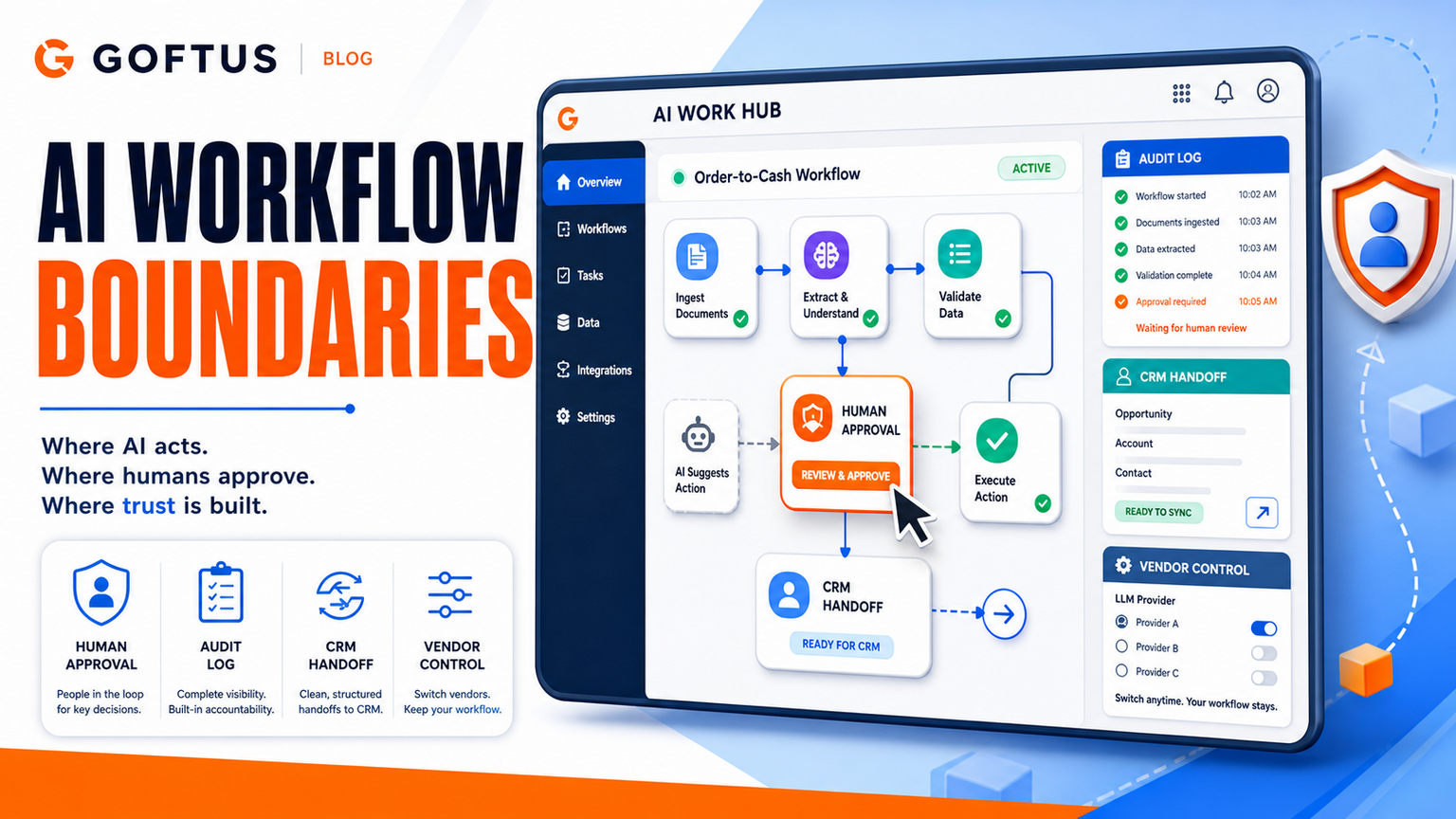
OpenAI's reported ChatGPT super app push shows why SMEs should define AI workflow boundaries before tools become the front door to daily work. Start with one process, assign an owner, set approval gates, log actions, and connect safe outputs back to CRM, support, reporting, or document systems.
OpenAI's reported ChatGPT "super app" push is not just another AI product headline. For SMEs in the UK, US, and EU, it is a warning that AI work is moving from single prompts into the daily workspace where staff write, search, analyse, message, and eventually trigger actions.
That makes this a news-led post with adjacent social proof, not a claim based on direct Reddit discussion.
The SME lesson is simple. If AI becomes the front door to work, the business needs rules for what the assistant can read, what it can change, when it must ask a human, and how the result is checked. A bigger AI app can be useful, but only if the workflow around it is owned.
A super app sounds convenient because it promises one place for knowledge, chat, documents, tasks, and perhaps agents. The risk is that convenience can hide messy operating rules. A sales manager may want AI to draft follow ups. A support lead may want AI to summarise tickets. A finance team may want AI to compare invoices. Each use case has different permissions, review steps, and failure modes.
That is why GOFTUS treats AI adoption as workflow design rather than tool shopping. The question is not "which model is best this week?" The better question is "which business process is safe enough to automate, and what happens when the AI is unsure?"
For example, an AI assistant can draft a customer response, but the workflow should still know which answers are approved, which questions need escalation, which CRM fields can be updated, and which messages require a human before sending. It can prepare a proposal, but the workflow should still control pricing language, legal wording, version history, and manager approval.
This is especially important for SMEs because small teams often have informal processes. The owner knows which customers are sensitive. The operations lead knows which spreadsheet is the real one. The best salesperson knows which follow ups should never be automated. If all that knowledge stays in people's heads, a super app will amplify inconsistency.
What the signal says about AI work
The Reuters headline frames the move as part of a broader rivalry with Anthropic. That rivalry matters to SMEs because vendors are trying to become the place where work happens, not just the model behind a chat box. OpenAI, Anthropic, Microsoft, Google, Perplexity, and others are all pushing toward assistants that sit closer to documents, browsers, emails, meetings, internal knowledge, and business systems.
A practical first step is to map three processes where AI already appears in the business. Common examples are customer answers, sales follow up, reporting, and document processing. For each one, define the input, the output, the owner, the allowed systems, the approval point, and the exception route. Then decide whether the work belongs in a chat assistant, an automation tool, a browser agent, or a custom workflow.
GOFTUS helps SMEs do this through practical AI automation and AI agent systems at /services and /agents. The goal is not to block staff from using modern tools. The goal is to give them a safe lane that produces measurable outcomes.
Competitors and tools all have a role. Faculty AI, Deeper Insights, Waracle, and Brainpool AI can support UK AI strategy and delivery. LeewayHertz, Markovate, SoluLab, and BairesDev can build larger US automation projects. Addepto, STX Next, Netguru, and 10Clouds bring strong European engineering capability. SaaS tools such as Zapier, n8n, Relevance AI, Lindy, Gumloop, Bardeen, Make, and Stack AI can move tasks quickly.
What many implementations miss is the operating wrapper. Tools automate tasks. GOFTUS automates the workflow around the task.
That difference matters when AI moves into a super app. A task automation might send a message, update a field, or summarise a file. A workflow automation decides who requested the action, which source was trusted, whether the output needs approval, where the evidence is stored, what happens after a rejection, and how the process improves next month.
This is where SMEs can beat larger firms. They do not need a giant transformation programme. They need a narrow process, a clear owner, and a measurable before and after.
What this means for SMEs
Start with boundaries, not a tool list. Choose one workflow where AI is already being used or requested. Write down what the AI can read, what it can suggest, what it can update, and what it can never do without a human. If that list is unclear, the process is not ready for autonomous action.
Next, create an approval point that matches the risk. A draft blog caption may only need a quick human check. A customer refund, contract clause, payment, or compliance response needs stronger review. Browser-based actions need login boundaries, stop rules, and screenshots or logs. Internal knowledge assistants need source citations and a way to flag stale information.
Then connect the workflow to business systems. If AI answers a lead question, the CRM should know. If AI triages a support request, the ticket tool should know. If AI prepares a weekly report, the source files and reviewer should be visible. This is where /services and /agents become more useful than another standalone chat subscription.
Finally, review the workflow every month. Count unanswered questions, rejected drafts, repeated exceptions, and manual handoffs. These signals show where automation should improve next.
GOFTUS builds the practical layer between AI tools and real SME operations. That can include AI automation, AI agents, CRM follow up, reporting automation, document workflows, support triage, internal knowledge assistants, and browser-based workflow automation.
If your team is considering a larger AI workspace, start with a diagnostic instead of a platform decision. GOFTUS can help identify the safest first workflow, define the approval gates, connect the systems, and create a simple improvement plan. You can start from /contact, explore /services, or review common operator questions at /questions.
The super app race will keep changing. Your operating rules should not change every time a vendor ships a new button.
Is this post saying SMEs should avoid AI super apps? No. It says SMEs should adopt them through narrow workflows with owners, approval gates, logs, and system handoffs.
Where should a business begin? Pick one repeated process such as sales follow up, support triage, reporting, or document review, then map what AI can and cannot do.
AI super apps can help, but SMEs need boundaries, approvals, logs, and system handoffs before letting AI sit at the centre of daily work.