NVIDIA Physical AI Shows SMEs Need Shop-Floor Workflow Controls
NVIDIA physical AI news shows why SMEs need robot, factory, approval and workflow controls before safely connecting AI to real-world operations.
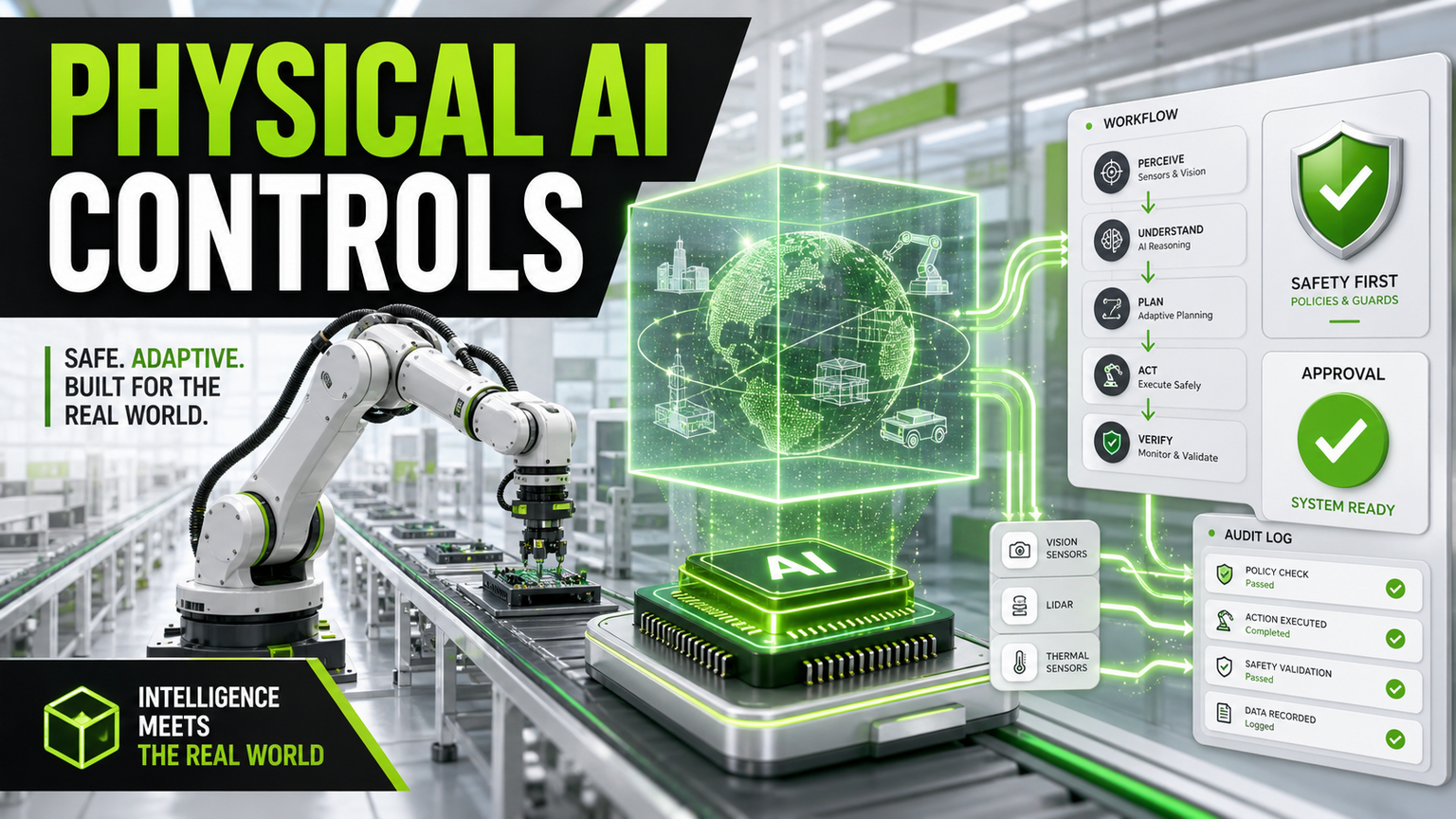
# NVIDIA Physical AI Shows SMEs Need Shop-Floor Workflow Controls Meta description: NVIDIA physical AI news shows why SMEs need robot, factory, approval and workflow controls before safely connecting AI to real-world op
NVIDIA Physical AI Shows SMEs Need Shop-Floor Workflow Controls
Meta description: NVIDIA physical AI news shows why SMEs need robot, factory, approval and workflow controls before safely connecting AI to real-world operations.
Quick answer
NVIDIA's latest physical AI push in Japan is a useful signal for UK, US and EU SMEs, even if most smaller companies are not building humanoid robots or factory foundation models. The direct NVIDIA Newsroom listing and several reputable cross-checks point in the same direction: AI is moving from screens into operations where machines, sensors, staff and workflows meet.
The SME lesson is not to buy robotics because NVIDIA is in the headlines. The lesson is to prepare the operating system around automation. When AI touches a shop floor, warehouse, service desk, field team, lab, clinic or fulfilment workflow, the business needs approvals, stop rules, exception handling, audit logs and a clear owner before the technology gets more freedom.
Hajikreena's view is that physical AI makes workflow design more important, not less. A robot arm, sensor feed or computer-vision model is only useful when it fits a business process that people trust.
Why this signal matters
Most AI adoption still feels digital. Teams use chat assistants, document extraction, CRM follow-up flows, support triage and browser agents. Physical AI changes the conversation because the output may affect inventory, quality checks, staff movement, production timing, packaging, maintenance or customer delivery.
That does not mean every SME needs a robotics roadmap this quarter. It means owners should notice where AI is heading. The same control questions that apply to an AI agent in a browser also apply to a machine vision system, an automated warehouse check or a predictive maintenance workflow. What can the system see? What can it change? Who approves exceptions? What happens when confidence is low? Where is the action logged?
NVIDIA's ecosystem push is also a reminder that larger manufacturers will keep raising expectations around speed, traceability and data quality. Smaller suppliers, distributors and service businesses may feel the pressure indirectly. A customer may ask for faster status updates. A partner may expect cleaner reporting. A compliance team may ask how automated checks are reviewed. These are workflow questions before they are model questions.
What SMEs should do next
Start with one real-world workflow that already causes delay or rework. Good candidates include goods-in checks, order picking validation, equipment inspection, service visit reporting, stock discrepancy review, quality-photo triage, delivery exception handling or supplier portal updates.
Map the process before choosing tools. Identify the trigger, data source, human owner, system of record, approval point, exception route and success measure. If AI is added, decide whether it can only observe, suggest, draft, update internal records or trigger an external action. Those permission tiers keep the first project practical.
Then create stop rules. Physical and operational workflows need conservative defaults: pause when the image is unclear, route mismatched records to a person, block irreversible actions, require sign-off for safety-sensitive changes and keep a record of every automated recommendation.
GOFTUS uses this structure across AI automation and agentic workflow projects. A business may begin with /services discovery, extend digital operations through /agents, and later connect those controls to physical or field workflows. The point is not to automate everything. The point is to automate the repeatable part while keeping judgement, safety and accountability visible.
Competitor lens
UK providers such as Faculty AI, Deeper Insights, Waracle and Brainpool AI can support strategy, data science and specialist builds. US firms such as LeewayHertz, Markovate, SoluLab and BairesDev can help with enterprise implementation. European teams such as Addepto, STX Next, Netguru and 10Clouds can deliver data platforms and custom software. SaaS and automation tools such as Zapier, n8n, Relevance AI, Lindy, Gumloop, Bardeen, Make and Stack AI can move data between systems quickly.
The gap for SMEs is the workflow around the technology. Tools automate tasks. GOFTUS automates the workflow around the task.
That difference matters more when AI leaves the chat window. A connector may move a record. A model may classify an image. A robot may complete a step. But the business still needs allowed actions, review paths, exception queues, CRM or ERP handoff, reporting and monthly improvement. Without those controls, automation creates another black box for staff to supervise.
Where GOFTUS fits
GOFTUS helps businesses turn AI interest into controlled operating workflows. For a manufacturer, distributor or field-service SME, that may mean linking inspection notes into CRM, routing failed checks to a manager, generating supplier follow-ups, creating dashboards for unresolved exceptions or documenting every automated decision.
For a service company, the same pattern may begin digitally. FAQ automation at /services#faq-automation can answer repeated customer questions and expose demand signals. Browser agents at /agents can handle controlled portal work. Reporting automation can show where delays happen. Those layers create the foundation for more advanced operational AI later.
A practical diagnostic asks three questions. Which repeated work is visible enough to automate safely? Which decisions still need a person? Which system should become the record of truth after the workflow runs? If those answers are unclear, adding more AI will only move confusion faster.
Source notes
Hacker News Algolia showed adjacent developer interest in automation agents and computer-use tooling, but the core evidence for this post is the news and official-source signal rather than a confirmed Reddit thread.
If you want to assess a physical AI, shop-floor automation or workflow-control opportunity, start with GOFTUS /services or request a short /contact diagnostic.