FAQ Automation Should Catch Missed Customer Questions First
FAQ automation helps SMEs answer repeated website questions, capture leads, route complex issues, update systems and measure missed customer intent.
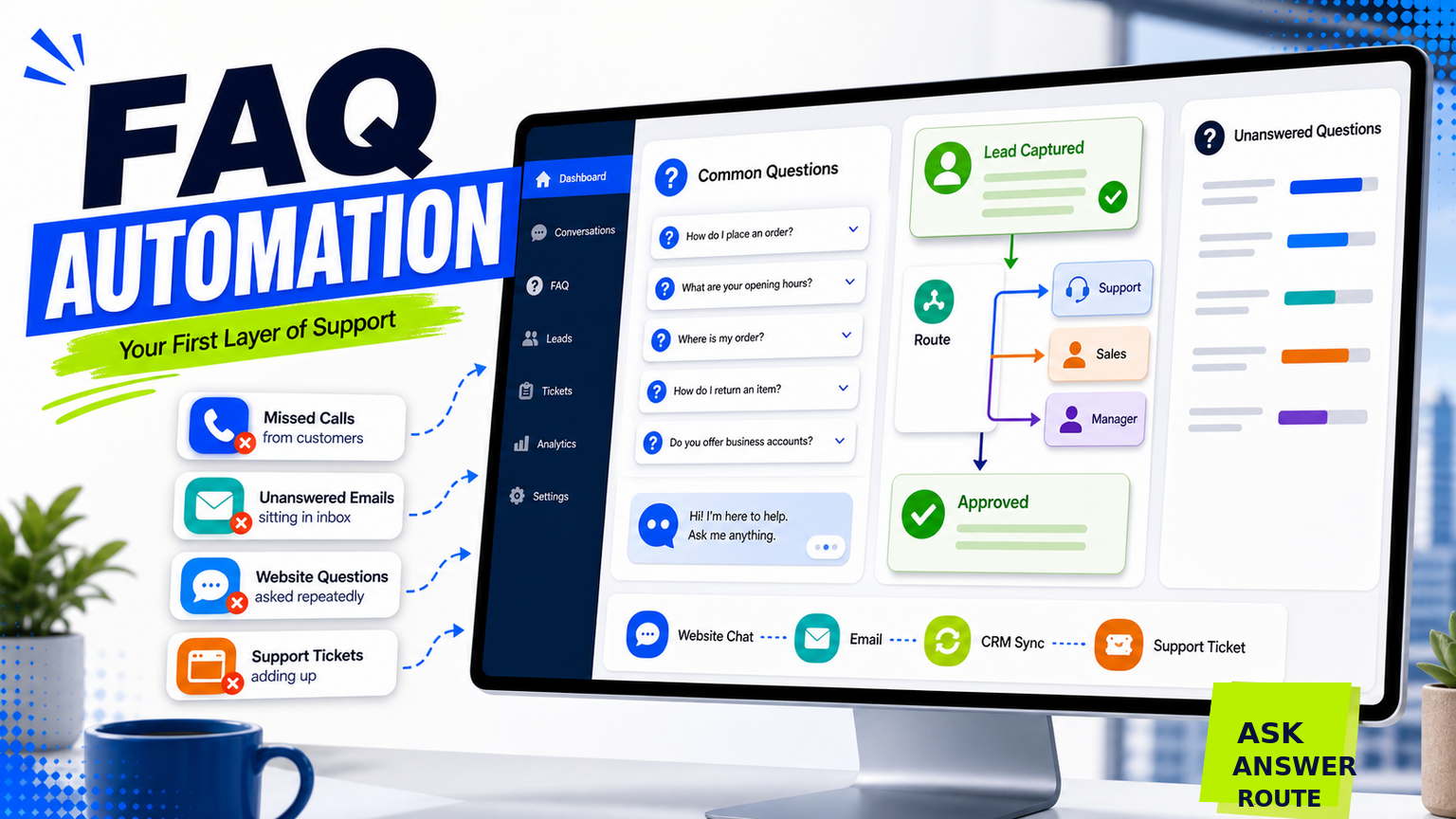
# FAQ Automation Should Catch Missed Customer Questions First Meta description: FAQ automation helps SMEs answer repeated website questions, capture leads, route complex issues, update systems and measure missed custome
FAQ Automation Should Catch Missed Customer Questions First
Meta description: FAQ automation helps SMEs answer repeated website questions, capture leads, route complex issues, update systems and measure missed customer intent.
FAQ automation is the practical first support layer many SMEs should build before buying another broad AI tool. The latest buyer-context signals are not about a single magic chatbot. They point to a familiar operating problem: prospects and customers ask repeated questions across websites, email, calls and chat, while small teams are busy with delivery.
For GOFTUS, the lesson is simple. A good FAQ automation system should answer approved repeat questions, capture lead context, route unclear issues, update CRM or support tools and measure what the business still cannot answer. That is why the main internal link for this topic is the GOFTUS FAQ automation service at /services#faq-automation.
Why this signal matters now
Those articles are useful because they show the market conversation moving from curiosity about AI tools toward practical support, communication and workflow use cases.
A Reddit r/smallbusiness search RSS result initially surfaced an operator-style question about missed customer calls when everyone is busy, with options such as receptionist, voicemail, forwarding and automation. The feed later rate-limited, so this post treats it as a social support-pain signal, not as confirmed news or as a quoted data source. HN Algolia also surfaced founder discussion about automating customer support questions from FAQ docs, which is adjacent context rather than a direct GOFTUS source.
That mix is enough for a buyer question cluster post because the buyer query is already clear: FAQ automation. SMEs are not only asking whether AI is impressive. They are asking how to stop losing intent when customers ask the same questions, miss calls, abandon forms or wait for replies.
What this means for SMEs
Most SMEs do not need a giant support transformation first. They need a controlled answer layer that covers the questions customers already ask every week. Typical examples include pricing scope, opening hours, delivery areas, onboarding steps, refund policies, booking rules, document requirements, service eligibility, response times and what happens after someone submits an enquiry.
The mistake is to publish a generic chatbot and hope it behaves. A safer FAQ automation project starts with approved answers and clear boundaries. The system should know which questions it can answer, which answers need a human review and which enquiries should become leads, tickets or CRM tasks.
A good GOFTUS implementation normally includes:
a question library based on website, email, call and support history
approved answer drafts written in the business voice
lead capture fields for high-intent questions
routing rules for sales, support, operations or management
CRM, helpdesk, inbox or spreadsheet updates
unanswered-question tracking so the FAQ improves every month
human approval for sensitive topics, complaints, payments or policy exceptions
This is why FAQ automation is an entry wedge into wider workflow automation. The first win is faster answers. The larger win is learning what customers want, which handoffs are slow and where staff spend time repeating themselves.
Bharatvaj's view is that FAQ automation should not be sold as a replacement for customer care. It should be sold as a memory and routing layer for the business. If a prospect asks a simple question at 10 pm, the business should not wait until morning to give a safe, approved answer. If the question is complex, the system should not pretend. It should collect context, explain the next step and route the case.
This matters for UK, US and EU SMEs because trust is fragile. A wrong automated answer can create more work than a late answer. A good FAQ automation service therefore needs permissions, review loops, escalation rules and audit trails. GOFTUS designs those workflow controls before connecting the AI layer.
SaaS tools such as Zapier, n8n, Relevance AI, Lindy, Gumloop, Bardeen, Make and Stack AI can be useful inside a FAQ automation stack. Consultants and agencies such as Faculty AI, Deeper Insights, Waracle, Brainpool AI, LeewayHertz, Markovate, SoluLab, BairesDev, Addepto, STX Next, Netguru and 10Clouds can also help businesses modernise operations.
The gap is usually not whether a tool can answer a question. The gap is who owns the workflow around the answer. What happens if the customer is angry? What happens if the question suggests sales intent? What happens if the answer is missing? What happens if a policy changed last week? What happens if the customer should be routed to a manager?
Tools automate tasks. GOFTUS automates the workflow around the task. That means answer design, CRM handoff, support routing, approval gates, logs, review cadence and monthly improvement.
What SMEs should do next
Start with the questions your team already answers repeatedly. Pull them from inboxes, call notes, website forms, chat logs, sales calls and support tickets. Then mark each question as safe to answer, answer with conditions, capture as a lead or route to a person.
Next, define the first version of the automated customer answers workflow. A simple version might answer five to fifteen common questions, capture name, email and need, create a CRM note, route uncertain cases to support and report unanswered questions every week.
Then connect the first layer to the rest of the business. FAQ automation can lead into CRM follow-up automation, document collection, reporting automation, browser-based portal work and AI agents for internal operations. The point is not to install more AI. The point is to reduce repeated work and make every customer question easier to handle.
If you want a practical starting point, review the GOFTUS FAQ automation service at /services#faq-automation or book a workflow diagnostic through /contact.
FAQ automation is one of the safest first AI projects for a small business because it starts with known questions and approved answers. The best version does more than reply. It captures leads, routes exceptions, updates systems and shows which customer questions still need better content or staff follow-up.
Is FAQ automation the same as a chatbot?
No. A chatbot is only the interface. FAQ automation includes approved answers, routing, CRM or support updates, unanswered-question reporting and review rules.
Should FAQ automation replace support staff?
No. It should remove repeat-answer pressure and help staff focus on complex, sensitive or high-value customer conversations.
Where should an SME begin?
Begin with the repeated questions customers already ask and build a small, approved workflow around them before expanding into wider automation.