Claude in Business Travel Shows AI Needs Workflow Boundaries
Amex GBT's Claude connector shows why SMEs need approval gates, policy checks, logs, and workflow ownership around workplace AI assistants safely.
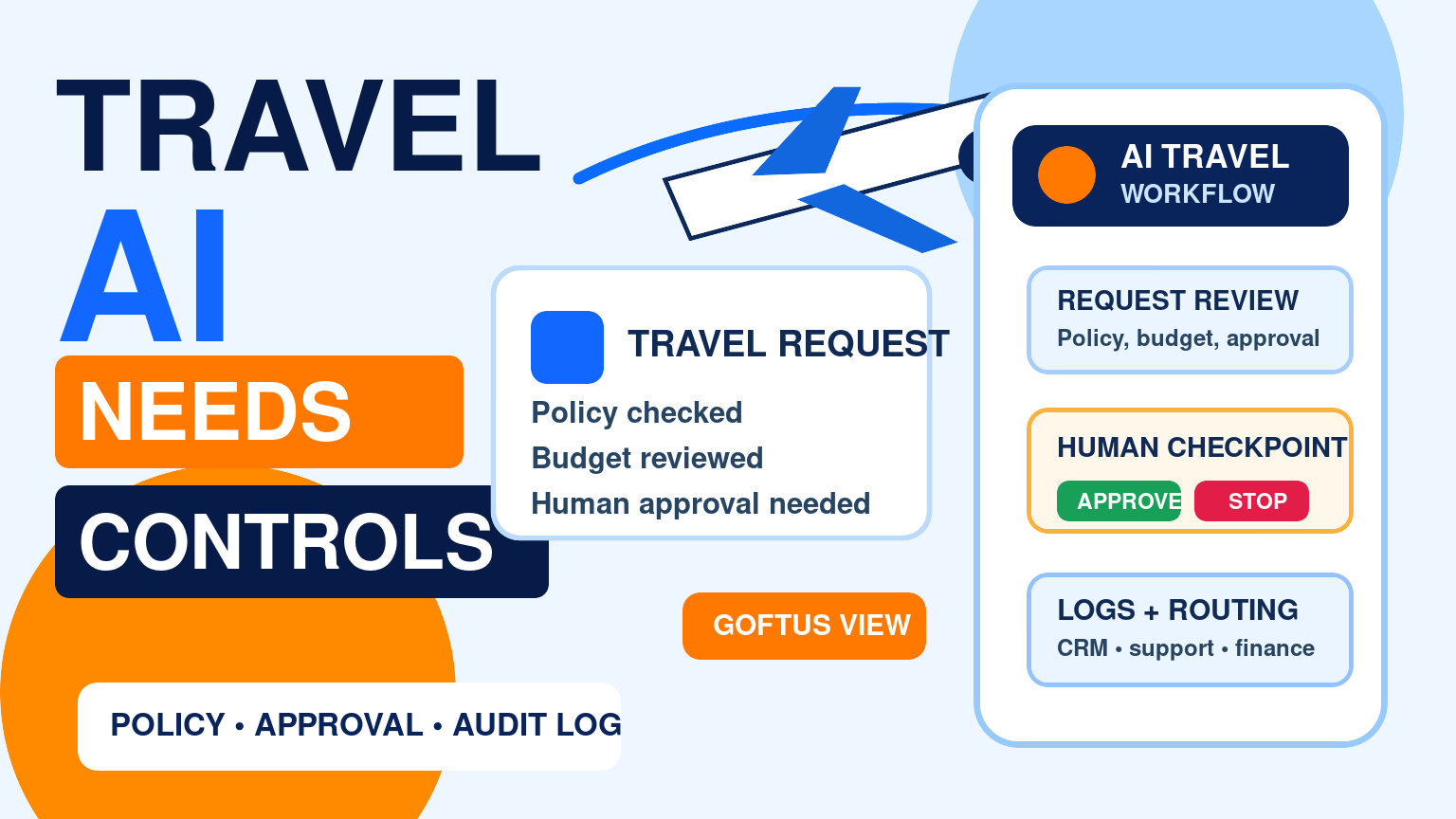
# Claude in Business Travel Shows AI Needs Workflow Boundaries Meta description: Amex GBT's Claude connector shows why SMEs need approval gates, policy checks, logs, and workflow ownership around workplace AI assistants
Claude in Business Travel Shows AI Needs Workflow Boundaries
Meta description: Amex GBT's Claude connector shows why SMEs need approval gates, policy checks, logs, and workflow ownership around workplace AI assistants safely.
Amex GBT has been listed in Google News as launching an Egencia AI Connector in Anthropic's Claude. The direct listings point to Business Travel Executive and AI Magazine coverage on 28 July 2026, so this post treats the item as a headline-level news signal rather than claiming full article extraction. The important SME lesson is not travel itself. It is what happens when an AI assistant moves from answering questions into a live business workflow.
Business travel is a useful test case because it touches policy, budgets, calendars, managers, finance, suppliers, receipts, and exceptions. A Claude-style assistant may help an employee understand travel options or prepare a request, but the workflow around that request still needs rules. Who approves? Which policy applies? What happens when the trip is urgent? Where does the expense evidence go? Which systems get updated afterward?
That is where GOFTUS sees the real opportunity for UK, US and EU SMEs. AI can make the conversation faster, but workflow controls make the outcome usable.
What this means for SMEs
The travel connector signal shows a broader shift in workplace AI. Assistants are becoming entry points into operational work, not just chat windows. A staff member can ask for help, compare options, draft a request, and move closer to action inside the same experience. That is convenient, but it also creates risk when the surrounding process is vague.
For a smaller business, the weak point is rarely the model. The weak point is the handoff. If an AI assistant recommends a supplier, changes a booking, drafts a customer email, updates a CRM field, or submits information through a browser portal, the business needs a visible approval trail. Without that trail, managers cannot tell whether the workflow followed policy or simply felt efficient in the moment.
This is why GOFTUS frames workplace AI around systems rather than prompts. A good implementation defines the narrow job first. It decides which data the assistant can read, which steps it can draft, which steps require human approval, and which exceptions must stop the workflow. Then it connects the result to the tools the business already uses.
In travel, that might mean a request form, policy check, manager approval, finance notification, CRM note, and exception log. In another SME, it might be support triage, quote follow-up, reporting automation, document processing, or a browser-based admin workflow. The pattern is the same. AI should not become a hidden operator. It should become a controlled workflow participant.
A hot r/Anthropic RSS entry on 29 July discussed an agent-like coding mistake wiping a database. That is a social discussion signal, not verified news about the travel connector. Still, it captures the operator anxiety behind workplace AI: people are excited about capable assistants, but they want clearer boundaries before those assistants can touch real systems.
Hajikreena's view is that SMEs should not wait for a perfect enterprise platform before acting. They should start with one practical workflow and make the control layer explicit. For example, a travel request assistant can draft the request, check the policy, prepare a manager summary, and log the decision. It should not silently approve spend, change supplier terms, or bypass finance just because the user asked nicely.
The same thinking applies to AI agents, workflow automation, and controlled browser actions. If the work involves a login, a form submission, a customer record, a payment step, or a regulated document, the design should include stop rules, audit logs, and human-approved actions.
Tools such as Zapier, n8n, Make, Bardeen, Gumloop, Lindy, Relevance AI, and Stack AI can be useful parts of the stack. Consultancies such as Faculty AI, Deeper Insights, Waracle, Brainpool AI, LeewayHertz, Markovate, SoluLab, BairesDev, Addepto, STX Next, Netguru, and 10Clouds can also help with strategy or delivery. The missing piece for many SMEs is not whether a tool exists. It is whether the workflow owner can trust the process after the tool is connected.
Tools automate tasks. GOFTUS automates the workflow around the task. That means mapping the business rule, integration point, approval gate, exception route, and review loop before the automation is treated as done.
For a travel workflow, the task might be simple: draft a trip request. The workflow is bigger: check policy, confirm budget, route approval, notify finance, capture evidence, update records, and measure where requests get stuck. The same difference matters in support, sales, reporting, documents, and browser automation.
What SMEs should do next
First, pick one workflow where staff already lose time moving between tools. Do not start with a broad instruction like "use AI for operations." Start with a repeatable path such as travel approvals, supplier onboarding, support triage, FAQ follow-up, sales lead routing, or monthly reporting.
Second, write down the decision points. Which actions can AI draft? Which actions need approval? Which actions are never allowed? Which events should create an alert? Which data should be logged for review?
Third, connect the assistant to the existing system of record only after the control layer is clear. In some cases that means CRM automation. In others it means browser with AI controls, document automation, n8n workflows, or a simple manager dashboard.
Fourth, review the workflow monthly. AI workflows improve when the business measures exceptions, repeated questions, failed handoffs, and tasks that still require manual chasing. GOFTUS can help SMEs turn that review into a practical automation roadmap through the services page or a consultation.
Claude appearing in a business travel workflow is a signal that AI assistants are moving closer to operational decisions. SMEs should welcome the productivity gain, but they should not treat chat as a substitute for process design. The safer pattern is narrow workflow, clear approval, visible log, controlled handoff, and regular improvement.
Is this only relevant to travel companies?
No. Travel is just an easy example because it touches policy, approval, finance, suppliers, and records. The same workflow-control pattern applies to customer support, sales follow-up, reporting, documents, and browser-based admin work.
Where should an SME start?
Start with one workflow that repeats every week and already causes manual chasing. GOFTUS can map the steps, decide the approval gates, and connect the automation to existing tools without making the first project too large.
Should AI be allowed to act without approval?
Only for low-risk, clearly defined steps. Anything involving spend, customer records, credentials, regulated documents, or external submissions should include human approval, stop rules, and an audit log.
Reddit source note: old.reddit.com/r/Anthropic/hot/.rss included a 29 July discussion titled "and just like that Opus 5 ultracode wipes the entire database," used only as adjacent operator sentiment about AI action boundaries.