How SMEs Test AI Model Upgrades Before They Reach Customer Workflows
Approval workflow design helps SMEs test AI model upgrades before agents touch CRM, support, documents, finance, or browser-based customer work.
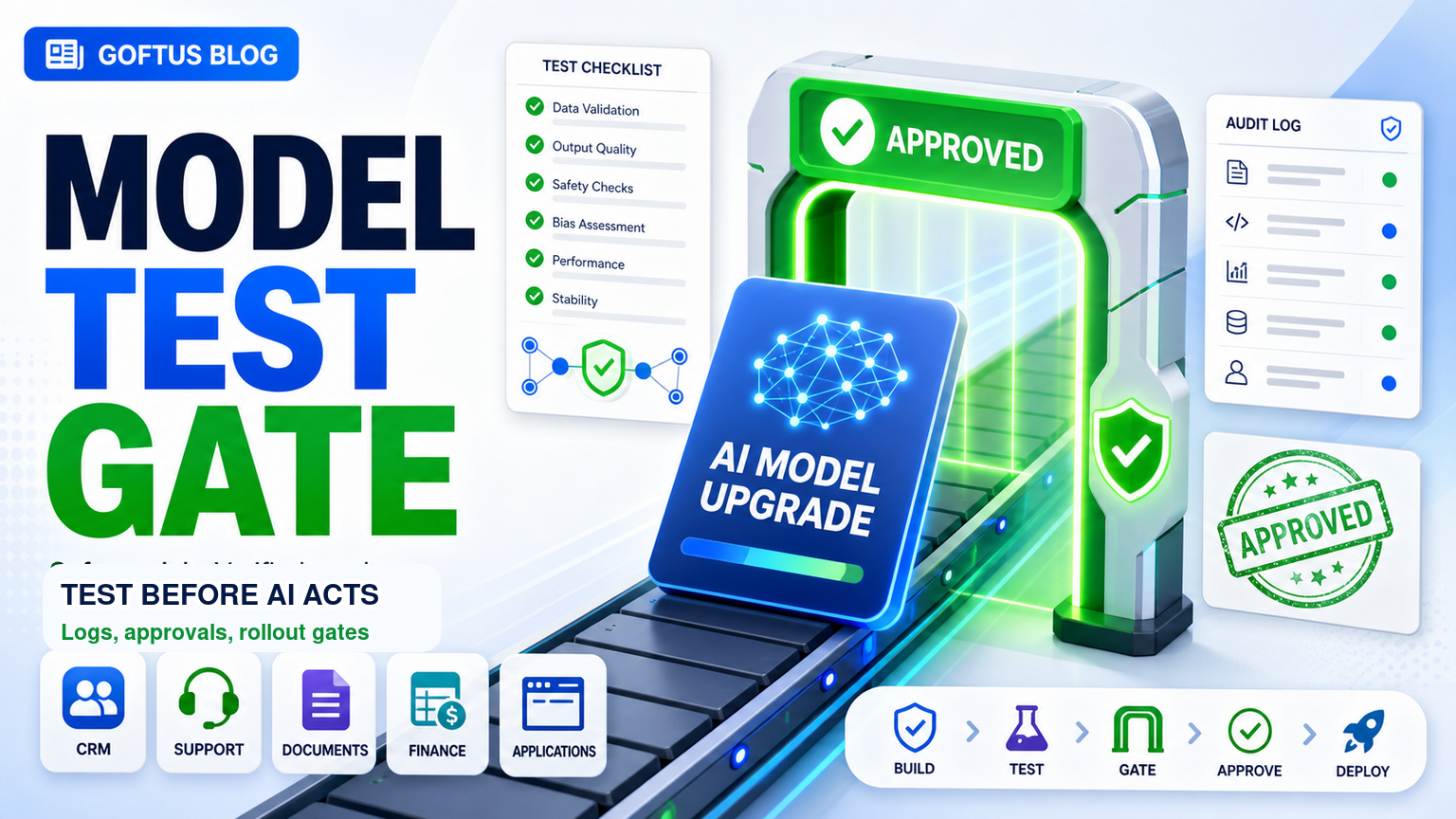
# How SMEs Test AI Model Upgrades Before They Reach Customer Workflows # Quick answer An approval workflow gives SMEs a safe way to test AI model upgrades before the new model touches customers, CRM records, support ti
How SMEs Test AI Model Upgrades Before They Reach Customer Workflows
Quick answer
An approval workflow gives SMEs a safe way to test AI model upgrades before the new model touches customers, CRM records, support tickets, documents, finance steps, or browser-based work. Together, the signal is clear enough for operators: better models still need rollout gates.
For a UK, US, or EU SME, the question is not whether the next model sounds smarter. The question is whether the business knows what changes when the model is swapped into a real workflow. If an AI assistant drafts support replies, qualifies leads, updates a CRM field, prepares a refund note, summarizes a contract, or drives a browser with AI controls, the model upgrade should be tested like a process change, not treated like a cosmetic software update.
GOFTUS helps businesses design these approval layers through /agents and /services. Tools can provide access to new models. GOFTUS designs the workflow around the model so staff know what AI can observe, prepare, suggest, and only do after review.
What this means for SMEs
AI vendors now release stronger models on a faster cycle. A launch can bring better reasoning, coding, writing, tool use, speed, or security claims. It can also change tone, refusal behavior, cost, latency, output format, memory behavior, or how confidently the model acts. A model that looks excellent in a demo can still create risk when it sits inside a business process with messy customer data and staff handoffs.
That is why an approval workflow matters. Before a model upgrade goes live, SMEs should test the exact jobs the model performs. If the AI drafts customer replies, compare old and new answers on real historical questions. If it updates CRM notes, check whether the new model keeps the same fields and source references. If it handles documents, verify that it cites approved knowledge and does not invent policy. If it helps with finance or booking workflows, keep it in prepare-only mode until a person approves the action.
The safest pattern is observe, prepare, approve, act. AI gathers context, drafts the next step, shows the exception reason, and waits for a human before touching CRM, support, documents, finance, or web portals. That pattern keeps model upgrades useful without giving every release direct authority over live work.
Thirumurugan's view
Thirumurugan's view is that Claude Opus 5 and similar model launches should make SMEs more ambitious and more disciplined at the same time. The opportunity is real: stronger models can reduce manual triage, improve draft quality, and help small teams handle work that used to wait for a specialist. The risk is also real: if the workflow has no owner, a model upgrade quietly becomes a business-rule change.
This is where many AI projects become fragile. A founder approves a chatbot. A department connects it to a form. Someone adds a CRM action. Later, the model is upgraded and nobody re-tests the exact workflow. The problem is not AI itself. The problem is unmanaged change.
A practical model-upgrade gate is simple. Pick ten to twenty real cases from the workflow. Run them through the current model and the new model. Score accuracy, tone, missing fields, escalation decisions, cost, and whether the output needs human review. Keep a rollback route. Add a staff note that says what changed and what has not changed. Then publish the upgrade only for the workflows that passed.
Competitor lens
SaaS tools such as Zapier, n8n, Make, Bardeen, Gumloop, Lindy, Relevance AI, and Stack AI can connect triggers, models, and actions quickly. Consultants such as Faculty AI, Deeper Insights, Waracle, Brainpool AI, LeewayHertz, Markovate, SoluLab, BairesDev, Addepto, STX Next, Netguru, and 10Clouds can also support AI delivery, strategy, and engineering capacity.
The gap appears after the demo. Who owns the approval rules? Who checks the model after a vendor update? Who decides whether an AI agent can submit a browser form, change a CRM opportunity, send a support reply, or prepare a finance note? Who reviews exceptions every month?
Tools automate tasks. GOFTUS automates the workflow around the task. That means the model, prompt, data source, approval gate, action log, exception queue, and improvement loop are designed together. The goal is not to slow AI down. The goal is to let the business adopt stronger models without losing control of customer-facing work.
What SMEs should do next
Start with one workflow where model quality matters and mistakes are visible. Good candidates include lead qualification, support triage, proposal drafting, document intake, meeting follow-up, internal knowledge answers, or browser-based admin work. Write down what the AI is allowed to do today. Then separate the steps into green, amber, and red lanes.
Green steps can run automatically because they are low risk, reversible, and logged. Amber steps require human approval because they affect a customer, record, document, or next action. Red steps should stay blocked until the business has a clearer rule, better evidence, or a trained reviewer. This gives staff confidence because the upgrade is not a mystery. It is a tested change.
Next, create a model-upgrade checklist. Include sample cases, expected output, prohibited claims, required source references, escalation rules, browser login boundaries, and rollback instructions. Track the results in a simple audit log. If the new model passes, release it to that workflow. If it fails, keep it in draft mode and improve the process before giving it more authority.
GOFTUS can help define the first approval workflow through /agents for agentic work or /services for broader automation. If the business is early, the £100 Startup Kit diagnostic is a useful way to identify which workflow should be tested first and which actions need human approval.
Summary for SMEs
Better AI models are useful, but a model launch is not a workflow strategy. SMEs should treat every major model upgrade as a controlled rollout. Test real cases, keep high-risk work behind approval, log what changed, and keep a rollback route. If AI is touching CRM, support, documents, finance, or browser actions, the approval workflow is the safety system.
FAQ
Should SMEs upgrade to new AI models immediately?
Not for every workflow. Test the new model on real examples first, then release it only where it improves accuracy, speed, or staff effort without increasing risk.
Where should approval workflows sit?
Put approval workflows before customer replies, CRM changes, document outputs, finance steps, browser submissions, and any action that is hard to undo.
How can GOFTUS help?
GOFTUS designs practical AI agent and automation workflows with review gates, logs, exception routes, and improvement loops. Start with /agents or /services.
Source notes
Direct article access was not required for unsupported claims; the post uses headline-level cross-checking.
GOFTUS angle: stronger models need approval workflows before they affect CRM, support, document, finance, or browser-based operations.