Approval Workflow for AI Model Chatter: Keep Agents Inside Action Boundaries
Approval Workflow for AI Model Chatter: Keep Agents Inside Action Boundaries for SMEs with GOFTUS workflow owners, approval gates, logs, and practical ROI rev
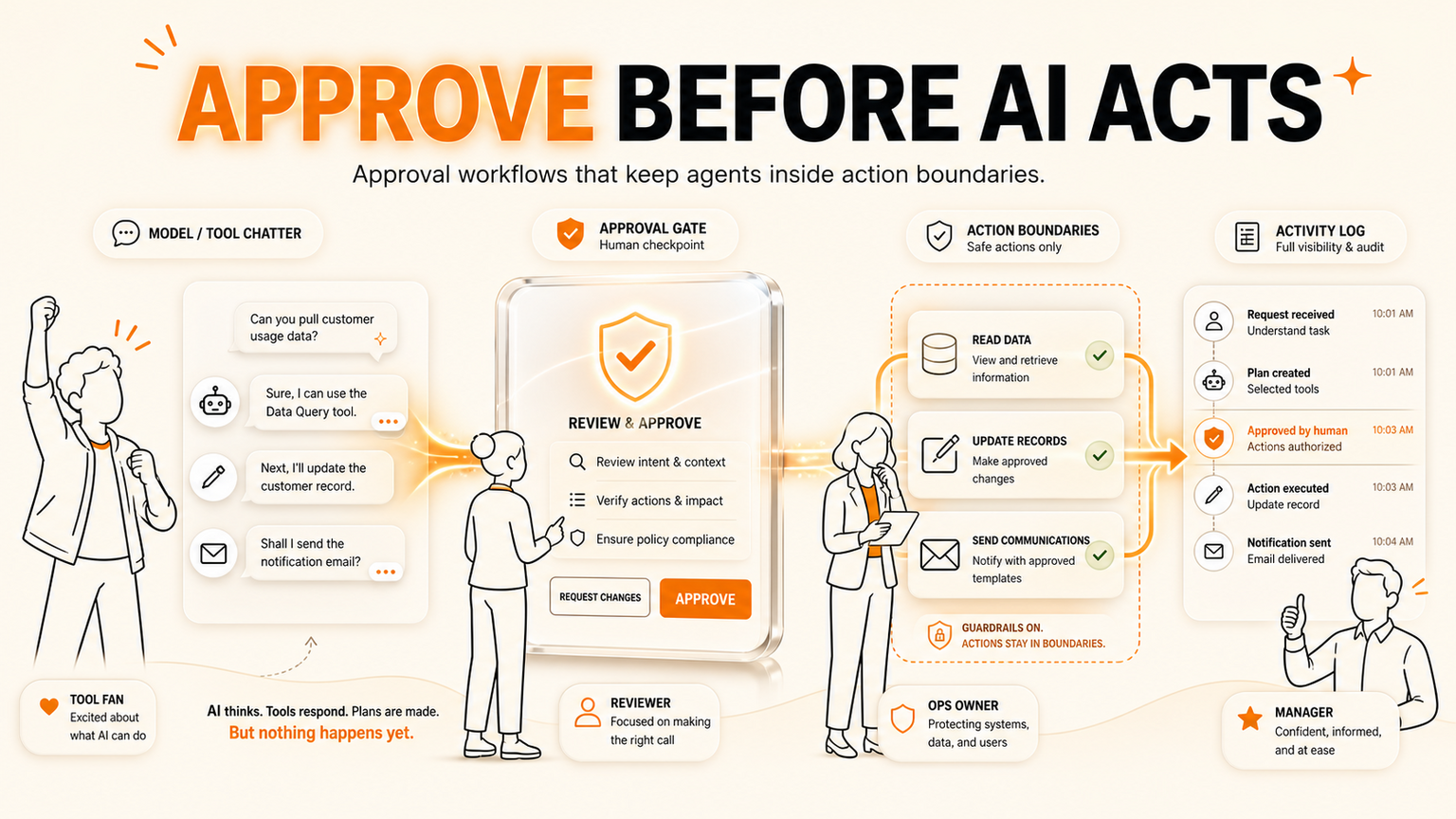
# Approval Workflow for AI Model Chatter: Keep Agents Inside Action Boundaries # Quick answer The signal is not that every Reddit complaint or news headline should change an SME stack overnight. The signal is that appr
Approval Workflow for AI Model Chatter: Keep Agents Inside Action Boundaries
Quick answer
The signal is not that every Reddit complaint or news headline should change an SME stack overnight. The signal is that approval workflow now has to be treated as an operating system for daily work. Reddit is used here as operator sentiment, not as verified product fact. GOFTUS would turn that signal into a controlled workflow: define the owner, map the action boundary, capture evidence, require approval before risky steps, and measure whether the process saves time or improves follow-up.
What this means for SMEs
SMEs hear about a new model and immediately ask whether sales, support, coding, or reporting workflows should switch. The risk is not the model launch itself. The risk is letting a more capable assistant move from advice to action without a workflow owner, a test lane, and a rollback path.
For GOFTUS clients, the useful question is simple: what repeatable business process should be safer, faster, or easier to audit because of this AI signal? A model release, compliance debate, automation thread, or marketing-trust concern only matters when it changes work inside CRM, support, documents, browser portals, finance checks, or reporting. That is why GOFTUS links AI adoption back to /agents rather than leaving teams with scattered prompts and disconnected SaaS tools.
The first step is to separate observation from action. Observation can be low risk: summarize tickets, classify incoming questions, prepare a CRM note, compare supplier emails, or draft a review response. Preparation is the next lane: the AI proposes a next step, fills a form, or creates a task. Approval is where a human checks context, tone, data, and risk. Action is only allowed after the workflow has logs, fallback rules, and a clear owner. This lane design is what keeps approval workflow practical for SMEs.
A measurable outcome should be attached before the workflow goes live. Useful measures include fewer missed follow-ups, faster first response, fewer manual copy-paste steps, cleaner handoffs between sales and support, lower rework after document review, or clearer evidence when something goes wrong. GOFTUS does not need to promise a magic percentage. The better ROI logic is to compare the current process cost with the controlled workflow cost, then review the exceptions every month.
A practical rollout can stay small. Week one is discovery: collect examples, identify the owner, and write the current process in plain English. Week two is a controlled build: connect only the systems needed for the first use case, add test data, and make the AI prepare work without submitting it. Week three is review: compare draft outputs against real staff decisions, record failure patterns, and tighten prompts, forms, and routing rules. Only after that should the workflow move into limited production with approval gates and a visible stop rule.
The same pattern also protects teams from over-automation. If a process has unclear ownership, missing source data, or conflicting customer promises, AI will make the mess faster. GOFTUS would fix the lane first: who receives the trigger, what information is trusted, what the AI may change, what must be escalated, and what gets logged. That turns the signal into a durable operating process instead of a one-off experiment.
Competitor lens
SaaS tools, prompt libraries, consultants, and workflow builders can all be useful. The gap appears when nobody owns the full path from trigger to business outcome. A tool may automate one step, a consultant may deliver a deck, and a template may work for a week. GOFTUS focuses on workflow design, integration, monitoring, review, and improvement so the automation remains useful after the first demo.
A second gap is maintenance. Models change, APIs change, staff habits change, and customers ask new questions. Managed workflow ownership means someone checks the logs, watches exceptions, updates the approval rules, and keeps the automation aligned with the business result. That is the difference between installing AI and operating AI.
Summary for SMEs
Treat this signal as a reason to tighten workflow control, not as a reason to chase every new AI feature. Start with one process, connect it to /agents, add approval where the action can affect a customer, record what happened, and review exceptions. That is how approval workflow becomes practical business infrastructure instead of another experiment.
FAQ
What should an SME do first?
Pick one repetitive workflow with a clear owner and visible handoff problem. Map the current steps, decide where AI may observe or prepare work, then require human approval before customer-facing, financial, security, or browser-based actions.
Where should this connect inside GOFTUS?
Start with /agents for workflow design, then use /agents when the assistant needs to prepare actions, browse controlled systems, or route follow-up. Use /questions to support the same keyword cluster with practical buyer questions.
Source notes
Reddit is used here as operator sentiment, not as verified product fact. Direct article access may vary, so these are used as headline-level or accessible-source cross-checks where appropriate.