Anthropic and UST Bring Claude to Physical AI: The SME Workflow Control Lesson
Anthropic and UST's physical AI push shows why SMEs need workflow controls before AI touches operations, equipment, or quality checks.
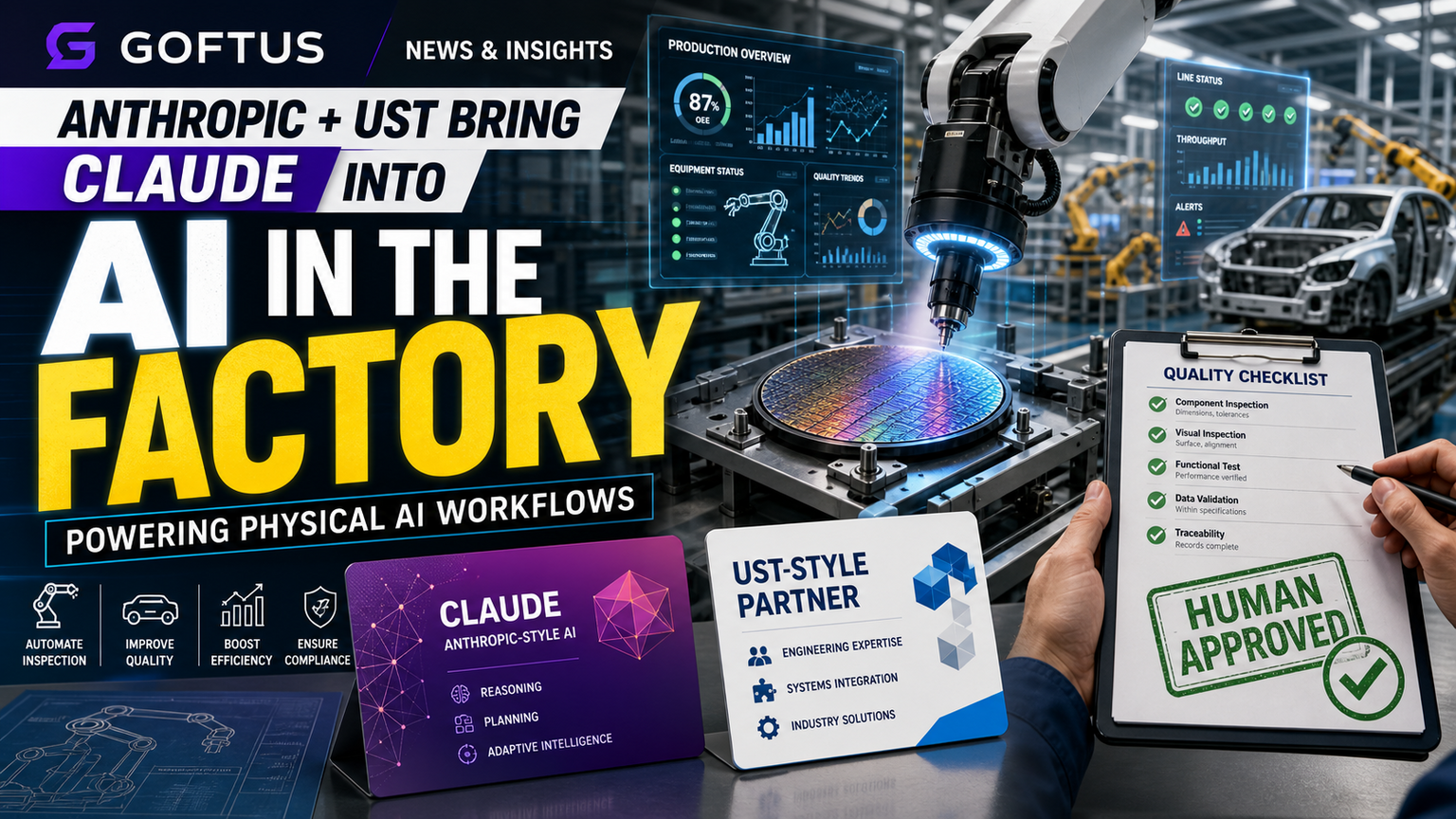
# Quick answer Anthropic says UST is bringing Claude into physical AI work across engineering environments for chips, cars, connected devices, and production-quality checks. For SMEs, the useful lesson is not that every
Quick answer
Anthropic says UST is bringing Claude into physical AI work across engineering environments for chips, cars, connected devices, and production-quality checks. For SMEs, the useful lesson is not that every factory needs a frontier model tomorrow. It is that AI is moving closer to operational equipment, quality gates, fault detection, and engineering decisions.
Bharatvaj's view: when AI reaches physical operations, the workflow around the model matters as much as the model. An SME should decide what the AI can inspect, what evidence it must record, who approves exceptions, and how errors are reviewed before any automation touches customers, stock, equipment, or compliance.
What this means for SMEs
The Anthropic and UST announcement points to a wider shift from chat-based AI toward embedded operational AI. UST describes Claude being used inside engineering environments and physical AI workflows. That makes the topic relevant beyond large manufacturers because the same pattern appears in smaller businesses through CRM updates, support triage, warehouse exceptions, finance approvals, document checks, and service scheduling.
For a UK, US, or European SME, the practical question is not whether to copy an enterprise physical AI programme. The question is whether each automation has enough control around it to be trusted in a real workflow.
A safer rollout usually needs:
a narrow operational task with a clear owner
trusted data inputs from the systems the team already uses
a human review point for high-risk decisions
logs that show why the AI suggested an action
alerts when the workflow fails, stalls, or drifts
a monthly improvement loop based on real exceptions
That is where AI automation becomes business infrastructure rather than another experiment.
Competitor lens
Global SaaS tools such as Zapier, n8n, Make, Bardeen, Gumloop, Lindy, Relevance AI, and Stack AI are useful for connecting tasks and building fast automations. US and European AI consultancies often publish strong material on AI agents, RAG, production AI, and industry transformation. UK firms such as Faculty AI, Deeper Insights, Waracle, and Brainpool AI also keep the market focused on safety, decision intelligence, and enterprise AI.
What many SME buyers still miss is the operating layer around the automation. Tools automate tasks. GOFTUS automates the workflow around the task.
For physical AI, that distinction is critical. A model can flag a likely defect, missed handover, or process anomaly. The workflow must decide who sees it, what context they receive, what gets written back to the system of record, and what happens if the AI is wrong. SaaS tools and consultants can be valuable, but SMEs need workflow design, integration, human review, monitoring, and monthly improvement to turn AI into reliable operations.
Because this is tied to manufacturing and engineering, it matters for UK and European firms managing quality, safety, and audit obligations as well as US companies trying to improve throughput without losing control.
Summery for SMEs
| Area | SME takeaway | GOFTUS workflow response |
|---|---|---|
| Physical AI | AI is moving from chat into operational environments | Start with controlled, auditable workflow steps |
| Quality checks | AI can support inspection and exception detection | Add human approval, evidence capture, and escalation rules |
| Systems integration | Value depends on data from real business systems | Connect CRM, helpdesk, finance, documents, and reporting tools |
| Risk management | Operational AI needs monitoring, not blind trust | Track errors, stalled cases, overrides, and monthly fixes |
FAQ
Is Anthropic's UST physical AI announcement relevant to non-manufacturing SMEs?
Yes. The direct announcement is about engineering and physical AI, but the workflow lesson applies to any SME using AI near operational decisions, customer commitments, stock, finance, compliance, or support processes.
Should SMEs build physical AI systems now?
Most should not start with physical AI. They should start with lower-risk workflow automations such as support triage, CRM follow-up, document processing, reporting, and internal knowledge assistants, then add stronger controls as automation moves closer to operations.
How can GOFTUS help with AI workflow control?
GOFTUS helps SMEs map the workflow, choose the right automation points, connect business systems, add human review, monitor exceptions, and improve the process each month. If you want AI agents that support real operations rather than isolated tasks, GOFTUS can design and build the workflow around them.
Anthropic official source: "UST is bringing Claude to physical AI", published July 9, 2026. Direct Reddit page retrieval was blocked, so this article treats Reddit as an adjacent community signal rather than confirmation of the UST announcement.
X signal: xurl was unavailable in the cron environment, so X was not used.