Anthropic Usage Limit Debate Shows SMEs Need AI Capacity Workflows
Anthropic usage limit debate shows why SMEs need AI capacity workflows, fallback routes and approval queues.
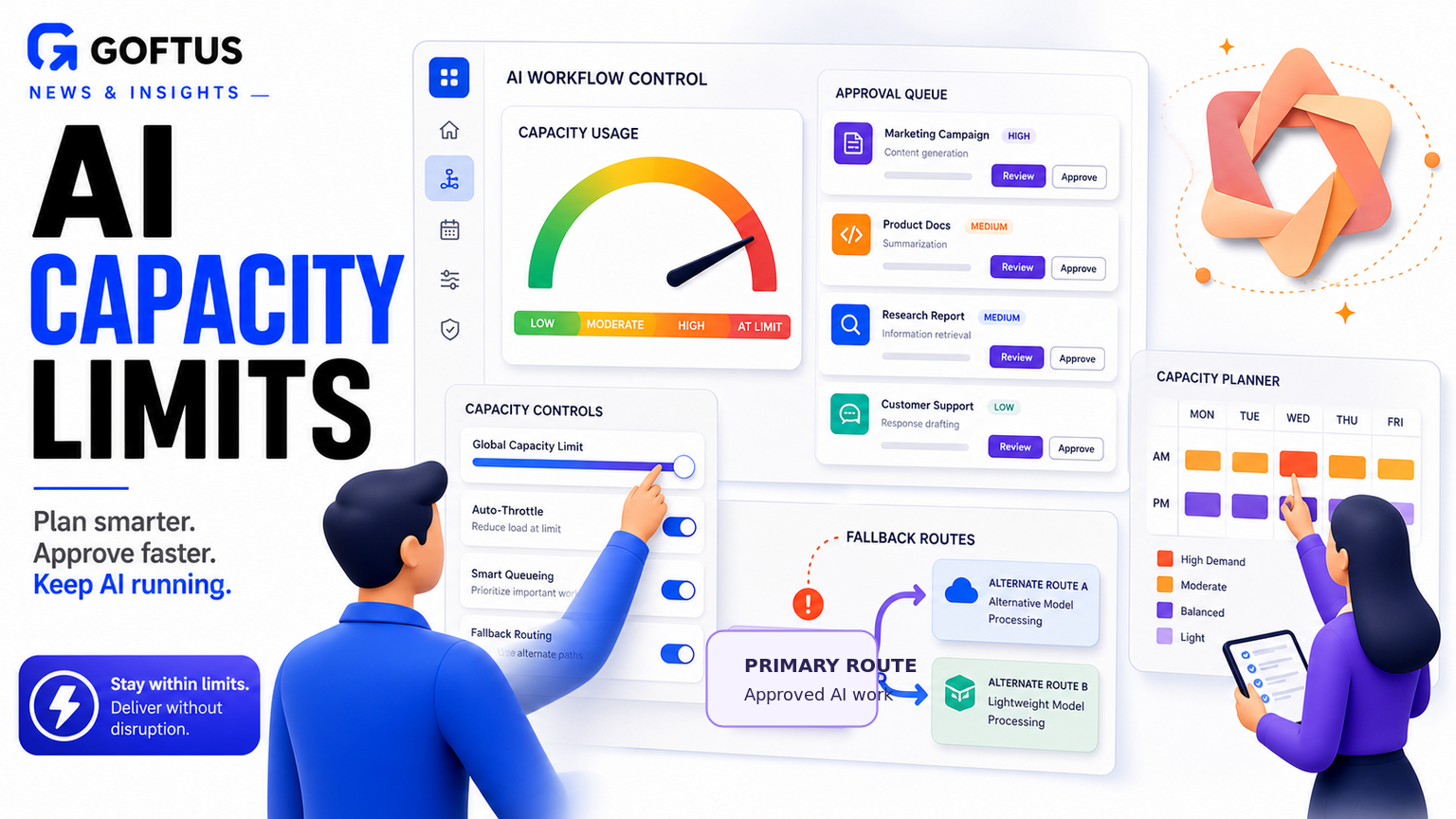
# Anthropic Usage Limit Debate Shows SMEs Need AI Capacity Workflows Meta description: Anthropic usage limit debate shows why SMEs need AI capacity workflows, fallback routes, approval queues and monitored automation pl
Anthropic Usage Limit Debate Shows SMEs Need AI Capacity Workflows
Meta description: Anthropic usage limit debate shows why SMEs need AI capacity workflows, fallback routes, approval queues and monitored automation plans for safer daily work.
Users debated whether weekly usage promotions and plan limits leave enough predictable capacity for real work. This is not a confirmed product incident report from Anthropic, but it is a clear reminder that AI capacity is now an operations topic.
That wider news signal matters because SMEs are being encouraged to put AI into sales, support, research, coding, documents and operations at the same time.
Thirumurugan's view is simple: if AI is becoming part of the workflow, capacity cannot be treated like a personal subscription detail. SMEs need usage budgets, fallback routes, review queues, escalation rules and monthly monitoring. GOFTUS helps teams design that layer through /services and /agents so AI keeps work moving even when a vendor limit, model change or policy setting interrupts the ideal path.
Why a usage limit debate matters for operators
Many owners first meet AI through a chat window. That makes limits feel like a user inconvenience: wait until later, buy a higher plan or switch models. But once the same tool supports customer replies, lead research, document summaries, CRM updates or coding assistance, limits become a workflow risk.
A sales team using AI for follow-up cannot simply pause half of its prospecting process. A support team using AI to draft replies cannot leave difficult tickets waiting with no routing path. A finance team using AI to prepare document checks still needs evidence, handoff and review if the primary model is unavailable. Capacity planning is not about squeezing more prompts from a subscription. It is about deciding which work deserves priority, what happens when capacity is low and who approves the fallback.
That is why the Reddit signal is useful even though it is a community discussion. It shows the operator emotion behind adoption. People do not only ask whether the model is smart. They ask whether it is available, predictable and worth building around. Business leaders should listen to that emotion before they depend on any single AI tool for a live process.
What this means for SMEs
For UK, US and EU SMEs, the practical move is to separate AI experiments from AI operating capacity. A founder testing prompts can tolerate limits. A team that uses AI inside customer, sales or reporting workflows needs a capacity plan.
Start by listing the business processes where AI already helps. Then rank each process by time sensitivity and business impact. A customer escalation, quote follow-up or compliance document should not have the same priority as a low urgency brainstorming task. Once the priority is clear, the workflow can route scarce AI capacity toward the work that matters most.
Next, design fallback routes. A fallback route might switch from a premium model to a lighter model, move from full automation to draft-only, assign a task to a human reviewer, or delay low-priority background work until the next capacity window. This is where /agents and /services become more important than the AI model itself. The agent should know the stop rules, the queue order and the handoff path.
Finally, measure interruptions. If a team repeatedly hits limits on the same workflow, the answer may be a plan change, a model change, better prompt compression, smarter batching or a different automation design. Without logging, teams only notice frustration. With logging, they can improve the system.
The market is busy for good reasons. UK firms such as Faculty AI, Deeper Insights, Waracle and Brainpool AI, US teams such as LeewayHertz, Markovate, SoluLab and BairesDev, and European firms such as Addepto, STX Next, Netguru and 10Clouds can support AI delivery. SaaS tools such as Zapier, n8n, Relevance AI, Lindy, Gumloop, Bardeen, Make and Stack AI can connect apps quickly.
The gap appears when the business needs the workflow around the AI action. Tools automate tasks. GOFTUS automates the workflow around the task. We ask what happens when capacity changes, an answer needs review, a CRM record must be updated, a document needs evidence or a customer issue must be escalated. For SMEs, that layer is often the difference between a clever demo and a reliable operating system.
What SMEs should do next
First, choose one workflow where AI is useful but unreliable for production. Good candidates include sales follow-up, support triage, FAQ updates, quote preparation or document intake.
Second, create a capacity map. Define expected work volume, the highest priority task, the acceptable delay, the fallback model or human owner and the actions that always require approval.
Third, add monitoring. Track unanswered requests, delayed approvals, failed runs, model switches and manual overrides. If repeated support questions are part of the pressure, an FAQ automation service at /services#faq-automation can reduce unnecessary AI load by answering common questions first, capturing leads and routing complex issues. If agents are doing browser or CRM work, /agents can help define approvals, logs and boundaries.
If you want a practical starting point, GOFTUS can review one workflow, identify where AI capacity risk shows up and design a Startup Kit style diagnostic through /contact.
The lesson from the Anthropic usage limit discussion is not that one vendor is good or bad. The lesson is that AI adoption has moved from experimentation into operations. When AI sits inside sales, support, documents or reporting, businesses need capacity rules just like access rules and approval rules.
SMEs should avoid building critical workflows around an unlimited assumption. Plan the queue, define fallback routes, keep humans in the loop for sensitive actions and review the logs each month. The strongest AI workflow is not the one that works only when capacity is perfect. It keeps the business moving when capacity changes.
Should SMEs worry about AI usage limits?
Yes, if AI is part of live work. Usage limits are not only a subscription annoyance when AI supports customers, sales, documents or reporting. SMEs should decide which tasks get priority, which tasks can wait and which tasks need a human fallback. GOFTUS can help design that through /services.
How can an AI workflow keep running when a model is limited?
A resilient workflow can switch to draft-only mode, use a lighter model, queue low-priority work or ask a human to approve the next step. The key is to define that logic before a limit is reached. GOFTUS connects agents, approvals and monitoring through /agents.
The business lesson is about capacity planning for AI workflows.
This is used as headline-level corroboration that enterprise AI competition is a live business topic, not as a scraped full-article claim.