AI Tools Need a Workflow Diagnostic Before Your Team Adds Another Subscription
Before buying another AI tool, map the workflow, owner, approval gate, data source, fallback route, and measurable outcome it must improve.
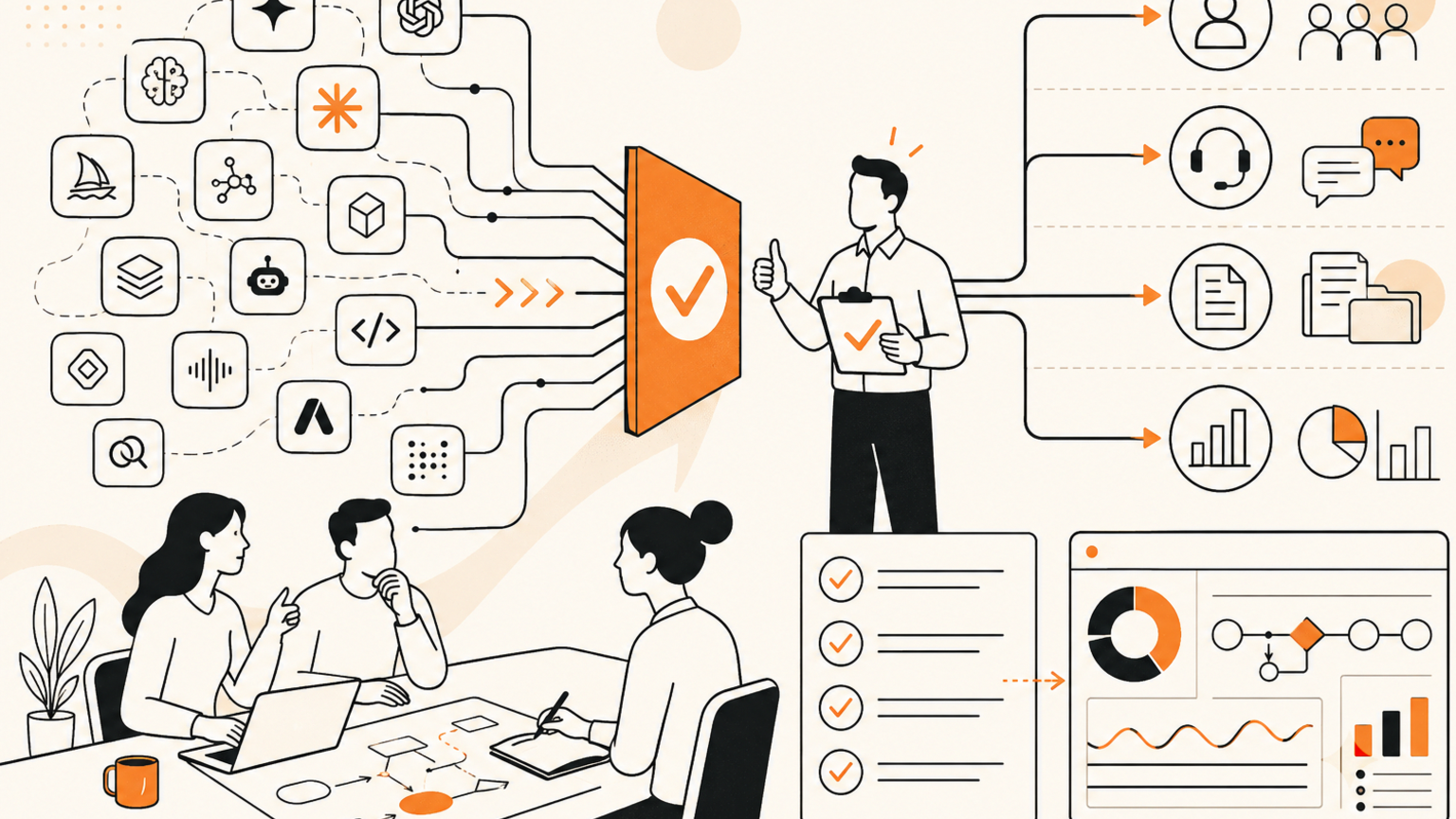
## Quick answer Before buying another AI tool, an SME should map the workflow it will change, name the human owner, define the approval gate, confirm the data source, set a fallback route, and decide which business outc
Quick answer
Before buying another AI tool, an SME should map the workflow it will change, name the human owner, define the approval gate, confirm the data source, set a fallback route, and decide which business outcome will prove the tool is worth keeping.
AI tools are no longer hard to find. The hard part is deciding which ones should touch real work. A founder can sign up for a writing assistant, a sales manager can test prospecting, support can add a chatbot, and operations can try automation in the same week. Each tool may look useful. Together, they can create a messy stack of prompts, subscriptions, copied data, and unclear ownership.
That is why the practical question is not "Which AI tool is best?" The better question is "Which workflow deserves AI assistance, and what has to be true before we let the tool act?"
GOFTUS sees this as a workflow diagnostic problem. The business does not need another disconnected experiment. It needs a simple way to turn AI interest into approved, measurable, secure automation.
Why tool-first AI creates hidden work
Tool-first adoption feels fast because the first demo is easy. Someone pastes a messy brief into ChatGPT, gets a better draft, and feels the possibility immediately. Another person uploads call notes, asks for follow-up copy, and saves an hour. A third person connects an app to a spreadsheet and calls it automation.
The hidden work appears later. Who checks the output before it reaches a customer? Which source is trusted when an AI summary conflicts with the CRM? What happens when pricing, usage limits, model behavior, or integrations change? Who owns errors after the original tester moves on?
Without those answers, the tool does not remove work. It moves work into review, cleanup, risk management, and subscription sprawl. A workflow diagnostic slows the first purchase slightly so the implementation can move faster later. It turns scattered interest into one approved path.
What this means for SMEs
SMEs should evaluate AI tools through five workflow questions before they buy, integrate, or roll out anything widely.
First, what exact workflow will change? A tool that helps "marketing" is too vague. A tool that turns webinar questions into approved follow-up emails for warm leads is specific. A tool that helps "support" is broad. A tool that drafts refund replies from policy pages, then queues them for human approval, is operational.
Second, who owns the workflow? AI should not be owned by whoever found the app. The owner should be the person accountable for the business result: booked calls, resolved tickets, clean reports, accurate documents, or faster onboarding.
Third, where does approval happen? Some tasks can be prepared by AI but still need a human yes before the output is sent, saved, charged, deleted, submitted, or published. Approval is the control that lets the business use AI without pretending the system is perfect.
Fourth, what data is allowed? A useful tool can become a problem if staff paste customer records, private notes, financial context, or partner documents without rules. Good workflows define the source of truth and the boundary.
Fifth, how will the result be measured? If the team cannot measure time saved, error reduction, lead response speed, ticket deflection, content approval time, or revenue handoff quality, the tool becomes another monthly bill with a good story and weak proof.
A practical workflow example
Take a small B2B company with too many unanswered website questions. The team wants an AI chatbot because visitors ask the same things: pricing range, setup time, integrations, support, security, and whether the service fits their size. Buying a chatbot immediately might create a public answer box, but it may not create a better sales workflow.
A diagnostic starts earlier. It reviews existing customer questions, groups them by buying stage, decides which answers can be public, and marks which questions should trigger a human follow-up.
Then the workflow can be designed like this:
1. A visitor asks a question on the website.
2. The approved answer appears from a controlled FAQ set.
3. If the question shows buying intent, the system creates a CRM note.
4. AI drafts a follow-up message from approved service language.
5. A human reviews the message before it is sent.
6. The result is logged so the team can see which answers create better conversations.
That is not just a chatbot. It is FAQ automation connected to sales follow-up, support triage, and review. The right tool matters, but the workflow matters more. A business can explore this path through GOFTUS services at /services#faq-automation or start with a diagnostic at /contact.
Summery for SMEs
The safest AI tool strategy is to choose the workflow first, then choose the tool that fits the workflow.
For a founder, this prevents random spending and unclear accountability. For an operator, it turns AI ideas into visible steps, owners, and handoffs. For a sales or support leader, it keeps customer-facing output inside a reviewable process. For a technical leader, it reduces shadow automation by giving staff an approved path to request and test AI support.
This is also where checklists and resources help. Before a team automates, a checklist should ask: what action is being prepared, who approves it, where the data comes from, what system is updated, and what should happen when the answer is uncertain?
GOFTUS uses this approach because governed automation is more useful than tool collecting. The business gets fewer experiments, better handoffs, clearer review, and a stronger reason to keep each subscription.
Competitor lens
No-code platforms, AI writing tools, chatbot builders, and automation consultants can all help. The difference is where the responsibility sits. A tool vendor usually gives features. A consultant may give advice. A workflow partner should define the operating path, approval gates, evidence logs, integrations, fallback routes, and improvement loop.
That distinction matters when AI touches CRM updates, customer replies, document changes, browser actions, reporting, or payment workflows. The business needs more than a prompt library. It needs a controlled process that can be reviewed and improved.
If the choice is between another generic tool and a managed workflow, compare the risk of doing nothing, the cost of messy adoption, and the value of a measurable first implementation. GOFTUS can help map that first workflow through /services, build controlled agent steps through /agents, or scope the first diagnostic through /contact.
FAQ
Should SMEs stop testing new AI tools?
No. SMEs should keep testing, but they should test inside a clear workflow. Give each trial a business owner, a permitted data boundary, a review step, a success metric, and a deadline for keep, pause, or replace.
What is the first AI workflow most businesses should diagnose?
Start with a repeated, visible workflow where delays or mistakes are already costing time. Common examples include website questions, CRM follow-up, support replies, internal reporting, document intake, quote preparation, and onboarding checklists.
When should AI act automatically?
AI should act automatically only when the task is low risk, the data source is controlled, the allowed action is narrow, and the business has logs, rollback, and exception handling. For customer, finance, legal, support, browser, or CRM actions, human approval is usually the safer first step.
What should a workflow diagnostic produce?
A useful diagnostic should produce a workflow map, owner list, allowed data sources, approval points, risk notes, tool shortlist, implementation plan, measurement plan, and a practical next step. It should make the first automation easier to build and easier to govern.
How can GOFTUS help?
GOFTUS helps SMEs turn AI tool interest into governed automation. We map the workflow, design the approval path, connect the systems, add review and logs, and help the team measure whether the automation is worth scaling. Start at /contact.