AI Tool Cost Control for SMEs: Budget Rules Before Model Usage Drifts
AI tool cost control for SMEs means budgets, approval gates, model routes, and usage logs before model usage quietly drifts.
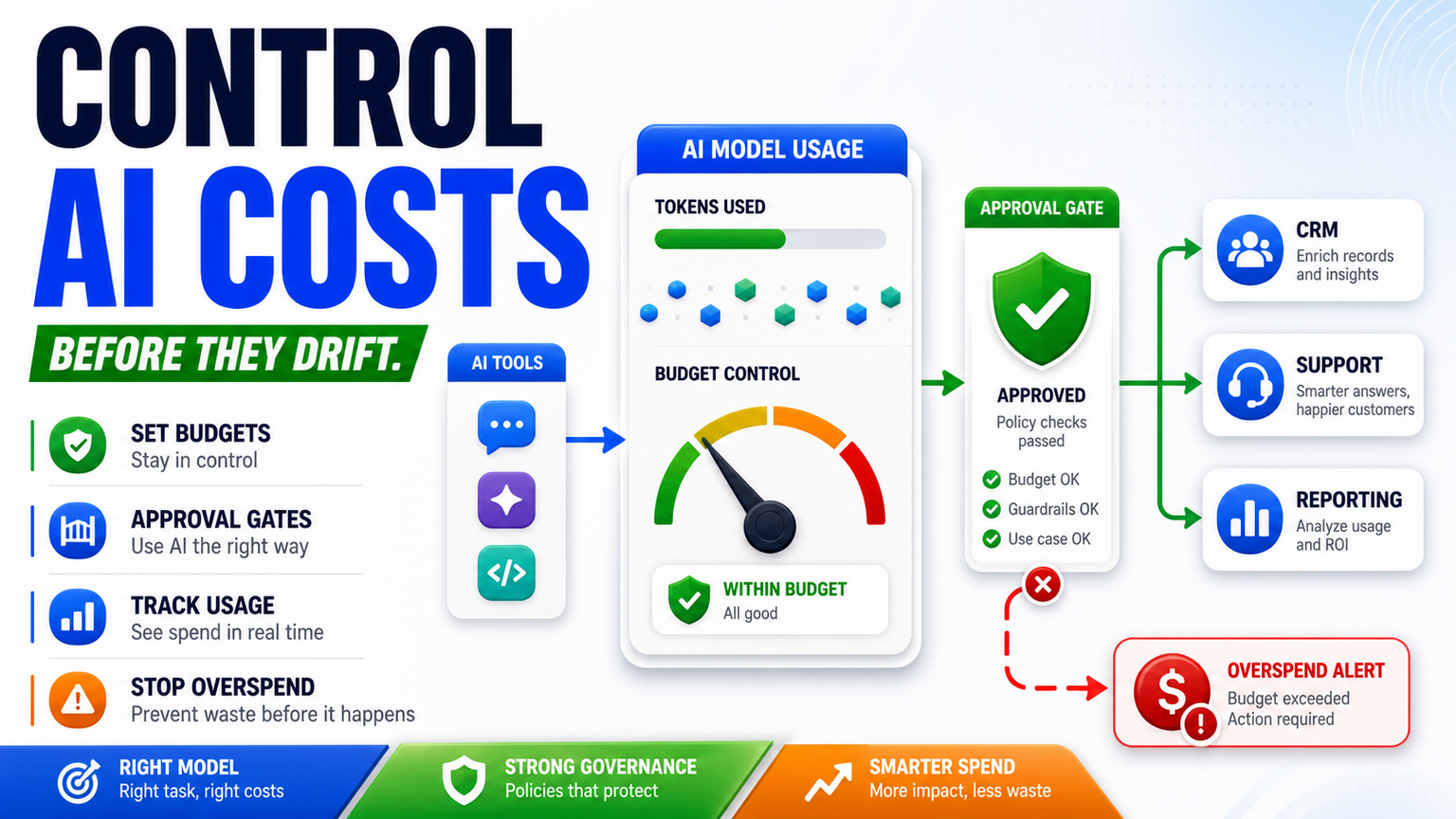
# AI Tool Cost Control for SMEs: Budget Rules Before Model Usage Drifts **Meta description:** AI tool cost control helps SMEs set budgets, approvals, model routes, usage logs, and fallback rules before Claude or OpenAI
AI Tool Cost Control for SMEs: Budget Rules Before Model Usage Drifts
Meta description: AI tool cost control helps SMEs set budgets, approvals, model routes, usage logs, and fallback rules before Claude or OpenAI workflow costs drift.
AI tool cost control is becoming a practical SME workflow problem, not just a finance spreadsheet problem. Today's operator research scored an r/Anthropic discussion about declining Anthropic usage on OpenRouter at 100, and the live r/Anthropic RSS feed also showed operators debating token value, plan differences, and usage frustration. They do not prove vendor performance or pricing changes by themselves.
For UK, US, and EU SMEs, the question is not which model wins this week. The searchable buyer problem is how to stop AI usage from drifting across staff, agents, browser tasks, support replies, CRM updates, reports, and documents before anyone owns the bill.
GOFTUS approaches this through measurable workflow design. The goal is not to ban stronger models. The goal is to decide which workflow deserves expensive reasoning, which task can use a cheaper route, when a human must approve, and where usage should be logged. See /services for broader implementation and /agents when AI agents need budget-aware action rules.
What this means for SMEs
Most SMEs first experience AI cost drift in small ways. A team member upgrades a plan. A developer tests a model inside an integration. A support process starts generating longer answers. A sales assistant summarises every lead. A reporting workflow retries failed prompts. An agent starts using a browser to collect information. None of these decisions look dangerous alone, but together they create spend that is hard to explain.
That is why AI tool cost control should sit inside the workflow, not only inside the vendor admin panel. Admin limits are useful, but they usually do not know whether a task is commercially important, whether the customer is high value, whether the answer needs review, or whether a cheaper route would be good enough. A workflow-level budget rule can ask better questions: Is this a draft or a final customer message? Is this a routine FAQ answer or a complex support issue? Is this a low-risk browser lookup or a form submission? Is this report going to leadership or just an internal scratchpad?
Bharatvaj's view is that model choice is becoming an operating policy. SMEs need a simple usage map before they scale AI. Start with the recurring workflows that already touch revenue, service quality, or staff time. For each workflow, define the approved model lane, fallback lane, approval step, retry limit, logging requirement, and monthly review owner. This makes AI spend easier to manage without slowing down the useful work.
How to build budget rules before usage drifts
First, classify AI work by business risk and value. Low-risk internal summaries can use cheaper models or shorter prompts. Customer-facing replies, finance actions, contract reviews, data exports, and CRM changes need stronger review rules. Browser-based automation needs extra boundaries because it can move across websites, logins, forms, and downloads. If agents are involved, GOFTUS usually recommends a prepare-first lane: the agent can draft, gather, compare, or recommend, but a human approves before send, submit, delete, pay, or change access.
Second, connect usage to outcomes. A monthly model bill is not enough. The operator should know which workflow generated the cost, what result it produced, which items needed human review, and where the process failed. That is the difference between paying for AI activity and paying for useful automation. GOFTUS can connect AI usage logs to CRM follow-up, support triage, FAQ automation, document processing, reporting automation, and internal knowledge assistants so spend reviews are tied to real work.
Third, create fallback routes and review exceptions. If a premium model is limited, costly, or unavailable, the workflow should know whether to wait, use a cheaper model, shrink context, or route to a human. Review repeated retries, long context windows, duplicate automations, and agents working outside their lane each month.
Tools like Zapier, n8n, Make, Relevance AI, Lindy, Gumloop, Bardeen, and Stack AI can help teams connect apps quickly. Larger consultancies and AI firms such as Faculty AI, Deeper Insights, Waracle, Brainpool AI, LeewayHertz, Markovate, SoluLab, BairesDev, Addepto, STX Next, Netguru, and 10Clouds can also support AI delivery. These options can be valuable when the scope is clear.
What competitors are often missing is the operating layer around the task. Tools automate tasks. GOFTUS automates the workflow around the task. For AI tool cost control, that means budgets, model routes, approvals, logs, exception handling, owner reviews, and improvement loops. A workflow builder can trigger a model call. A GOFTUS workflow decides whether that call should happen, what it is allowed to do, how much it can spend, who approves the result, and how the business learns from the usage.
What SMEs should do next
Pick one AI-heavy workflow and audit it this week. Good candidates are customer support drafts, CRM lead research, proposal generation, management reporting, internal knowledge search, document review, or browser-based data collection. Write down who uses it, which models are involved, what each run costs in broad terms, what the output changes, and where a human still checks the work.
Then add three simple controls. Set a monthly budget owner. Add an approval step before customer, finance, access, or browser actions. Log the workflow name beside each AI action so finance and operations can review usage together. If the workflow is already important to sales, support, reporting, or delivery, speak to GOFTUS through /contact about turning it into a controlled automation rather than another unmanaged AI tool.
The best AI budget rule is not “use less AI”. It is “use the right AI for the right workflow with the right approval”. That is how SMEs keep the benefits of Claude, OpenAI, Gemini, Mistral, open models, browser agents, and workflow builders without letting model usage drift into hidden operating cost.
AI usage is spreading across everyday work, while social discussions and news headlines show more attention on limits, token spend, and budget control. SMEs should not react by blocking AI. They should create workflow-level cost controls: model lanes, fallback routes, approval gates, retry limits, usage logs, and monthly owner reviews. GOFTUS helps businesses build those controls into real sales, support, reporting, document, browser, and agent workflows through /services and /agents.
Is this confirmed news about Anthropic usage decline?
No. They are useful because they show what users are worried about, but GOFTUS treats Reddit as source heat, not verified vendor evidence.
What is the main business lesson?
AI costs should be governed at workflow level. Vendor dashboards help, but SMEs also need budgets, approval gates, model routes, logs, and fallback rules around the work itself.
Where should an SME start?
Start with one recurring workflow that already touches customers, revenue, reporting, documents, or browser actions. Map usage, value, risk, owner, approval step, and monthly review before scaling more AI tools.