AI Tool Chatter Needs Approval Gates Before Agents Act
AI tool cost control starts with approval gates, spend owners, and action logs before model releases or agents touch SME workflows.
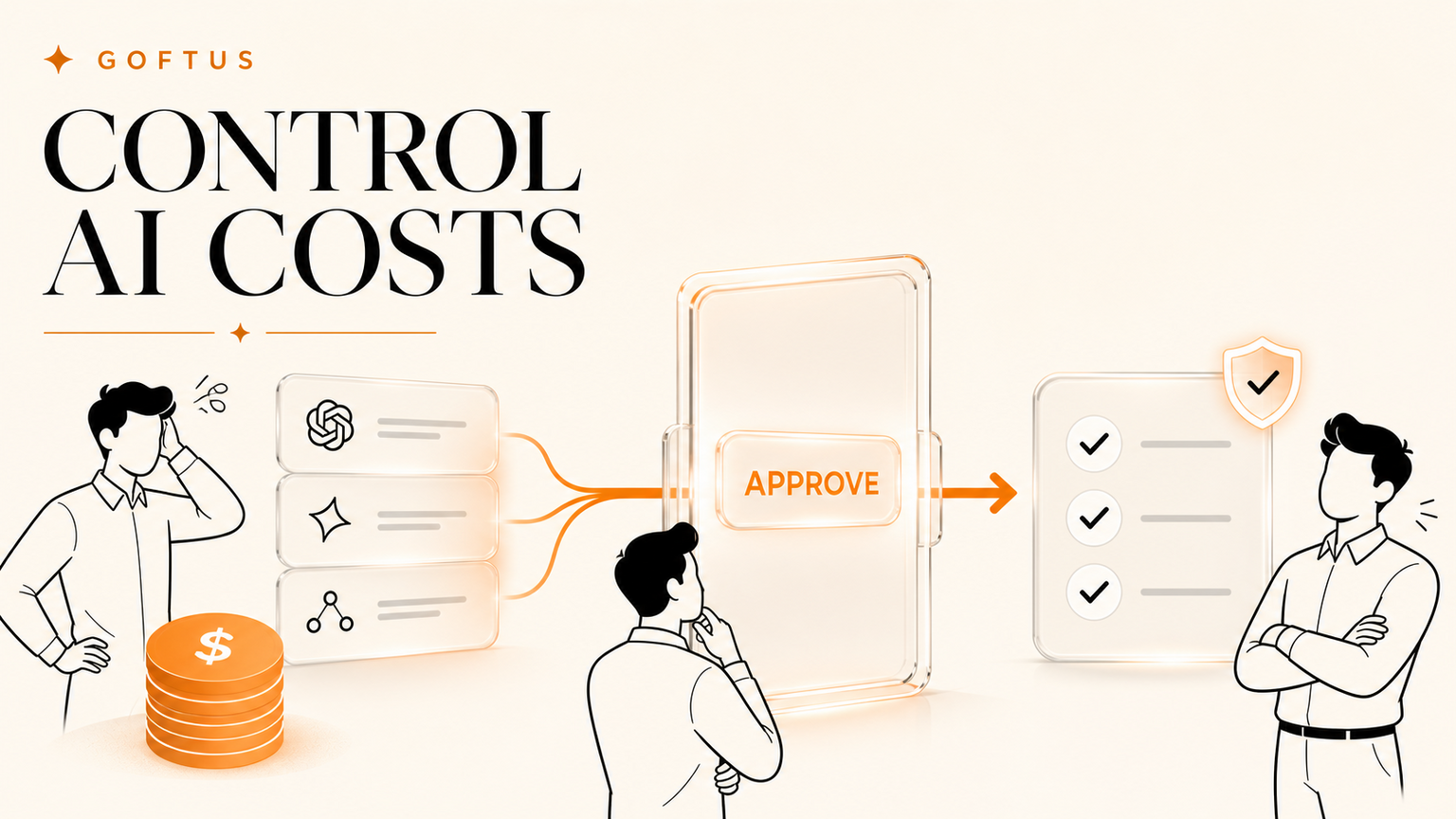
# AI Tool Chatter Needs Approval Gates Before Agents Act AI tool cost control starts with approval gates, spend owners, and action logs before model releases or agents touch SME workflows. Treat that as operator sentime
AI Tool Chatter Needs Approval Gates Before Agents Act
AI tool cost control starts with approval gates, spend owners, and action logs before model releases or agents touch SME workflows. Treat that as operator sentiment, not proof of vendor behavior. GOFTUS turns that signal into the evergreen buyer problem ai tool cost control, then links it to a workflow that a small or mid sized business can actually run.
What this means for SMEs
Model launches create urgency. Staff want the newest assistant, managers worry about usage caps, and operations teams still need to know who approved a tool before it changes a customer, invoice, document, or support case. The mistake is buying a tool first and designing the operating rules later. When AI is allowed to draft, decide, submit, message, or change records without a clear lane, the business inherits hidden risk. When AI is only discussed as a future trend, the team gets excitement but not a better process.
A practical SME plan starts with a workflow inventory. Pick one process where volume, delay, or quality problems are visible. Write down the current trigger, inputs, systems, exceptions, approval point, and handoff. Then decide what AI is allowed to do. In most cases the first version should not be full autonomy. It should prepare the work, collect evidence, suggest the next step, and ask for human approval before the action touches a customer, invoice, account, website, document, browser portal, or production system.
The safest design also separates tool performance from business performance. A model can appear impressive in a demo while the end to end workflow still loses context, duplicates work, or waits for one busy manager. GOFTUS looks for the operational bottleneck first: missing input data, unclear ownership, weak approvals, unreliable handoffs, or no feedback loop after the automation runs. That lets the business improve the process even if the preferred AI vendor changes next month.
GOFTUS would map every AI tool into green, amber, and red lanes. Green tasks draft or summarize. Amber tasks prepare changes for approval. Red tasks require a named owner, cost rule, fallback route, and audit log before any action is submitted. The important part is ownership. A named workflow owner should review exceptions, failed runs, cost drift, customer complaints, and staff feedback. That owner also decides when an automation graduates from drafting to recommending, and from recommending to acting with approval.
The same owner should also decide what not to automate yet. Some tasks need better data, a clearer policy, or a simpler approval path before AI is useful. By documenting these gaps, the business gets a roadmap instead of a pile of disconnected experiments. That makes future automation cheaper, safer, and easier for staff to trust.
ROI is measured by avoided rework, fewer unsupported tool subscriptions, faster safe approvals, and a monthly review of which AI tasks actually saved time. GOFTUS would treat the Reddit heat as a signal to tighten workflow design, not as a reason to chase every new feature. The business case should include baseline time spent, avoided manual follow up, rework reduction, response consistency, and how quickly exceptions reach the right person.
Start small. Choose one high friction process. Create a safe lane where AI can help. Add approvals, logs, and fallback steps before expanding. Internal links should point staff to the right operating path: see /services for GOFTUS services and implementation support, or use /questions when the team needs product focused answers before a build.
What competitors are missing
Generic SaaS tools and consultants can be useful. A workflow builder may automate a simple handoff. A model vendor may release better reasoning. A dashboard may show activity. The gap is that none of those pieces automatically owns your process. GOFTUS focuses on workflow design, integration, monitoring, review, and improvement so the automation keeps working when the real world changes.
For SMEs, the better question is not whether AI can do the task once. It is whether the workflow can be reviewed, approved, measured, fixed, and safely expanded. That is where managed automation beats random experiments.
What should an SME automate first for ai tool cost control?
Start with a process that repeats often, has visible delay, and already has a human decision point. Good candidates include support triage, CRM follow up, document review, reporting collection, or browser based admin tasks.
Should AI agents act without approval?
Usually not in the first version. Let the agent draft, gather evidence, and prepare actions. Add human approval before customer messages, account changes, payments, data exports, or live web submissions.
How does GOFTUS measure whether this worked?
Measure baseline handling time, missed follow ups, rework, exception volume, approval delay, and cost drift. Review the workflow monthly and improve the rules instead of only swapping tools.