AI Image Generator Workflows Need Approval Gates Before Marketing Content Goes Live
AI image generators help marketing teams move faster, but SMEs need approval gates before brand, legal, and sales content goes live.
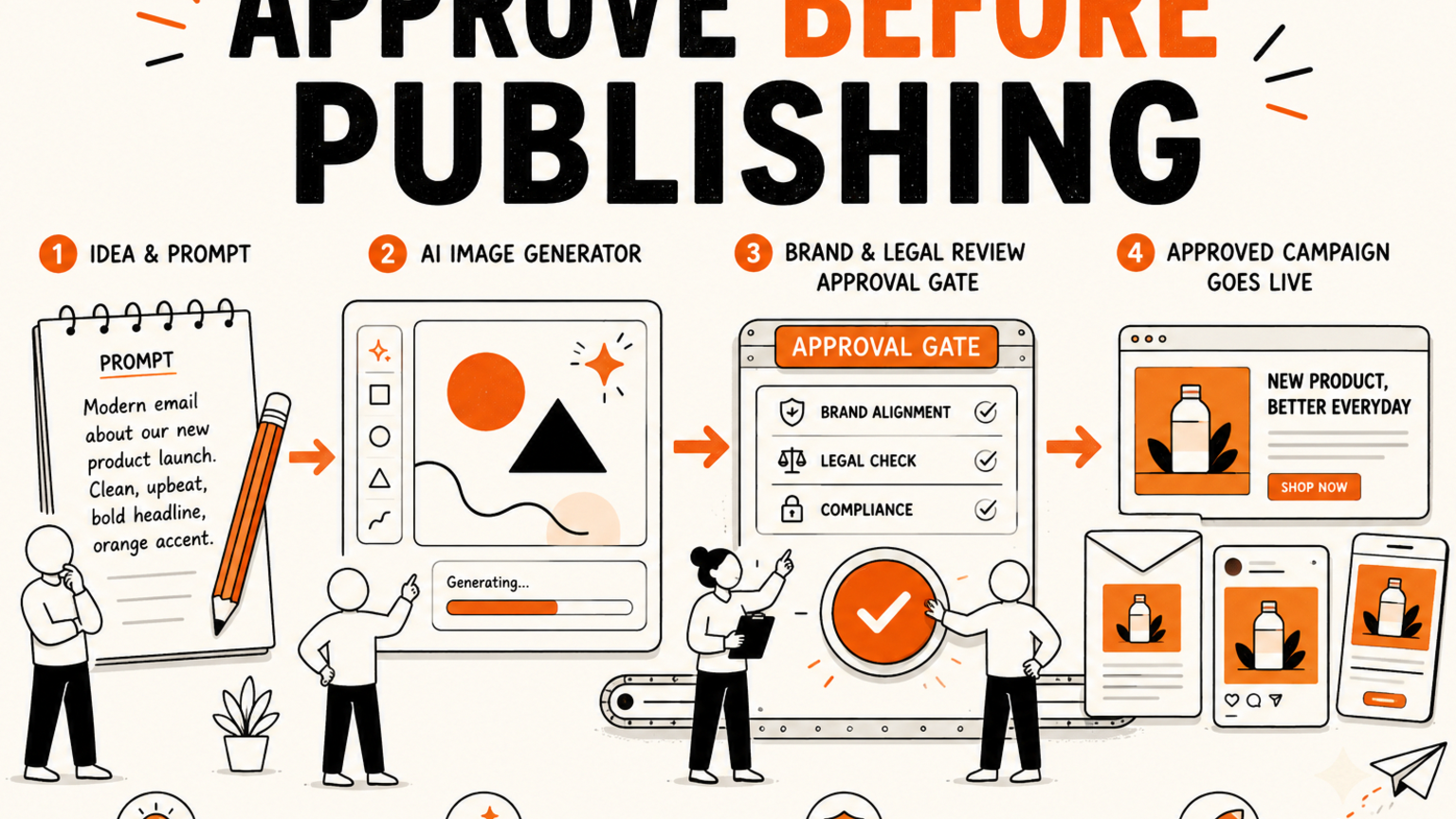
# Quick answer AI image generator workflows are safest when the tool creates drafts, a human reviews brand and risk, and only approved assets move into ads, websites, emails, or sales follow-up. ## Why this topic matter
Quick answer
AI image generator workflows are safest when the tool creates drafts, a human reviews brand and risk, and only approved assets move into ads, websites, emails, or sales follow-up.
Why this topic matters now
AI image generators are no longer novelty tools for marketing teams. They are showing up in campaign planning, landing page production, email creative, paid social tests, sales decks, proposal visuals, and internal enablement packs. That is useful for SMEs because good creative can finally move at the pace of the campaign calendar. It is also risky because the same speed can push weak claims, off-brand visuals, licensing confusion, or customer data into public channels before anyone notices.
The business question is not whether a marketing team should use an AI image generator. The better question is what workflow should sit around it. GOFTUS sees the winning pattern as simple: let AI speed up the draft stage, then put clear review gates around any asset that could influence a buyer, represent a client, make a claim, or enter a paid campaign.
What this means for SMEs
For a small business, the first mistake is treating image generation like a private design shortcut. One person generates a visual, another person drops it into a campaign, and a third person later has to explain why the offer looked different from the website, why a product screenshot was fictional, or why a regulated claim slipped into a sales deck.
A stronger workflow starts before generation. The request should capture the campaign goal, target audience, offer, channel, required size, approved brand language, and any forbidden claims. The AI image generator then becomes one step inside a governed content workflow. It can create the draft, but it does not decide whether the asset is suitable for the homepage, an advert, a customer email, or a partner deck.
For example, a B2B services firm could use AI to create three image directions for a new diagnostic offer. The workflow would attach the brief, save each draft, ask a marketing lead to select one, ask an operations owner to check whether the workflow promise is accurate, and ask a final approver to approve the live campaign asset. If the asset will be used in a browser tool, CMS, ad account, or email platform, the system should require an extra submit gate before publishing.
The approval gates that matter
The first gate is brand fit. Does the image look like the company, or does it look like generic AI output with shiny panels and vague robots? SMEs should define a short brand checklist with colors, tone, visual style, banned logo use, and acceptable levels of abstraction.
The second gate is claim risk. Marketing images often include visible text, badges, dashboard numbers, product screens, or compliance language. If those details are generated, they can accidentally imply proof the business does not have. The review step should remove fake metrics, invented customer names, fake certification stamps, or unsupported performance claims before anything reaches the public site.
The third gate is channel control. A draft for an internal brainstorm is not the same as a paid ad or landing page hero. Each channel should have its own rule. Low-risk internal mood boards can move quickly. Public campaigns, product pages, and outbound sales assets need documented approval. If an AI agent or automation tool can upload the image into a live CMS, ad account, or email system, the final click should stay human-approved. GOFTUS covers this broader action-control pattern on /agents and /services.
A practical workflow example
Imagine a small consultancy launching a new guide. The old workflow is scattered: someone writes a prompt, downloads four images, posts a favorite in Slack, edits a Canva file, and uploads the result to the website. The faster the team moves, the easier it is to lose the source, the reason for the creative decision, and the final approval.
A GOFTUS-style workflow would look different. The marketer fills a creative request form. The form creates a task, stores the campaign brief, and asks the AI image generator for draft directions. The drafts return to a review queue. The reviewer can approve, reject, or request changes. Approved creative moves into a controlled folder with the final campaign copy. If the image is intended for a web page, the workflow creates a CMS draft rather than publishing directly. If the image is intended for email, it creates a campaign draft and asks for one final approval before send.
This kind of setup does not make the team slower. It removes repeated manual chasing. Everyone can see what is waiting for review, which version is approved, and where the asset will appear. The team still gets speed from AI, but the business keeps ownership over the public message.
Competitor lens
AI image tools, design platforms, and no-code workflow builders are useful. They can generate assets, resize creatives, create templates, and connect apps. The gap appears when the business needs ownership across the whole path from idea to live campaign. A tool can make a draft, but it usually does not know your sales promise, legal boundaries, support capacity, approval policy, or CRM handoff needs.
How to start without overbuilding
Start with one campaign type, not the whole marketing department. Pick a repeated use case such as blog thumbnails, landing page hero images, paid social variants, or sales proposal visuals. Write down who can request creative, which tool can generate it, what details must be checked, who approves it, and where the approved file goes.
Then add automation where it removes friction. Automate task creation, draft storage, reviewer alerts, approved-folder naming, CMS draft creation, and weekly reporting. Keep final publish or send approval manual until the workflow has proven itself. This is the same principle behind human-approved AI automation: let machines prepare and route the work, but keep business-critical decisions visible and accountable.
If your team is already experimenting with AI images and losing track of review, GOFTUS can map the workflow, identify the approval gates, and build the first controlled version. Start at /contact or review our AI agent workflow approach at /agents.
Summery for SMEs
AI image generators can reduce creative bottlenecks, but they should not become untracked publishing shortcuts. SMEs need a clear path from brief to draft to review to approved campaign asset. The safest system records the prompt, checks brand fit, removes unsupported claims, separates internal drafts from public assets, and keeps a human approval gate before anything goes live.
FAQ
Should small businesses use AI image generators for marketing?
Yes, but they should use them inside a controlled workflow. AI can create strong draft directions quickly, while people should approve brand fit, claims, channel use, and final publishing.
What is the biggest risk with AI-generated marketing images?
The biggest risk is not the image itself. It is using a generated asset without checking whether the visual, text, numbers, or implied proof match what the business can honestly support.
Where should GOFTUS fit into this process?
GOFTUS helps design and implement the workflow around the tool: request intake, generation, review, approval, CMS or campaign handoff, browser action controls, and reporting. Start with /services or /contact.
Sources and further reading
OpenAI: Introducing 4o image generation, https://openai.com/index/introducing-4o-image-generation/
Adobe Firefly product information, https://www.adobe.com/products/firefly.html
Interactive Advertising Bureau: Generative AI Playbook for Advertising, https://www.iab.com/insights/generative-ai-playbook-for-advertising/