AI Automation for Europe UK and Dubai SMEs Needs Local Workflow Controls
Regional AI adoption is not one-size-fits-all. SMEs need local controls for data, approvals, growth, and customer handoffs.
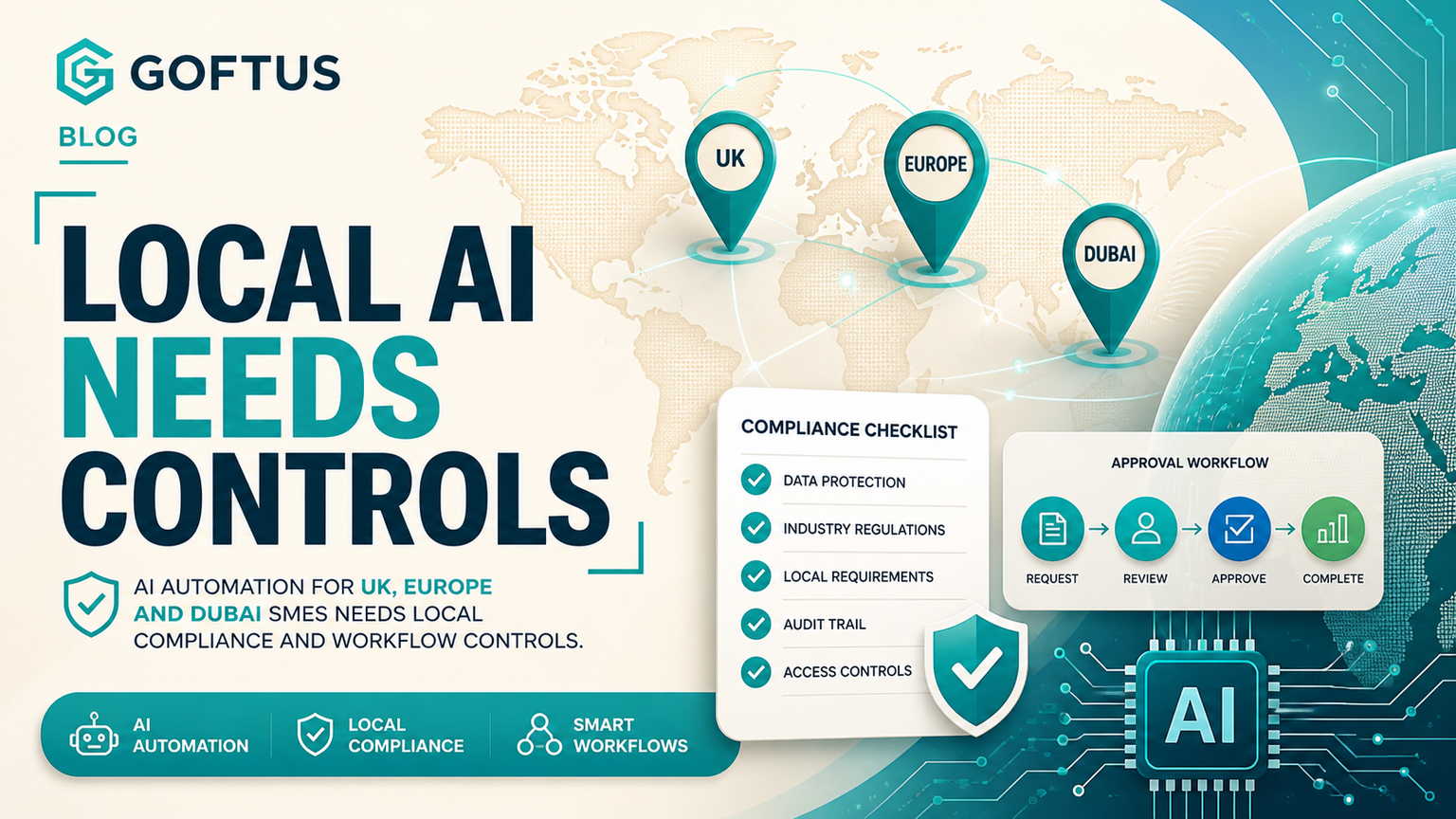
# Quick answer Regional AI adoption is not one-size-fits-all. SMEs need local controls for data, approvals, growth, and customer handoffs. The practical goal is safer throughput: more useful AI work, fewer unreviewed ch
Quick answer
Regional AI adoption is not one-size-fits-all. SMEs need local controls for data, approvals, growth, and customer handoffs. The practical goal is safer throughput: more useful AI work, fewer unreviewed changes, and clearer ROI.
What this means for SMEs
The signal is regional interest, not a direct factual claim.
Used as headline-level regional market context.
The business pain is importing a generic automation pattern into a local operating reality. A UK services firm, a European ecommerce team, and a Dubai growth business may all want faster follow-up, but they face different customer expectations, data practices, approval chains, and reporting needs. AI automation that ignores location can create compliance worry or poor adoption.
For an SME, the first useful move is to write down the real handoff in plain language. Who receives the request? Which system is trusted? What information is allowed to leave the business? Which step changes money, customer promises, access, or public content? Those answers decide whether AI should observe, prepare, recommend, or act. They also prevent the common trap where a tool looks productive in isolation but creates hidden work for sales, support, finance, or operations later.
GOFTUS would localize the workflow before choosing tools. Define what data can be used, where approvals sit, which customer promises require review, what language or region rules matter, and how exceptions reach the right person. Then connect the system to CRM, support, document, reporting, or browser-controlled actions as needed. Internal next step: review GOFTUS /services for workflow design, /agents for controlled AI-agent implementation, and /questions for supporting product Q&A around this topic.
The implementation should include a small proof run before rollout. Start with a narrow queue, log every AI-assisted action, and compare the result against the current manual process. If staff override the system repeatedly, the workflow needs redesign. If approvals pile up, the risk boundary is too broad. If exceptions repeat, the automation needs better inputs or a clearer stop rule.
ROI comes from making local teams faster without creating local risk. Track response speed, qualified follow-up, manual admin removed, approval turnaround, exception rates, and customer handoff quality by region. A reusable workflow can still have local rules.
Competitor lens
Global SaaS platforms are helpful, but they usually offer configuration rather than local operating ownership. GOFTUS positions automation around the SME’s market, team, and review requirements, then integrates the right tools into that design.
Summary for SMEs
Do not judge AI by the most exciting demo or the loudest Reddit thread. Use those signals to choose where the business needs control. The winning pattern is simple: define the workflow, set the action boundary, approve risky steps, log decisions, and improve the system after real work moves through it.
A practical rollout usually has three phases. First, discovery: capture the messy current process, the tools involved, and the moments where staff already double-check each other. Second, controlled automation: let AI prepare drafts, summaries, classifications, or next-step recommendations while a human confirms anything that changes a customer record, spends money, alters access, or makes a public claim. Third, improvement: review logs every month, remove unnecessary approval steps, and tighten the rules where exceptions keep appearing. This is how SMEs get useful speed without turning AI into an unsupervised operating risk. The same map also gives managers a clear training asset, because every new automation has a named owner, allowed action list, review queue, and evidence trail.
FAQ
How should an SME start? Pick one workflow with visible revenue, support, security, or admin pain. Define the current owner, the system of record, the risky actions, and the approval point before adding AI.
Where does GOFTUS fit? GOFTUS designs and implements the workflow layer: integrations, AI agents, review gates, browser controls, logs, and improvement cycles across /services, /agents, and /questions.
What should be measured? Track cycle time, manual steps removed, approval wait time, exceptions, rework, and customer or staff outcomes. Tool usage alone is not enough.