When AI Breaks the Workflow: The Ford Quality Story Every Automation Buyer Should Read
Reddit is debating reports that Ford had to bring experienced engineers back after an AI-led quality push caused problems. The takeaway for SMEs: automate workflows, not accountability.
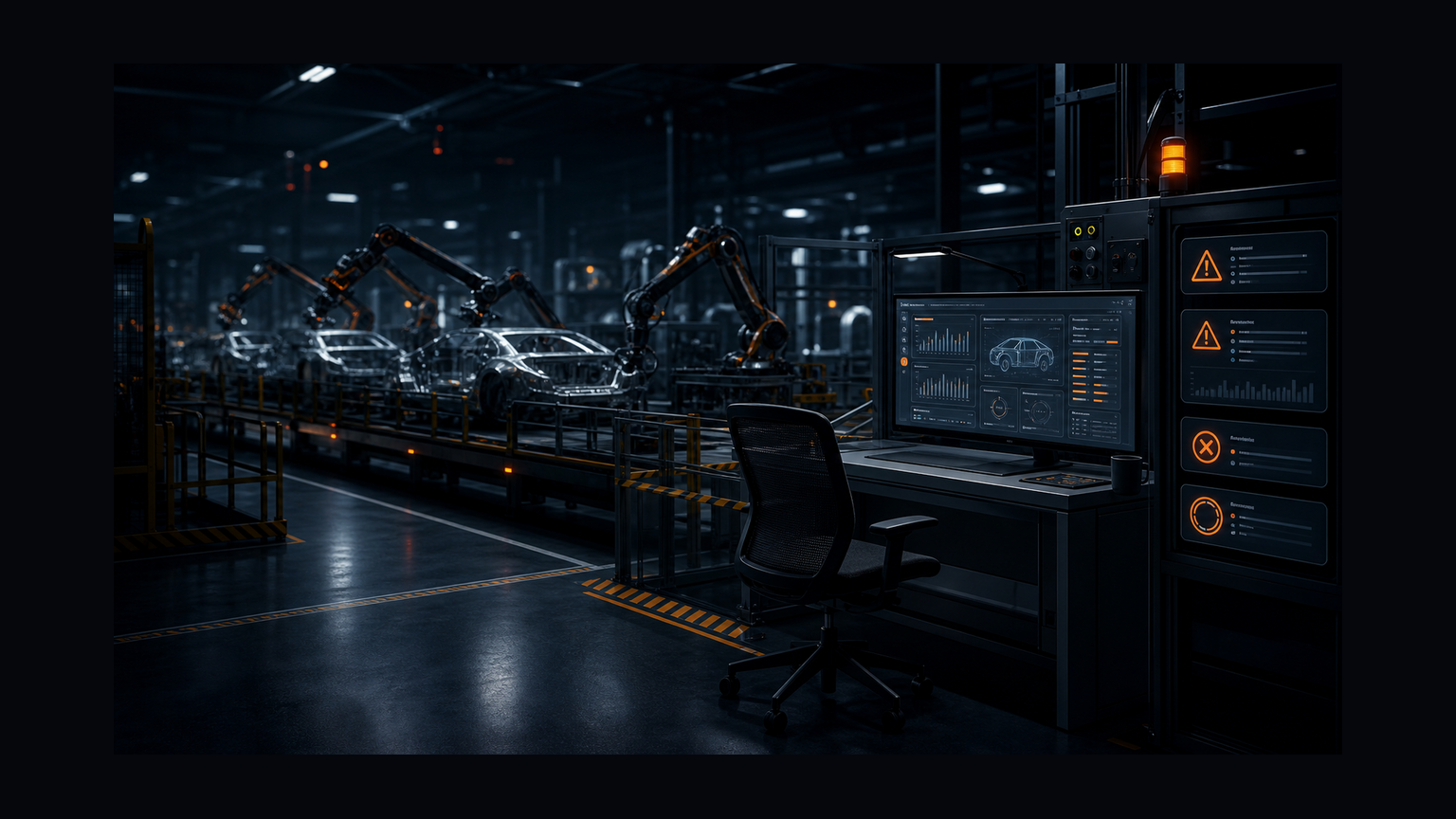
A viral r/technology discussion focused on reports that Ford asked AI to improve quality, then had to bring experienced engineers back to fix what went wrong. Carscoops and MSN carried similar coverage around the same story. Whether every detail of the corporate decision is debated or not, the operating lesson is useful for every business buying AI automation: AI can accelerate a process, but it cannot own accountability.
What happened
The story resonated because it fits a pattern many operators recognise. Leaders are told AI will reduce cost, improve speed, and remove bottlenecks. Then the workflow becomes harder to understand. Problems appear downstream. The people who knew the edge cases have already been moved away.
That is not an AI failure alone. It is a workflow design failure.
Why the story matters beyond factories
Most SMEs are not building cars. But they are building quote workflows, support workflows, lead handling workflows, invoice workflows, onboarding workflows, and reporting workflows. The same risk applies.
If AI changes decisions without clear checks, the business can ship errors faster. If experienced people are removed too early, nobody knows which exceptions matter.
The controversial part
AI vendors often sell automation as replacement. Operators should buy it as leverage. Replacement thinking asks: how many people can we remove? Leverage thinking asks: where can we remove repetitive work while keeping judgement, accountability, and customer trust?
The second question creates durable automation. The first often creates a hidden rework bill.
Hajikreena’s view
Every serious automation needs a crash-proofing layer. That means logs, approvals, rollback paths, exception queues, performance monitoring, and clear ownership.
If a workflow touches revenue, customers, compliance, safety, or brand trust, AI should not be allowed to silently make irreversible changes. It should recommend, draft, route, summarise, and flag. Human oversight should remain where the cost of failure is high.
What SMEs can learn
Before automating, document the current workflow. Identify the boring exceptions. Ask senior people what they check instinctively. Turn those checks into rules, alerts, or review queues.
Then automate in phases. Start with low-risk drafting and classification. Add approvals. Measure rework. Only then allow higher autonomy.
The practical test
Ask one question before deploying any AI workflow: if this goes wrong, how will we know, who will fix it, and can we reverse it?
If the answer is unclear, you do not have automation yet. You have a faster failure path.
GOFTUS builds AI systems with the boring safeguards included, because in real businesses the boring parts are where trust is won.
Sources and signal
Reddit discussion from r/technology; cross-checked with Carscoops and MSN coverage on Ford rehiring experienced engineers after AI quality issues.
Quick answer
AI breaks workflows when companies automate decisions before mapping exceptions, ownership, quality checks, and rollback paths. SMEs should automate in phases: first drafting and routing, then monitored recommendations, then limited autonomy only where failure is low-risk and reversible.
What is crash-proof AI automation?
Crash-proof AI automation is an automation design that includes logs, alerts, human approval for high-risk steps, exception queues, rollback plans, and clear ownership. It assumes AI can fail and makes sure the business can detect, contain, and fix failures quickly.
Summery for SMEs
| Question | Direct answer |
|---|---|
| Why do AI workflows fail? | They fail when speed is added without accountability, edge-case handling, or quality checks. |
| Should AI make irreversible business decisions? | Not unless the task is low-risk, monitored, and reversible. |
| What should be automated first? | Drafting, classification, routing, summarisation, reminders, and internal reporting. |
| What needs human approval? | Revenue-impacting, customer-facing, compliance, safety, legal, and brand-sensitive decisions. |
FAQ
What is the safest way to introduce AI automation?
The safest way is to start with low-risk workflow support such as drafting, triage, summaries, and reminders, then add review gates and monitoring before allowing higher autonomy.
Why does human oversight still matter in AI workflows?
Human oversight matters because experienced staff understand exceptions, customer context, accountability, and the cost of mistakes better than a generic automation layer.
How can SMEs know if an AI workflow is ready?
An AI workflow is ready when the team knows how failures are detected, who owns fixes, what can be reversed, and which steps require approval before reaching customers.