Robot sprint records still need reliability workflows
Robot speed is only one signal. SMEs need task limits, stop rules, recovery paths, human review and logs before trusting humanoid automation.
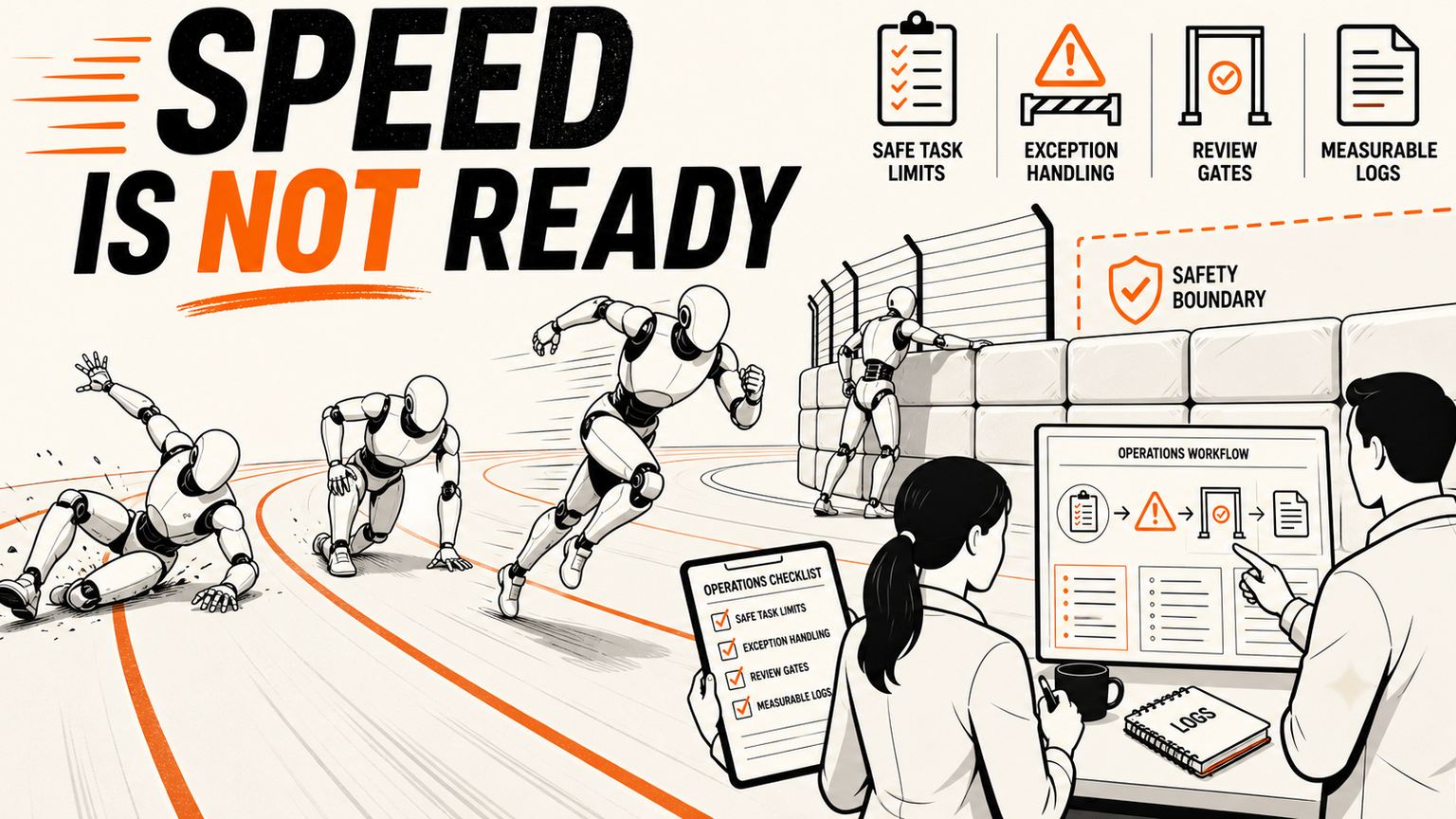
# Quick answer Robot sprint records make great headlines, but speed is not the same as operational reliability. The Beijing humanoid robot games turned races, football, boxing and other events into a public stress test.
Quick answer
Robot sprint records make great headlines, but speed is not the same as operational reliability. The Beijing humanoid robot games turned races, football, boxing and other events into a public stress test. That matters because businesses do not only need a robot to move fast. They need it to stop safely, recover from errors, respect boundaries, pass risky steps to a person, and leave evidence behind.
The GOFTUS angle is practical: treat humanoid robot speed as one metric inside a controlled workflow. A sprint can show actuator progress, balance and coordination. It does not answer whether a robot can handle a blocked aisle, a confused customer, a damaged package, a wet floor, a changed instruction, or a system outage. Reliability comes from the workflow around the machine.
What this means for SMEs
SMEs often buy technology after seeing the best-case version of it. With humanoid robots, that temptation will grow because the demos are physical, memorable and easy to share. A robot that beats a human sprint benchmark or completes a sports task can make automation feel closer than it is. The correct response is not cynicism. It is a better test plan.
Start with the difference between performance and readiness. Performance asks whether the robot can do an action under defined conditions. Readiness asks whether the business can run the action safely when conditions change. A sprint lane is marked, separated and supervised. A workplace has people crossing paths, stock moving, sensors getting dirty, power interruptions, incomplete data, customer promises, insurance constraints and tasks that change midstream.
That is why the first reliability layer is task design. The company should write exactly what the robot is allowed to attempt and what it must never attempt. The second layer is sensing and confirmation. If the robot is not confident about the person, object, route, instruction or environment, it should prepare a recommendation or pause rather than act. The third layer is approval. Human review should sit before any action that affects a customer, a worker, a record, a shipment, a payment, a building access point, or a public response.
The fourth layer is recovery. Every automation project needs a boring answer to the question, "what happens next if this fails." A robot that stops in a safe zone, opens a ticket, alerts a supervisor and hands the job to a person is far more useful than a robot that continues because the demo path expected success. This is the same reason software AI agents need browser controls, CRM approval gates, document review and support handoff logs. Autonomy without recovery is not efficiency. It is hidden risk.
GOFTUS would help an SME translate robot headlines into a reliability scorecard. The scorecard should track task success, human interventions, exceptions, near misses, unclear inputs, fallback use, time saved, time lost, customer impact and review outcomes. Once those measures exist, the business can expand carefully. Without them, a fast robot can still create slow operations.
Competitor lens
Many robotics platforms will show device telemetry, route planning or fleet status. Many automation tools will show task completion. Those are valuable views, but they do not automatically connect the robot to the business workflow. A consultant might recommend a pilot, and a SaaS tool might display uptime, but the SME still needs ownership of approvals, exceptions, fallbacks and evidence.
GOFTUS treats reliability as a workflow-control problem. The robot's vendor can provide capability. The business still needs operating lanes: observe, prepare, approve, act and review. Those lanes should connect to support tickets, CRM notes, documents, browser actions, team alerts and management reports. That is how a flashy record becomes useful work.
Summery for SMEs
Speed attracts attention, but reliability decides whether humanoid robotics can help a business. The robot games are a public signal that movement and coordination are improving. They are not a guarantee that robots can run unsupervised inside real operations. SMEs should ask for task boundaries, confidence checks, approval gates, stop rules, fallback routes and logs before trusting any physical automation with customer or operational impact.
FAQ
Should SMEs ignore robot sprint records?
No. They are useful signals of technical progress. They should be placed inside a broader readiness review that includes safety, exceptions, recovery and measurable outcomes.
What is the biggest workflow risk?
The biggest risk is letting a robot act when the environment, instruction or customer impact is unclear. The safer path is to pause, escalate and log.
How does this connect to AI agents?
Humanoid robots and AI agents both need boundaries. If either can act in a system, website, support queue, document or physical space, the business needs approval gates and fallback workflows.
Source notes
Google News RSS for World Humanoid Robot Games surfaced The Atlantic scenes coverage, BBC coverage of robot boxing, football and sprinting, DW coverage of the robot race, and Nikkei context on robot supply chains. This run used RSS headlines and links as source discovery where direct publisher pages were blocked or inconsistent.
Google News RSS for humanoid robot Olympics surfaced New York Times, Gizmodo, Al Jazeera, Business Insider and Mashable links about sprint records, robot failures and the Beijing games. The article treats those as news signals, not proof of workplace deployment.
Google News RSS for Beijing humanoid robot games surfaced Tech Xplore, BBC, DW and South China Morning Post links about sprinting, tennis, football and records at the games.
Google News RSS for humanoid robot reliability surfaced Robot Report, MotorTrend, Devdiscourse and analyst-warning headlines about dexterity, industrial readiness and hype versus reality.
Google News RSS for China robotics strategy surfaced Reuters, Yahoo, Investing.com and diginomica links about Chinese robot makers trying to convert humanoid hype into useful work and the broader strategic showcase.