OpenAI workflow automation needs cost controls before teams switch plans
OpenAI workflow automation works better when SMEs set spend owners, approval gates, fallback routes, and review logs before plans change.
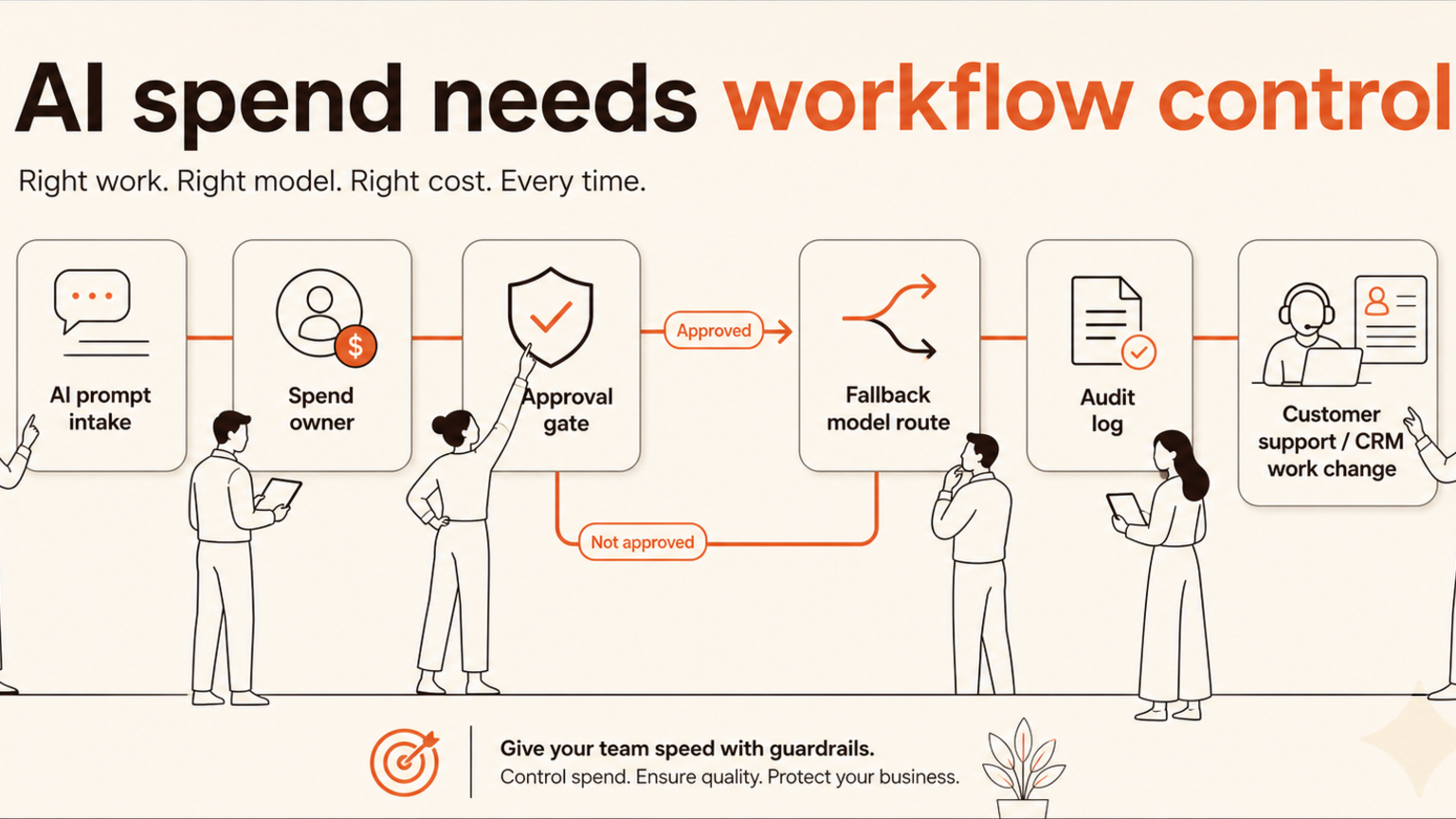
# Quick answer OpenAI workflow automation should not start with a plan upgrade, a model switch, or a scramble to buy more seats. It should start with cost controls around the workflows that matter. The latest GOFTUS dail
Quick answer
OpenAI workflow automation should not start with a plan upgrade, a model switch, or a scramble to buy more seats. It should start with cost controls around the workflows that matter. The latest GOFTUS daily SEO run ranked `openai` at 96 and recommended OpenAI workflow automation with approval and cost controls for SMEs. That makes the buyer problem clear: teams want the productivity lift from OpenAI tools, but they also need owners, spending rules, fallback routes, and review logs before AI touches support, sales, documents, reporting, or customer follow-up.
The social signal is pricing and capacity anxiety. GOFTUS Reddit keyword intelligence captured a 100 score r/OpenAI discussion about a new business plan and why usage limits may push teams toward higher tiers. It also captured r/Anthropic usage-limit complaints and a Financial Times headline, via Google News RSS, about cheaper tools competing with Anthropic's best model. These are social and headline-level signals, not verified financial advice. They matter because SMEs are now choosing AI plans under pressure, often before they have mapped which workflows deserve premium model capacity.
What this means for SMEs
For a small business, the risk is not only that an AI tool costs more. The bigger risk is that nobody can explain which customer journey, employee task, or revenue process the spend protects. A support manager may want OpenAI for faster replies. A sales lead may want it for proposal drafts. A founder may want it for research, strategy, and reporting. Each use case can be valid, but if all of them run through the same unmanaged account, the bill becomes a mystery and the workflow becomes harder to improve.
GOFTUS would treat OpenAI workflow automation as an operating system for decisions, not a generic subscription. The first layer is intake: what trigger starts the AI work, what source data is allowed, and which customer or internal outcome is expected. The second layer is routing: which tasks can use a cheaper default model, which tasks require stronger reasoning, and which tasks should wait for a human. The third layer is approval: what can be drafted automatically, what can be suggested only, and what can change a CRM, support ticket, invoice, document, or browser session. The fourth layer is evidence: every prompt class, decision, exception, approval, fallback, and result should be logged enough for a manager to review.
That workflow-first approach also helps when pricing changes. If a vendor changes limits or introduces a new business tier, the company does not need a panic meeting. It can look at actual workflow logs. Which automations saved owner time? Which drafts still needed heavy editing? Which support responses reduced repeat questions? Which reporting jobs failed or needed rework? Which actions created risk? The spend decision becomes tied to business outcomes instead of fear of missing out.
Summery for SMEs
OpenAI workflow automation should have a budget owner before it has broad rollout. Start with one or two workflows where time saved or error reduction can be measured. For each workflow, define the approved data sources, the allowed AI tasks, the human review point, the action boundary, and the cost lane. A simple green lane can cover low-risk drafts and summarization. An amber lane can cover customer-facing content, CRM updates, finance notes, or operational reports that need approval. A red lane can block payments, account changes, contract terms, legal claims, medical advice, security changes, or unsupervised browser actions.
This is where GOFTUS differs from buying another SaaS tool or hiring a consultant to connect a few automations. SaaS platforms can be useful. Consultants can help configure them. The durable value comes from owning the workflow design, integration, monitoring, review, and monthly improvement. GOFTUS builds the route from trigger to decision to approved action so the business can change models or pricing tiers without rebuilding the whole operating process.
Competitor lens
Most AI tools sell capacity, features, seats, or model access. That is useful, but it does not answer the operational question: who decides when AI can act, and who reviews whether the action helped? Many automation consultants sell quick n8n, Zapier, Make, or API builds. Those can also be useful, but a fast connector can spread cost and risk if it is not tied to a workflow owner.
A competitor-aware SME should ask five questions before switching OpenAI plans. First, which workflows justify premium model spend? Second, which workflows can run through cheaper or fallback routes? Third, which customer-facing outputs require approval before publishing or sending? Fourth, which browser, CRM, support, document, or reporting actions must never happen without a human checkpoint? Fifth, what log will show whether the workflow improved after thirty days? If a vendor or consultant cannot answer those questions, the business is still buying activity instead of control.
FAQ
Should SMEs upgrade OpenAI plans before building workflow controls?
Usually no. Upgrade only after mapping the tasks, owners, risk level, and expected business outcome. A plan can unlock capacity, but it cannot decide which work deserves that capacity.
What should OpenAI workflow automation control first?
Start with customer-facing drafts, CRM updates, support replies, reports, and documents. These areas create visible business impact and visible risk, so approvals and logs matter.
How does GOFTUS help?
GOFTUS designs and operates AI workflows with intake rules, approval gates, fallback routes, logs, and review cycles. See /services for the broader automation approach.
Source notes
Daily SEO input: GOFTUS daily SEO FAQ run for 2026-08-25 ranked `openai` at 96 and recommended OpenAI workflow automation with approval and cost controls for SMEs.
Social signal: GOFTUS Reddit keyword intelligence for 2026-08-26 captured a 100 score r/OpenAI pricing-plan discussion and related Anthropic usage-limit anxiety. Reddit is used as operator sentiment, not as verified pricing evidence.
News cross-check: Google News RSS results for AI image and AI content workflow topics showed current coverage from Dynamic Business, Hootsuite, Adobe for Business, Shopify, and Snowflake on AI content tools, governance, and operational control. The Anthropic pricing and cheaper-tools angle was also headline-level cross-checked through the intelligence file's Google News RSS references to Financial Times and GIGAZINE.