FAQ Automation Is the SME Support Wedge: From Repeated Answers to Workflow Control
FAQ automation helps SMEs answer repeat questions, capture leads, route complex issues, and turn support demand into workflow improvement across teams.
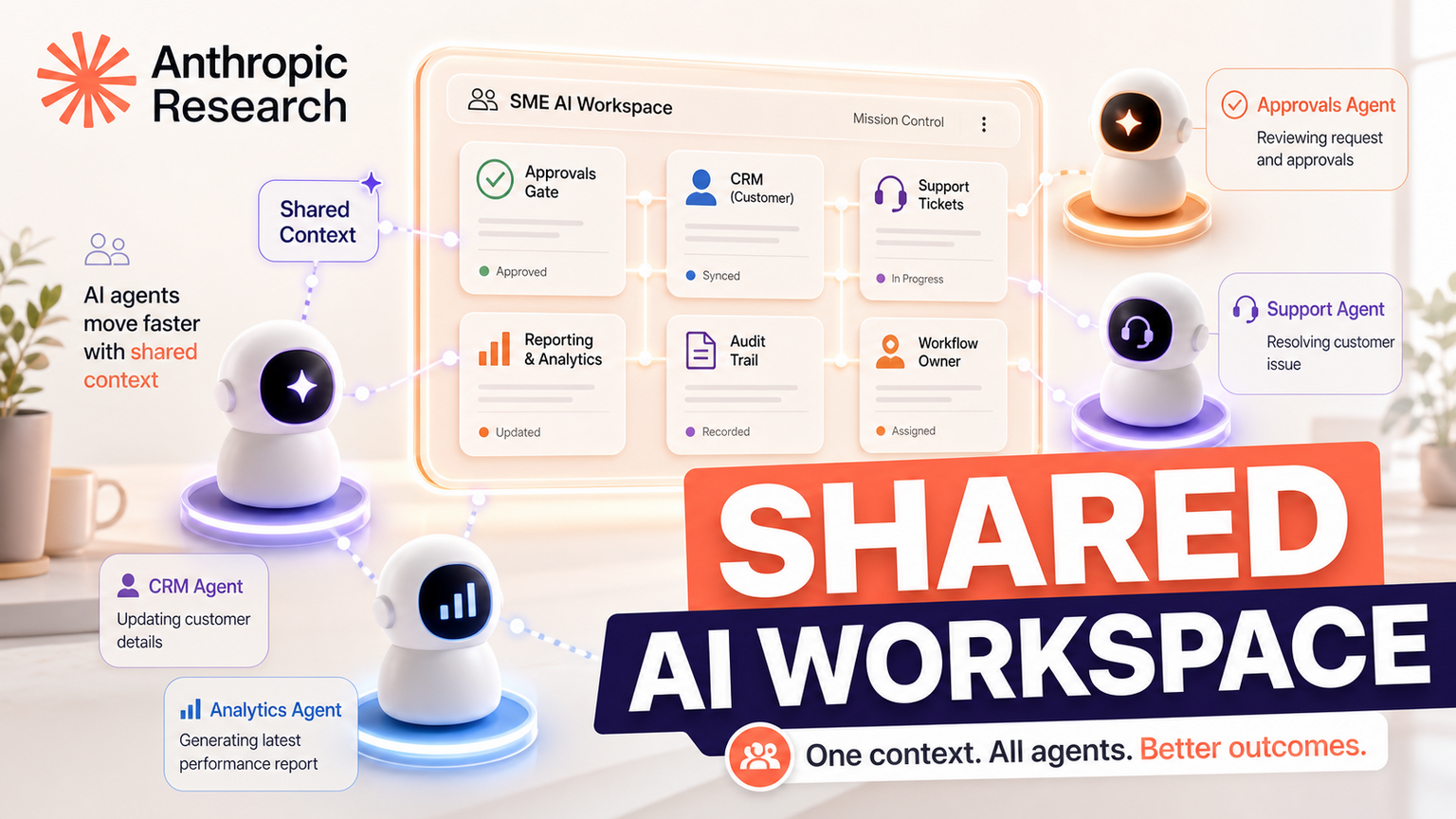
# Quick answer FAQ automation is the simplest AI wedge for many UK, US, and European SMEs because it starts where customers already create drag: repeated questions on the website, WhatsApp, email, chat, and contact form
Quick answer
FAQ automation is the simplest AI wedge for many UK, US, and European SMEs because it starts where customers already create drag: repeated questions on the website, WhatsApp, email, chat, and contact forms. The goal is not to hide humans behind a bot. The goal is to answer the questions that are safe and repetitive, capture lead details when intent is clear, route complex issues to the right person, and learn from the questions the system could not answer.
Bharatvaj's view: FAQ automation should be treated as a workflow system, not as a chatbot widget. A website FAQ chatbot can answer delivery, pricing, booking, onboarding, refund, location, documentation, and service questions. But the real business value appears when those answers connect to CRM notes, support triage, handoff rules, unanswered-question reporting, and a monthly improvement loop.
That is why today's run is the daily FAQ automation cluster post. GOFTUS is seeing search demand around "faq automation", and a fresh r/smallbusiness signal shows the same pain: an owner asking when WhatsApp support volume needs a proper tool. The message is practical: repeated customer answers are an operations problem.
For SMEs ready to move beyond a static help page, GOFTUS offers an FAQ automation service that turns repeated questions into automated customer answers, lead capture, escalation, and measurable support workflows.
What this means for SMEs
Most small teams start with questions scattered across WhatsApp, inboxes, web forms, Instagram DMs, and phone calls. The owner or office manager answers the same things repeatedly, then loses time copying details into another tool.
FAQ automation works best when it is deliberately narrow at the start. The first version should cover questions that are high frequency, low risk, and easy to verify. Examples include opening hours, service areas, delivery times, appointment steps, document requirements, pricing ranges, and how to get a quote.
The next layer is routing. If a customer asks something simple, the website FAQ chatbot can answer immediately. If the customer asks about pricing, the workflow can collect email, company size, urgency, and service need before creating a CRM lead. If the issue is sensitive or unusual, it can hand the conversation to a human with a short summary. If the bot cannot answer, the unanswered question becomes a content and service signal rather than a lost customer.
That last part is often missed. FAQ automation for small business is not finished when the chatbot goes live. The team should review what customers asked, what the bot answered well, what it escalated, and which answers need updating.
GOFTUS builds around that loop. We connect the customer-facing answer layer to the operational workflow behind it: CRM updates, support queues, email follow-up, owner alerts, knowledge-base improvements, and reporting. That is how automated customer answers become a business system rather than another plugin.
Competitor lens
The market is crowded, and many options can be useful. SaaS tools such as Zapier, n8n, Relevance AI, Lindy, Gumloop, Bardeen, Make, and Stack AI can automate pieces of the process. Larger consulting and development firms in the UK, US, and Europe, including Faculty AI, Deeper Insights, Waracle, Brainpool AI, LeewayHertz, Markovate, SoluLab, BairesDev, Addepto, STX Next, Netguru, and 10Clouds, can support broader AI and software programmes.
The gap for SMEs is ownership of the workflow around the tool. Someone still has to decide which questions are safe, which data should be captured, who gets escalations, how failures are reviewed, and when answers are updated.
Tools automate tasks. GOFTUS automates the workflow around the task.
For FAQ automation, that means we design the support path around the bot. It answers approved questions, sends context to CRM, routes priorities, shows unanswered-question patterns, and improves over time.
What SMEs should do next
Start with a simple audit before buying or building anything. Pull the last 50 to 100 customer questions from email, website forms, WhatsApp, live chat, and sales calls. Group them into four buckets:
1. Safe to answer automatically.
2. Needs a lead capture step before answering.
3. Needs human review or approval.
4. Should never be answered by automation without a person.
Then choose one customer journey. A local service business might start with "new enquiry to booked call". An ecommerce business might start with "delivery, returns, and order status". The point is one measurable support workflow, not a giant knowledge base nobody maintains.
A good first GOFTUS FAQ automation build usually includes:
approved answers sourced from your website, service pages, and internal notes
a website FAQ chatbot or guided question interface
lead capture for high-intent questions
escalation rules for complex or sensitive cases
CRM or spreadsheet logging
weekly unanswered-question review
monthly answer improvement
If you already use n8n, Make, Zapier, HubSpot, Pipedrive, Airtable, Google Sheets, Zendesk, or a shared inbox, the automation can often connect to what you already have.
For a practical starting point, see the GOFTUS AI FAQ automation service or book a workflow diagnostic through /contact. The best first project is usually small enough to launch, visible enough to measure, and useful enough that your team actually wants to keep it.
Summery for SMEs
FAQ automation is a strong entry wedge into wider workflow automation because it starts with a visible pain: repeated customer questions. The smart version is not a generic chatbot. It is a controlled support workflow that answers approved questions, captures leads, routes complex issues, logs unanswered questions, and improves the knowledge base.
For SMEs, the business case is practical. Faster replies can improve customer experience. Better routing protects staff time. Unanswered-question reports show unclear pages, products, or service details. Once the FAQ workflow works, the same structure can expand into CRM follow-up, support triage, reporting automation, document processing, and internal knowledge assistants.
FAQ
What is FAQ automation for small business?
FAQ automation for small business uses approved company information to answer repeated customer questions automatically, usually through a website FAQ chatbot, chat flow, or support form. The best version also captures leads, routes complex questions, and logs unanswered questions. GOFTUS treats it as a workflow automation project, not just a bot install. See /services#faq-automation.
How is AI FAQ automation different from a normal chatbot?
A normal chatbot may simply respond to typed questions. AI FAQ automation is more controlled and operational. It uses approved answers, decides when to capture details, knows when to escalate, records unanswered questions, and helps the business improve its support content. The aim is reliable automated customer answers with human review.
Can a website FAQ chatbot capture leads and route support tickets?
Yes, if it is designed as a workflow. A website FAQ chatbot can ask for contact details, service need, urgency, location, or order information, then send that context to CRM, email, a spreadsheet, or a support queue. GOFTUS designs these handoffs so simple questions are answered quickly and complex questions reach the right person.
Source notes
RSS access was used as headline-level cross-checking.