China’s Humanoid Robot Games Show Why Robotics Is Becoming an Operations Strategy
China’s humanoid robot games are more than spectacle. They show robotics moving toward infrastructure, competition and operational strategy.
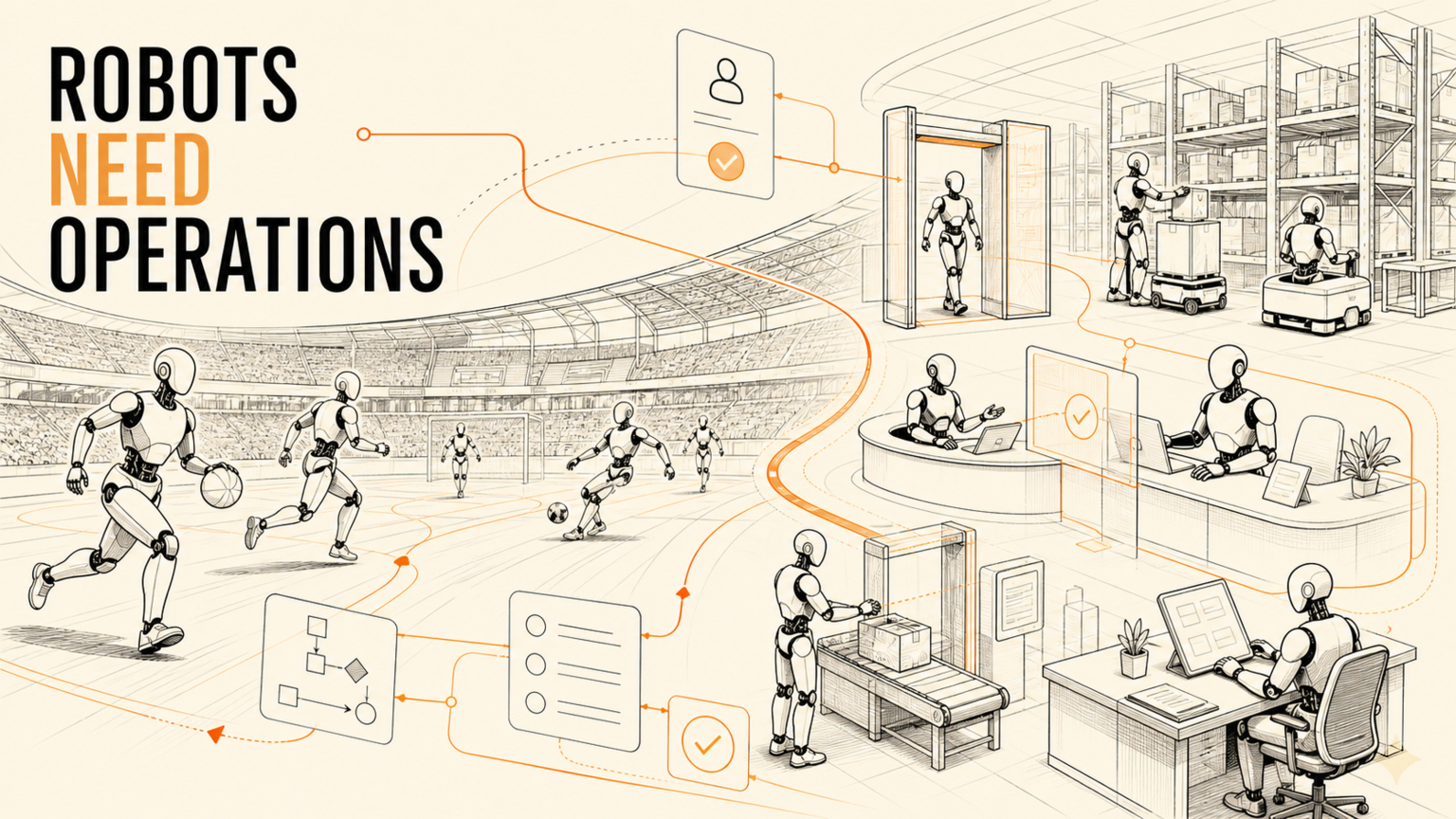
# Quick answer China's humanoid robot games should not be dismissed as a novelty event. The sports format made the story easy to understand, but the signal is larger. Reuters described the wider arc as a shift from scie
Quick answer
China's humanoid robot games should not be dismissed as a novelty event. The sports format made the story easy to understand, but the signal is larger. Reuters described the wider arc as a shift from science fair to strategic showcase. DW framed humanoid robot competition as a new frontier in technology competition. That is the more important business story.
What this means for SMEs
Robotics is moving from laboratory curiosity into public performance, investor narrative, industrial ambition and policy signalling. Sprinting robots, soccer matches and boxing bouts are not direct business use cases by themselves. They are a way to show progress in mobility, balance, perception, control systems and hardware integration. Those capabilities will matter when robots move into factories, warehouses, care environments, facilities and service operations.
The mistake for businesses is to treat the event as either hype or science fiction. It is neither. It is a signal that physical AI will become part of the automation conversation. The right response is not panic buying. The right response is process readiness.
Every wave of automation follows a familiar pattern. First, the demo looks magical. Then businesses try to apply it to messy work. Then the missing workflow layer becomes obvious. The same thing happened with chatbots, AI writing tools, image generation, browser agents and CRM automation. Humanoid robots will follow the same path, but with higher stakes because physical actions carry safety, space and equipment risks.
For SMEs, the opportunity is not to copy national robotics strategy. The opportunity is to learn from it. If large technology ecosystems are using robot games to test and display progress, smaller businesses should use the moment to ask whether their operations are machine readable enough for automation. Are tasks documented? Are exceptions named? Are approval points clear? Are handoffs visible? Are logs useful?
Summery for SMEs
SMEs should read the humanoid robot Olympics as an operations signal. The events show capability, but business value comes from repeatable workflows, named owners, review queues, fallbacks and logs. Before buying or trusting any robot or AI agent, map the task, define the exception path and decide what must stay under human review.
Competitor lens
Most coverage focuses on the spectacle: speed, boxing, soccer and record headlines. Many technology vendors will translate that into a simple message that robots are almost ready for work. That misses the hard part. The competitive advantage is not only the robot. It is the workflow system around the robot. Businesses that build clean task maps, approval points and operational logs will be able to adopt new AI tools with less risk.
A humanoid robot in a workplace will need more than balance. It will need job boundaries. It will need a clear source of truth. It will need a safe way to stop. It will need a human escalation path. It will need permission design, maintenance ownership and clear incident reporting. Those are workflow questions before they are robotics questions.
This is where GOFTUS connects the robot games to business automation. We do not see robotics as separate from workflow design. A physical robot, a browser agent and an AI support assistant all need the same operating discipline. They need to know what they can do, what they cannot do, when to ask for help and how to prove what happened.
The Beijing event also shows why countries and companies are competing in embodied AI. Robots are visible. They make progress tangible. But public visibility can hide operational complexity. A good robot demo tells you the machine can act. A good business system tells you the company can absorb that action safely.
For companies watching from the outside, the practical next step is not to wait for humanoid robots to become cheap. The practical step is to audit the workflows that would benefit from automation today. If the process is unclear for a human, it will be risky for AI. If the exception path is invisible, automation will magnify the problem.
The humanoid robot Olympics show that robotics is becoming an operations strategy. The companies that prepare their workflows now will be better placed when the machines become ready.
This matters because robotics progress will arrive unevenly. Some tasks will become realistic before others, and vendor demos will not always reveal the messy middle. Businesses with clear operating procedures will be able to test new tools safely while competitors are still arguing about whether the technology is hype or inevitability.
FAQ
What should a business take from the humanoid robot games? Treat them as an early signal that embodied AI is moving toward real operations, but do not confuse demos with deployment readiness.
Should SMEs buy humanoid robots now? Most SMEs should start by fixing workflow clarity, exception handling and automation governance before considering physical robots.
What is the GOFTUS view? The workflow around AI is what makes automation reliable. Robots, browser agents, chatbots and document tools all need owners, boundaries, review paths and logs.
Source notes: Reuters reported the practical question as "Robots can outrun humans, but can they plug in a cable?" Reuters also framed China's robot games as moving from science fair to strategic showcase. BBC described robot boxing, football and sprinting at the World Humanoid Games. AP described humanoid robots sprinting, playing soccer and setting records at Beijing games. The Guardian and other outlets highlighted the 100m sprint headlines. Business Insider described padded walls and stretchers around the robot Olympics finish line. DW framed the robot race as a new frontier in technology competition.