ChatGPT workflow automation needs owners before customer work changes
ChatGPT workflow automation for SMEs needs owners, approval gates, logs, and safe handoffs before AI changes customer work.
# Quick answer ChatGPT workflow automation needs owners before customer work changes because the valuable step is no longer just asking ChatGPT for a draft. The latest GOFTUS daily SEO run flagged `chatgpt` at a 100 Tre
Quick answer
ChatGPT workflow automation needs owners before customer work changes because the valuable step is no longer just asking ChatGPT for a draft. The latest GOFTUS daily SEO run flagged `chatgpt` at a 100 Trends score, with a recommended angle around ChatGPT workflow automation for customer support and operations. GOFTUS Reddit intelligence also surfaced a 100 score r/ChatGPT signal where users discussed a possible unannounced GPT 5.6 capability jump. Treat that as social sentiment, not a verified release note: operators notice when AI suddenly feels more capable, and that is exactly when SMEs need clearer workflow rules.
For a small business, the practical answer is simple. Let ChatGPT prepare the work, but make the business own the approval points. ChatGPT can summarize tickets, draft replies, prepare CRM notes, classify requests, compare documents, and suggest next steps. A named person should approve customer promises, price changes, account updates, refunds, data exposure, document edits, and browser submissions. GOFTUS builds those lanes so AI helps the team move faster without quietly becoming the owner of customer operations.
What this means for SMEs
ChatGPT is moving from an individual helper into a workplace tool that can sit inside sales, support, marketing, reporting, admin, and operations. The daily SEO signal matters because buyers are no longer only searching for a chatbot. They are searching for a way to use ChatGPT inside real work without creating hidden risk.
The Reddit signal points to the same operating pressure. When users believe a model has become faster, more factual, or more agentic, the temptation is to give it more responsibility immediately. That can help, but only if the business has already separated preparation from action. A better model still needs approved sources, decision owners, stop rules, and logs. If those controls are missing, the upgrade just makes unmanaged work happen faster.
Google News RSS cross checks showed headline-level coverage for OpenAI items including a ChatGPT small business program and workspace agents in ChatGPT. Direct OpenAI pages returned access restrictions in this run, so those items are used as headline-level source context rather than direct scraped article claims. The reliable business lesson is still clear: workplace AI is moving toward agents and business workflows, while SMEs need a way to decide what those agents are allowed to do.
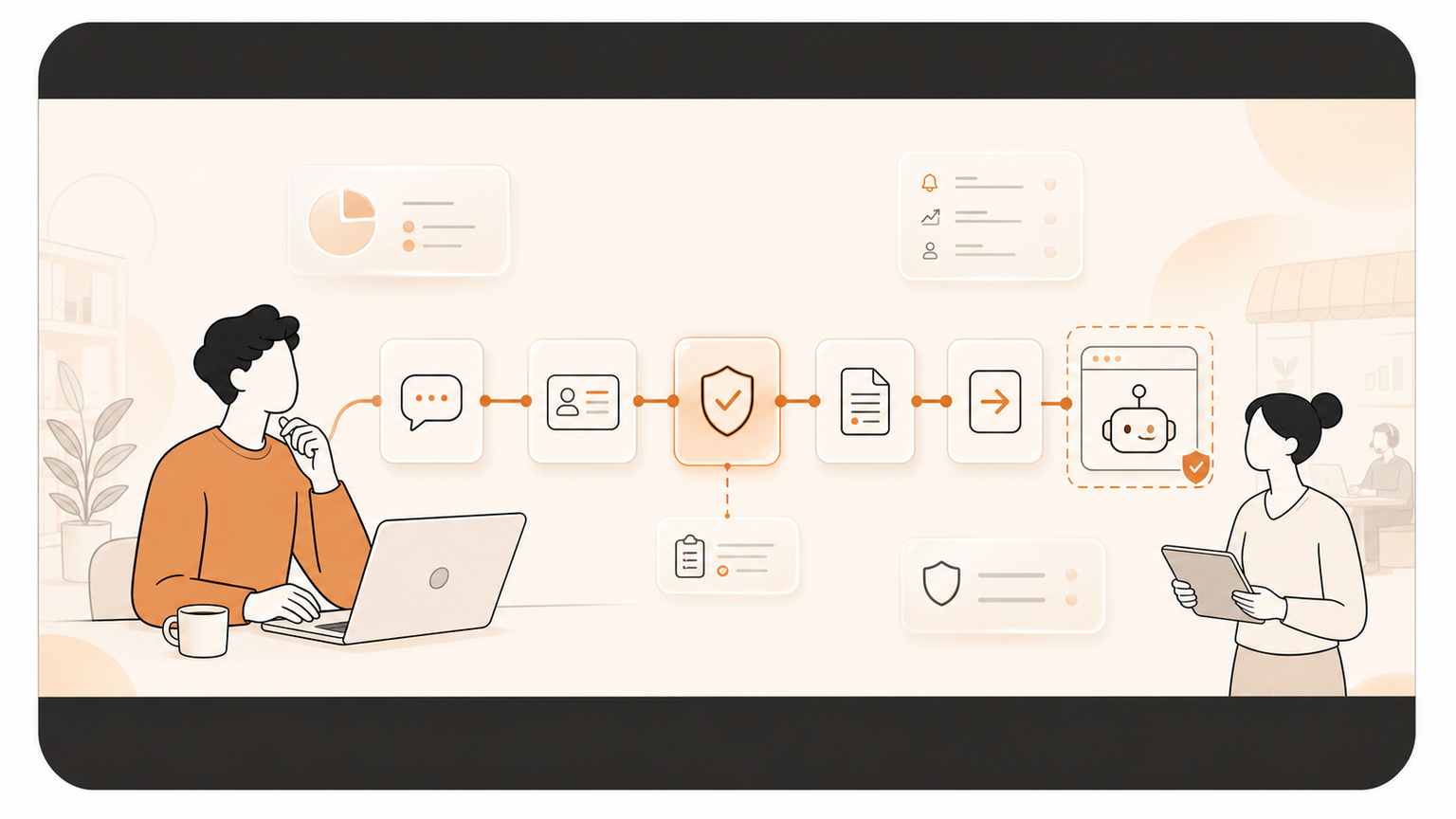
A safe ChatGPT workflow has five lanes. Intake captures the customer, request type, source system, urgency, and allowed data. Preparation lets ChatGPT summarize, draft, classify, and recommend. Review routes risky drafts to the right owner. Action sends, saves, updates, submits, or hands off only after approval. Evidence stores the prompt context, reviewer, final decision, timestamp, and destination system. That evidence matters when a customer asks why something was promised, when a manager audits a support queue, or when a founder wants to know whether AI is actually reducing workload.
Summery for SMEs
Start with one workflow where ChatGPT already appears in the team. Common examples are customer support replies, sales follow up, onboarding checklists, quote preparation, weekly reports, proposal drafts, FAQ updates, and CRM notes. Do not begin by asking how many tools can be connected. Begin by asking what decision the business cannot afford to lose control over.
For customer support, ChatGPT can read the ticket and draft a reply, but a human should approve refunds, account changes, sensitive promises, and escalations. For sales, ChatGPT can summarize a lead and prepare a follow-up, but pricing, discounts, delivery commitments, and contract wording need an owner. For operations, ChatGPT can turn notes into tasks, but the workflow should log who approved the task, where it was sent, and what happens when the task fails.
GOFTUS turns that map into working automation. We connect forms, CRM, support desks, shared documents, browser actions, n8n or Make workflows, Slack or email notifications, approval queues, and reports. The point is not to slow ChatGPT down. The point is to let it prepare more work while the business keeps control of customer impact, records, and public commitments.
Competitor lens
ChatGPT, model vendors, SaaS platforms, and consultants can all be useful. A vendor can provide the model. A SaaS tool can provide a connector or workflow template. A consultant can help with prompts or change management. Those pieces often help teams start, but they do not automatically define who owns each customer-facing action.
GOFTUS focuses on the operating layer around the tool. We define triggers, approved data sources, role permissions, review gates, exception queues, audit logs, browser boundaries, and monthly improvement loops. If a SaaS workflow says a reply is ready, GOFTUS still asks who approved the promise, what source it used, where the record was stored, and what should happen if the customer replies with a complaint. If a consultant writes a prompt, GOFTUS turns that prompt into a repeatable business process.
That contrast matters for SMEs. Buying more AI access is easy. Running a dependable ChatGPT workflow across support, sales, documents, CRM, and operations is harder. The companies that win will not be the ones that let AI act everywhere first. They will be the ones that know exactly where AI may prepare, where a person approves, and where the final action is logged.
FAQ
Should SMEs use ChatGPT for customer support automation?
Yes, but start with assisted workflows. Let ChatGPT summarize tickets, draft replies, classify requests, and prepare follow-up tasks. Keep human approval before refunds, account changes, unusual promises, sensitive data exposure, or messages that could damage customer trust.
What is the first ChatGPT workflow GOFTUS would automate?
Start with one repeated workflow that already causes delay or rework, such as support triage, sales follow up, onboarding notes, or weekly reporting. Map the trigger, source data, draft output, approval owner, final action, and log before adding more tools.
How does this connect to AI agents?
AI agents become useful when they are given boundaries. They can observe and prepare across systems, but approval should come before send, save, submit, refund, cancel, publish, buy, or change actions. That is especially important when browser with AI controls are involved.
Source notes: Primary SEO input came from the GOFTUS daily SEO FAQ run on 2026-08-22, where `chatgpt` scored 100 and the recommended angle was ChatGPT workflow automation for customer support and operations. Social input came from GOFTUS Reddit keyword intelligence on 2026-08-22, including the 100 score r/ChatGPT thread titled "GPT 5.6 Got Massively Upgraded Without an Announcement". That Reddit item is used as operator sentiment, not as proof of an OpenAI release. Google News RSS surfaced headline-level OpenAI results for "Introducing the ChatGPT for small business program" and "Introducing workspace agents in ChatGPT" plus workplace-agent coverage from IT Pro, Opus Research, Reuters, and The Indian Express. Direct OpenAI pages returned 403 during this run, so source claims are limited to headline-level cross checks. Internal GOFTUS links: /services and /agents.