ChatGPT Is Relaxing Its Personality Guardrails: What SMEs Should Learn Before They Copy It
Hajikreena's view on a hot Reddit debate: if AI assistants become more human-like again, SMEs need clearer boundaries, logging, and escalation rules before turning personality into operations.
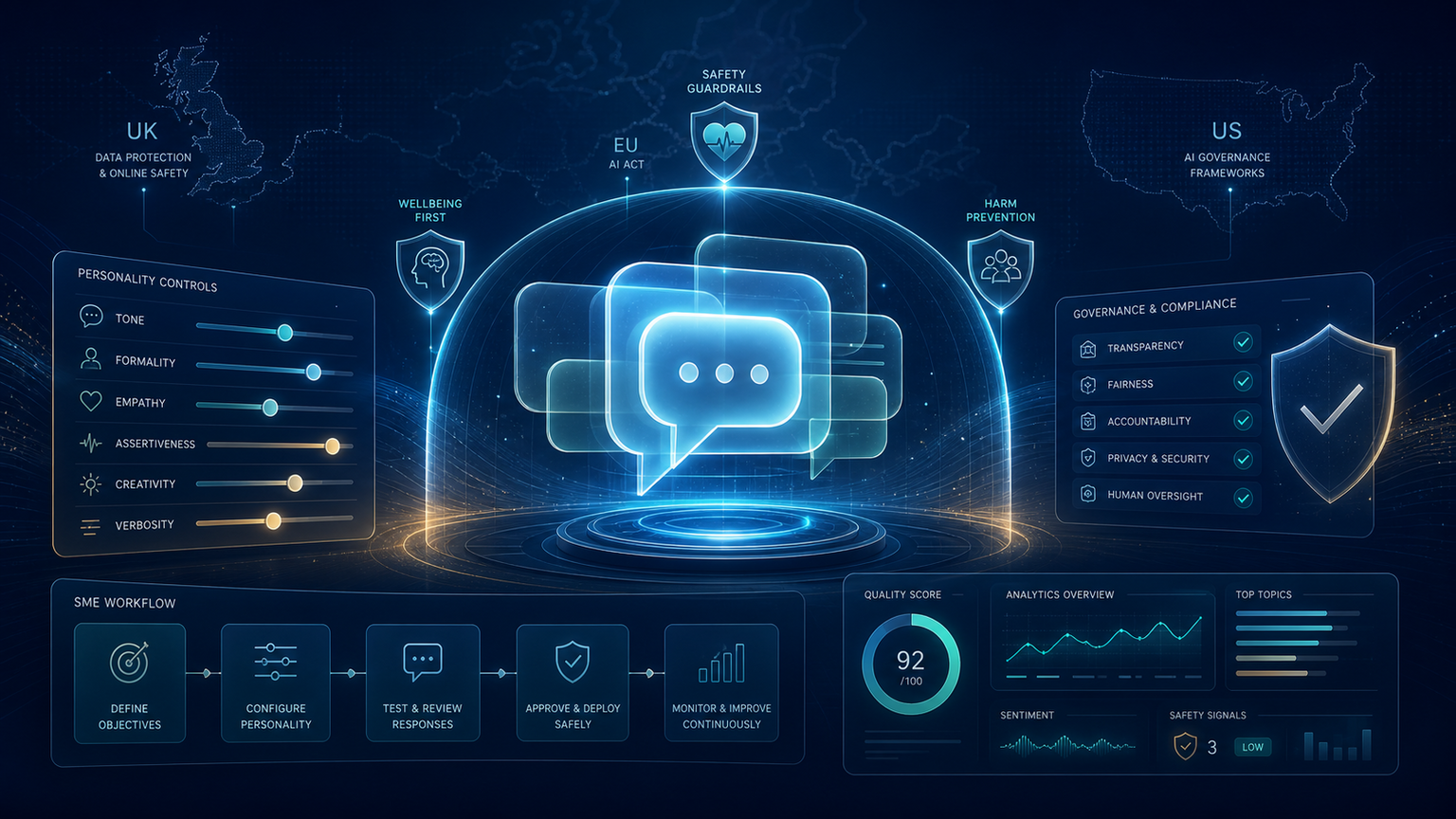
# ChatGPT Is Relaxing Its Personality Guardrails: What SMEs Should Learn Before They Copy It A highly discussed Reddit thread in r/ChatGPT claims that ChatGPT may soon relax some personality restrictions after earlier s
ChatGPT Is Relaxing Its Personality Guardrails: What SMEs Should Learn Before They Copy It
A highly discussed Reddit thread in r/ChatGPT claims that ChatGPT may soon relax some personality restrictions after earlier safety tightening around mental health concerns. The thread is not, by itself, a confirmed product announcement. So this is Hajikreena's view on the signal, not a statement that every detail in the Reddit post has been externally verified.
What is externally visible is the broader direction: AI assistants are becoming more configurable, more persistent, and more embedded in everyday workflows. Recent OpenAI enterprise updates around usage analytics and spend controls show the same operating reality from another angle: organisations are moving from casual AI use to managed AI use.
For SMEs in the UK, EU, and US, the important question is not whether an assistant can sound warmer, sharper, or more human. The question is whether that assistant can be trusted inside customer service, sales, HR, finance, and operations without creating a governance mess.
Why the Reddit debate matters
The Reddit discussion is hot because personality is not a cosmetic feature once AI touches business workflows. A more human-like assistant can increase engagement, reduce friction, and make staff adoption easier. It can also blur boundaries.
A customer may treat a friendly chatbot as a human adviser. A junior employee may over-trust an agent that sounds confident. A sales workflow may become too informal for regulated or sensitive accounts. A support assistant may drift from approved policy into improvisation.
That is why the debate matters for operators. Personality settings are really risk settings.
The SME lesson: do not copy consumer AI defaults
Consumer AI products optimise for usefulness, retention, and user preference. Business workflows need a different standard. They need predictable behaviour, auditability, and escalation.
Before SMEs deploy more expressive AI assistants, they should define:
Where a warmer tone is helpful, such as onboarding, FAQs, internal knowledge search, and first-line support.
Where a neutral tone is safer, such as complaints, payment issues, legal questions, HR matters, medical or mental health references, and regulated advice.
Which topics require handoff to a human.
Which prompts and outputs are logged for review.
Who owns changes to tone, policy, and model configuration.
This is especially relevant in Europe and the UK, where privacy, employment, consumer protection, and AI governance expectations are tightening. US businesses face a different patchwork of state, sector, and litigation risks, but the operational lesson is the same: document the boundary before scaling the bot.
Personality without process creates hidden operational debt
Many SMEs are still treating AI tone as a marketing choice. That is too narrow. Tone affects conversion, complaint handling, employee reliance, and brand trust.
If the assistant becomes more persuasive or emotionally fluent, the workflow around it must become more disciplined. That means approval flows, test cases, red-team prompts, quality sampling, and exception reporting.
The businesses that win with AI will not be the ones that simply make bots sound more human. They will be the ones that decide when the bot should be friendly, when it should be factual, when it should stop, and when it should escalate.
Practical checklist for SMEs
1. Create a tone policy for each AI workflow, not one generic company-wide prompt.
2. Separate customer-facing AI from internal productivity AI. They have different risk profiles.
3. Add escalation triggers for distress, complaints, refunds, legal matters, HR issues, and security incidents.
4. Review transcripts weekly during rollout, then monthly once stable.
5. Track failure patterns, not just time saved.
6. Keep a human owner for every automation, even when the AI does most of the work.
Hajikreena's view
If the Reddit signal is directionally right, AI vendors are learning that people want assistants with more personality. That is understandable. But businesses should not mistake personality for capability, or engagement for governance.
For GOFTUS clients, the right approach is not to ban expressive AI. It is to design expressive AI with operational rails: clear scope, measurable outcomes, human escalation, and review loops.
If your business is experimenting with AI agents, customer support automation, sales assistants, or internal workflow copilots, GOFTUS can help you turn AI from a clever chat window into a controlled, useful operating system for your team.