Best AI tools for SMEs need customer proof before another demo
Best AI tools for SMEs are the ones connected to customer proof, owners, approval gates, and measurable workflow outcomes.
# Quick answer The best AI tools for SMEs are not the tools with the longest feature list. They are the tools that can be connected to a real customer workflow, reviewed by a named owner, measured against an outcome, an
Quick answer
The best AI tools for SMEs are not the tools with the longest feature list. They are the tools that can be connected to a real customer workflow, reviewed by a named owner, measured against an outcome, and improved without creating more hidden work. The latest GOFTUS daily SEO FAQ run on 2026-08-23 made this a priority input: `ai tools` scored 100, `best ai tools` scored 93, and the recommended angle was AI tools with approvals, owners, and ROI controls for SMEs. That is the right topic because small teams are no longer asking whether AI exists. They are asking which AI tool deserves a place in sales, support, marketing, operations, finance, or reporting.
The 2026-08-24 Reddit intelligence supports the same concern. A 100-score r/smallbusiness thread complained about a wave of AI-built websites, AI-looking images, and generic AI copy that customers can spot. Another 100-score r/smallbusiness thread described a founder being criticized for using Canva Pro in a logo workflow. Those threads are social sentiment, not verified market research, but they show the buyer problem clearly. SMEs want useful AI, yet customers still judge the final experience. A tool can be clever in private and damaging in public if nobody checks the handoff.
What this means for SMEs
Choosing the best AI tools should start with the workflow that customers, staff, or managers actually see. A writing assistant might draft replies. An image generator might prepare campaign assets. A chatbot might answer website questions. A CRM assistant might summarize leads. A browser agent might prepare form fields. Each tool sounds useful until the business asks the operating questions: who approved the source data, what is allowed to leave the system, which action needs review, where is the evidence, and how do we know it saved time without lowering trust?
Google News RSS cross-checks for this run surfaced headline-level context around AI tools for entrepreneurs, small-business time savings, AI workflow automation tools, Claude for Small Business, AI collaboration tools, and coverage warning that AI adoption often fails when leadership and execution are missing. Some direct article pages are not reliably accessible in an unattended cron run, so these are used as headline-level context rather than scraped article claims. The common direction is enough: AI tool lists are everywhere, while the execution layer is still the hard part.
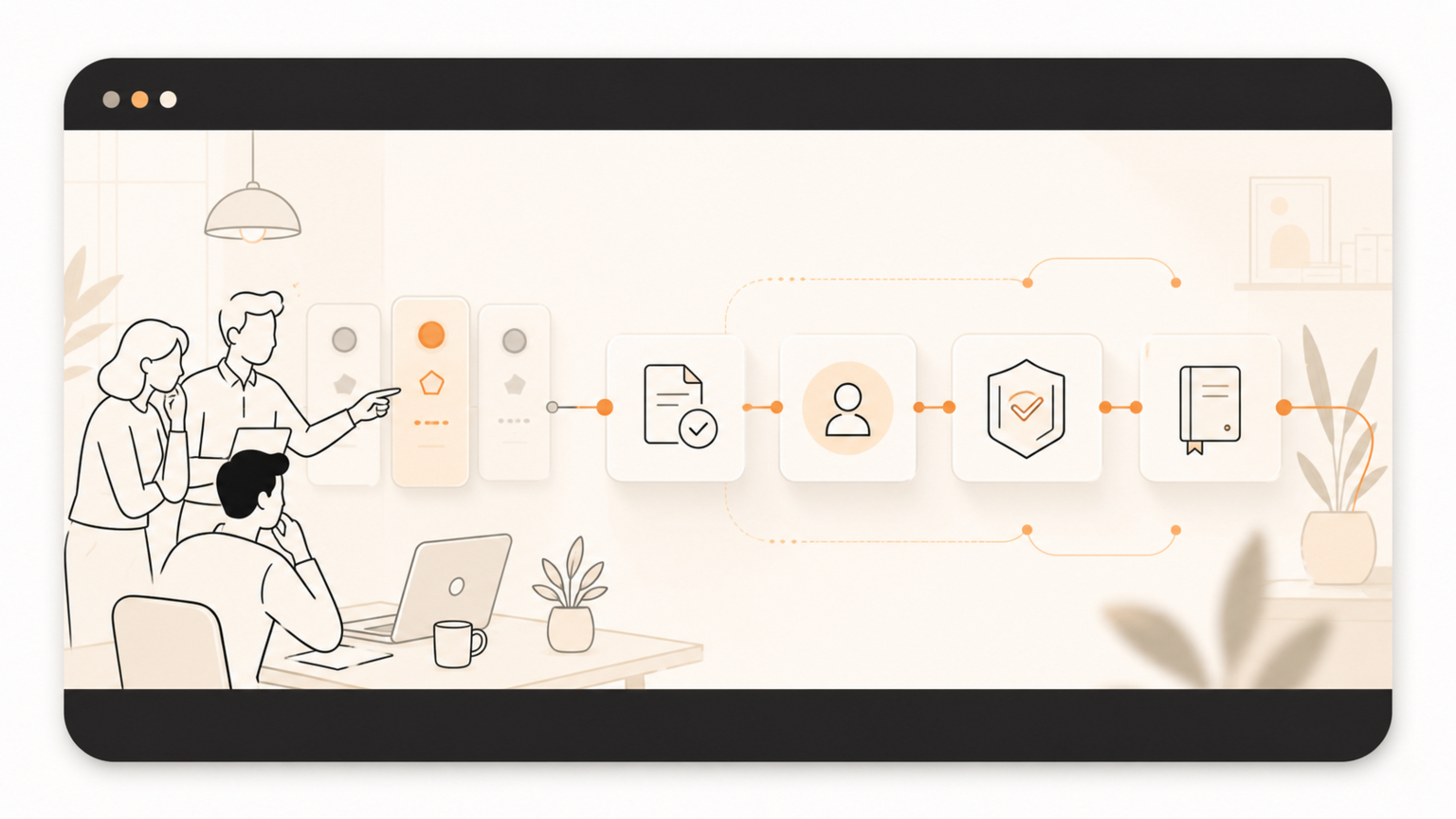
For GOFTUS, that turns tool selection into a five-lane workflow decision. First, define the customer or internal moment the tool will affect. Second, list the approved sources the tool may use. Third, decide what the tool can prepare versus what it can change. Fourth, place approval gates around public, financial, legal, customer-record, browser, or campaign actions. Fifth, log the outcome so the workflow improves next month.
This keeps the best AI tools from becoming another disconnected subscription. A useful SME tool should remove a bottleneck, not add a new review burden. It should show where humans are still needed, not hide the handoff. It should connect with CRM, support, documents, email, reporting, n8n, Make, Slack, or browser work in a way that a manager can inspect.
Competitor lens
AI tool directories, SaaS platforms, and consultants can all help. A directory can show options. A SaaS tool can ship templates, connectors, and a nice interface. A consultant can help compare vendors or run a pilot. Those pieces are useful, especially when a small team is overwhelmed by choices. The gap appears when the tool meets the messy business process.
GOFTUS focuses on that operating gap. We help SMEs decide which tool belongs in which workflow, what data it may use, what output it can prepare, who approves risky steps, what browser or system actions are blocked until review, and which metric proves the tool worked. That is different from saying every team needs a bigger AI stack. The point is to own the path from trigger to outcome.
If a marketing tool creates campaign assets, GOFTUS asks who approves brand claims before outreach. If a support bot drafts replies, GOFTUS asks when a human sees edge cases. If a CRM AI suggests follow-up, GOFTUS asks where the handoff is logged. If an automation platform can run the next step, GOFTUS asks what stops it from acting on bad input. The competitive advantage is not more AI access. It is controlled execution.
Summery for SMEs
Use a simple scorecard before buying or expanding any AI tool. Give one point for a clear business owner, one for approved data sources, one for structured output, one for an approval gate, one for exception handling, one for audit evidence, one for CRM or support handoff, one for browser-action boundaries where relevant, one for a measurable outcome, and one for monthly review. A tool that cannot pass this scorecard may still be useful for brainstorming, but it should not be allowed to change live customer work.
Start with one workflow where the pain is already visible. Good first choices include unanswered website questions, slow support triage, missed sales follow-up, repetitive report preparation, proposal drafts, document extraction, campaign review, or internal request routing. Keep the first implementation narrow. Let the tool prepare work. Let the workflow decide what is approved. Store the final action and exception reason.
GOFTUS can build that operating layer around the tools an SME already uses through /services and /agents. The outcome is not a prettier AI demo. It is a business process where staff know what AI may do, customers see reviewed output, managers see proof, and tool spend connects to response time, rework reduction, missed follow-up, or owner time saved.
FAQ
Should SMEs buy the best AI tool or fix the workflow first?
Fix the workflow first. A strong AI tool helps only when the business knows the trigger, source data, owner, approval step, destination, and success metric. Without that map, even a popular tool becomes another subscription that staff test in private and managers cannot measure.
How can an SME tell whether an AI tool is customer-safe?
Ask what the tool can change, send, publish, update, or submit. If it affects customers, records, money, documents, campaigns, or browser portals, it needs approved sources, structured output, human review for risky cases, logs, and rollback or correction steps.
Where does GOFTUS fit if we already have AI tools?
GOFTUS designs the workflow around those tools. We connect intake, preparation, approval, action, exceptions, evidence, and improvement across CRM, support, documents, reporting, browser work, n8n, Make, email, Slack, and other SME systems.
Source notes: Primary SEO input came from the GOFTUS daily SEO FAQ run on 2026-08-23, where `ai tools` scored 100 and `best ai tools` scored 93. Social input came from GOFTUS Reddit keyword intelligence on 2026-08-24, especially 100-score r/smallbusiness threads about AI-looking business websites and AI-use criticism in a logo workflow. Reddit is used as operator sentiment, not verified fact. Google News RSS cross-checks surfaced headline-level results from Salesforce, Startup Fortune, Intuit, Anthropic, Forbes, The AI Journal, Adobe for Business, and other sources around AI tools, small-business workflows, and adoption execution. Internal GOFTUS links: /services and /agents.