Anthropic and LTTS Show Why Engineering AI Needs Workflow Controls
Anthropic and LTTS point to a new phase for engineering AI: useful Claude workflows need approvals, audit trails and human checks.
# Anthropic and LTTS Show Why Engineering AI Needs Workflow Controls # Quick answer L&T Technology Services and Anthropic are now being reported as partners for AI-powered engineering intelligence across products and m
Anthropic and LTTS Show Why Engineering AI Needs Workflow Controls
Quick answer
L&T Technology Services and Anthropic are now being reported as partners for AI-powered engineering intelligence across products and manufacturing. The headline matters because it moves enterprise AI away from a chat box and into high-stakes work such as design review, quality checks, product data and manufacturing decisions.
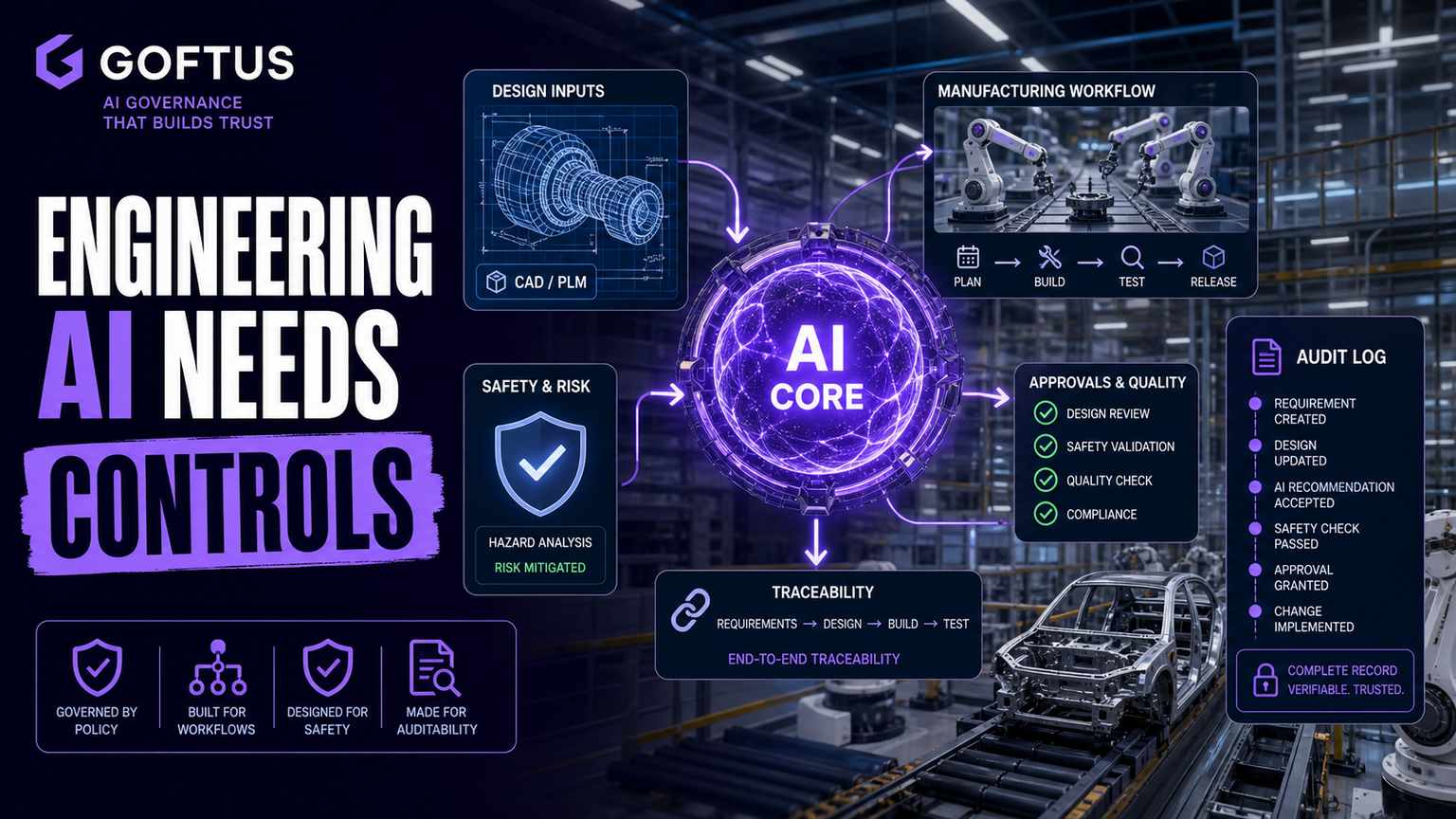
For UK, US and EU SMEs, the lesson is not simply "buy Claude" or "add an AI tool". AI becomes valuable when it is placed inside a controlled workflow. Engineering, operations and support teams need role-based access, review steps, source documents, exception handling, audit logs and feedback loops before AI can be trusted with work that affects customers, safety, delivery dates or compliance.
That is where GOFTUS positions the opportunity. A model can read, draft, reason and recommend. GOFTUS designs the workflow around the model so the business knows what happened, who approved it, what changed in the CRM or project system and which exceptions still need a person.
Why this signal matters now
The same topic also appeared through Rediff and NDTV Profit headline listings. Direct article retrieval was limited during this unattended run, so this post treats the sourcing as headline-level news cross-checking rather than a full independent article scrape.
The business direction is still clear. Large engineering and technology services firms are embedding AI into repeatable delivery systems. SMEs can learn from that pattern without copying enterprise complexity: pick one workflow where repeated knowledge work slows the team down, then add a safe AI layer that drafts, triages, routes or summarizes while a human keeps approval.
What this means for SMEs
Hajikreena's view is simple: AI engineering news should push owners to ask workflow questions, not model questions first.
Where does the request start? Which source documents can the AI use? Which fields should it update? What should it never change without approval? How will the team know whether the AI missed an exception? What happens if the answer is uncertain? Who reviews customer-facing output before it leaves the business?
These questions apply beyond engineering. They apply to CRM follow-up, support triage, document processing, sales proposals, internal knowledge assistants, finance reporting and customer operations. A Claude-powered engineering workflow and a GOFTUS-built SME automation both need the same operating principles: clear inputs, clear outputs, human review, system integration and measurement.
A practical first use case might be a technical enquiry assistant. It reads product documents and past support answers, drafts a response, tags the issue type, suggests a next step and creates a follow-up task. Another use case might be a quote assistant that extracts requirements from emails, checks missing fields and routes the job to the right person. The AI does not run the company. It reduces the manual load around the work.
If your first bottleneck is repeated customer questions, start with GOFTUS AI FAQ automation. If the bottleneck is multi-step operational work, look at GOFTUS AI agents and workflow automation or book a diagnostic through contact.
The workflow controls that matter
Engineering AI needs more than prompt templates. SMEs should focus on six controls before letting AI near important work.
First, define source boundaries. The assistant should know which documents, FAQs, CRM records, tickets or policies it can use. Second, define confidence behaviour. If the answer is uncertain, route to a human. Third, define approval gates. Customer-facing, safety-related, legal, financial or contractual outputs should require review.
Fourth, connect the tool to the system of record. If AI drafts a follow-up, the workflow should log it in the CRM or support tool. Fifth, measure exceptions. Unanswered questions, repeated corrections and manual overrides show where the workflow should improve. Sixth, maintain ownership. Someone in the business must review performance, update source content and decide what changes next month.
Competitor lens
Faculty AI, Deeper Insights, Waracle and Brainpool AI in the UK, LeewayHertz, Markovate, SoluLab and BairesDev in the US, and Addepto, STX Next, Netguru and 10Clouds in Europe can all be useful partners for larger AI or software initiatives. SaaS tools such as Zapier, n8n, Relevance AI, Lindy, Gumloop, Bardeen, Make and Stack AI can also automate individual steps quickly.
GOFTUS does not need to attack any of them. The practical difference is the operating layer. Tools automate tasks. GOFTUS automates the workflow around the task.
That means GOFTUS cares about what happens before and after the AI suggestion. We map the intake, the rules, the handoffs, the approval points, the CRM or support update, the exception queue and the monthly improvement loop. For SMEs, that is usually where the real return comes from. A single smart answer is helpful. A controlled workflow that produces the right answer, routes the edge case and records the outcome is far more valuable.
What SMEs should do next
Start by choosing one workflow where AI can help but should not be fully autonomous. Good candidates include repeated technical questions, sales qualification, support triage, proposal drafts, document extraction, onboarding checklists, CRM follow-up and management reporting.
Write down the current steps. Mark the slow manual parts. Mark the risky parts where human review must stay. Then decide what the AI should draft, summarize, classify, route or update. The safest first implementation is usually an assistant that prepares the work and asks for approval before taking visible action.
GOFTUS can help with a Startup Kit style diagnostic: pick the use case, design the workflow, connect the systems, build the AI layer, monitor unanswered cases and improve the process after real usage. If your team is ready to turn scattered AI experiments into a measurable workflow, start at GOFTUS services or speak to us through contact.
Summery for SMEs
The Anthropic and LTTS signal shows enterprise AI moving into engineering workflows. SMEs should copy the control pattern, not the enterprise budget. Start with one high-friction workflow, connect trusted sources, keep approval gates, log outcomes and measure exceptions. That is how AI becomes a dependable operating system for the business instead of another disconnected tool.
FAQ
Is this only relevant to manufacturing companies?
No. Manufacturing makes the control problem obvious, but the same workflow design applies to support, sales, finance, documents, CRM updates and internal knowledge. Any business process with repeated questions, important records and human approvals can benefit from controlled AI automation.
Should SMEs wait for enterprise AI partnerships to mature?
No. SMEs can start smaller and safer. The best first step is usually a narrow workflow assistant that drafts, routes or summarizes work while people approve important actions. This creates value without handing the whole process to an untested tool.
Where should a business start with GOFTUS?
Start with the workflow that wastes the most team time each week. If that is repeated customer questions, use FAQ automation service. If it is multi-step internal work, explore AI agents or request a diagnostic through contact.
Source notes
This was used as adjacent community context, not as confirmation of the LTTS partnership.
X signal: xurl was not installed in this cron environment, so X was treated as unavailable and was not used as evidence.