Anthropic's Drug Discovery Push: The SME Workflow Lesson for Regulated AI
Anthropic's life-science AI move shows why regulated SME workflows need audit trails, review gates, and integration.
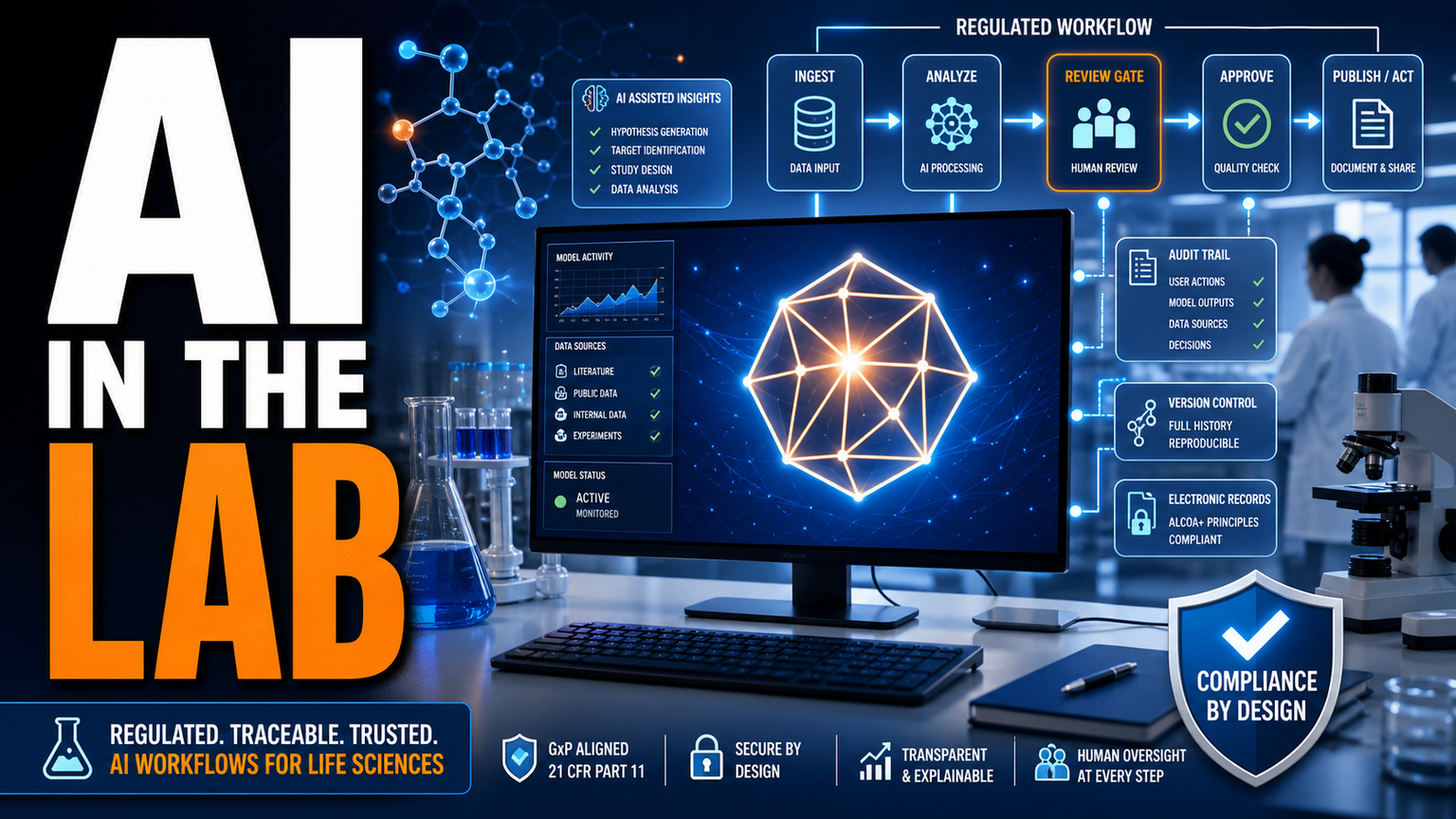
Anthropic's latest life-science push matters because it shows AI moving from general chat into regulated research workflows. Its Claude Science announcement describes a workbench that connects literature, code, data, specialist agents, reviewer checks, and auditable artifacts. Google News also surfaced CNBC coverage saying Anthropic is launching an AI drug discovery program, with STAT and FirstWord Pharma carrying related coverage signals. Hajikreena's view: for SMEs in healthcare, biotech, professional services, and regulated operations, the lesson is not simply to buy a stronger model. The real advantage comes from designing the workflow around the model: data intake, permissions, review, version history, exception handling, and monthly improvement.
What this means for SMEs
The business signal is clear. AI tools are becoming workbenches for specialist domains, not just assistants that answer questions. In life sciences, that means literature review, experiment planning, data analysis, figure creation, citation checking, and reproducible outputs can sit inside one operating flow. The same pattern applies to SMEs that handle claims, compliance files, support tickets, sales follow-up, procurement, reporting, legal documents, or cyber alerts.
The danger is treating a workbench like a magic box. Regulated work needs traceability. If an AI system reads a file, suggests an action, drafts a response, or updates a record, the business needs to know what data was used, who approved the output, where it was stored, and how mistakes are corrected.
For UK and EU businesses, the relevance is especially practical because AI adoption is increasingly tied to data protection, sector compliance, and vendor governance. For US businesses, the healthcare and life-science angle makes auditability and human review the centre of the operating model, not an optional extra.
A practical SME workflow could look like this:
1. Intake documents, tickets, records, or research notes from approved systems.
2. Use AI to classify, summarise, compare, or draft the next action.
3. Route sensitive outputs to a named human reviewer.
4. Write decisions, versions, prompts, files, and approvals back to the CRM, helpdesk, document store, or reporting system.
5. Monitor errors, delays, overrides, and savings every month.
That is where AI becomes operational infrastructure rather than another tab in the browser.
UK firms such as Faculty AI, Deeper Insights, Waracle, and Brainpool AI often focus on safety, decision intelligence, public-sector AI, or enterprise software quality. US firms such as LeewayHertz, Markovate, SoluLab, and BairesDev publish heavily around AI agents, industry guides, document AI, and agentic systems. European competitors such as Addepto, STX Next, Netguru, and 10Clouds talk about PoCs, RAG, sovereign cloud, software audits, and production AI. Global SaaS tools such as Zapier, n8n, Relevance AI, Lindy, Gumloop, Bardeen, Make, and Stack AI make it easier to automate pieces of a process.
Those categories are useful. SMEs should use good SaaS tools and strong specialist partners where they fit. But the gap appears when a business needs the whole operating loop to work reliably across people, systems, data, controls, and review.
Tools automate tasks. GOFTUS automates the workflow around the task.
For a regulated AI use case, that means GOFTUS would not stop at a chatbot, a prompt library, or a single automation recipe. The work is to map the process, connect the systems, define approval gates, log actions, watch failure points, and improve the workflow every month.
| Question | SME takeaway | GOFTUS workflow response |
|---|---|---|
| What changed? | AI is moving into specialist workbenches for regulated domains. | Build AI around real operational steps, not around isolated prompts. |
| Where is the risk? | Outputs can become hard to trust if data, approvals, and versions are not visible. | Add audit trails, reviewer gates, and exception handling. |
| What should SMEs do first? | Pick one high-friction workflow with clear value and manageable risk. | Start with intake, triage, draft, review, and reporting automation. |
| What should be avoided? | Do not let AI update critical systems without controls. | Keep humans in sensitive decisions and monitor every automation. |
Is Anthropic's Claude Science only relevant to life-science companies?
No. The direct announcement is life-science focused, but the operating pattern applies more widely. Any SME that handles regulated documents, customer data, technical support, finance records, or compliance reviews can learn from the same workbench model.
Should SMEs wait before using AI in regulated workflows?
SMEs should not wait for perfect certainty, but they should avoid uncontrolled rollout. Start with low-risk workflow stages such as summarisation, classification, draft preparation, internal search, and reporting. Add human approval before external messages, record updates, or decisions that affect customers.
How can GOFTUS help with this kind of AI workflow?
GOFTUS helps SMEs turn AI from a tool into a managed workflow. We map the process, connect CRM, inbox, helpdesk, document, and reporting systems, add review gates, log actions, and improve the automation monthly based on real usage.
Practical GOFTUS CTA
If your team is experimenting with AI in healthcare, compliance, customer operations, document processing, support triage, sales follow-up, or internal reporting, GOFTUS can help you build the controlled workflow around it. Start with one process, one measurable outcome, and one review loop.
Sources and source notes
Anthropic official announcement: `Claude Science, an AI workbench for scientists, is now available`, published June 30, 2026.