Anthropic’s Latest Moves Show Enterprise AI Is Moving from Chat to Governed Workflows
Anthropic’s Claude Tag, Opus 4.8, and new enterprise partnerships signal a shift from chat tools to governed team workflows for business operators.
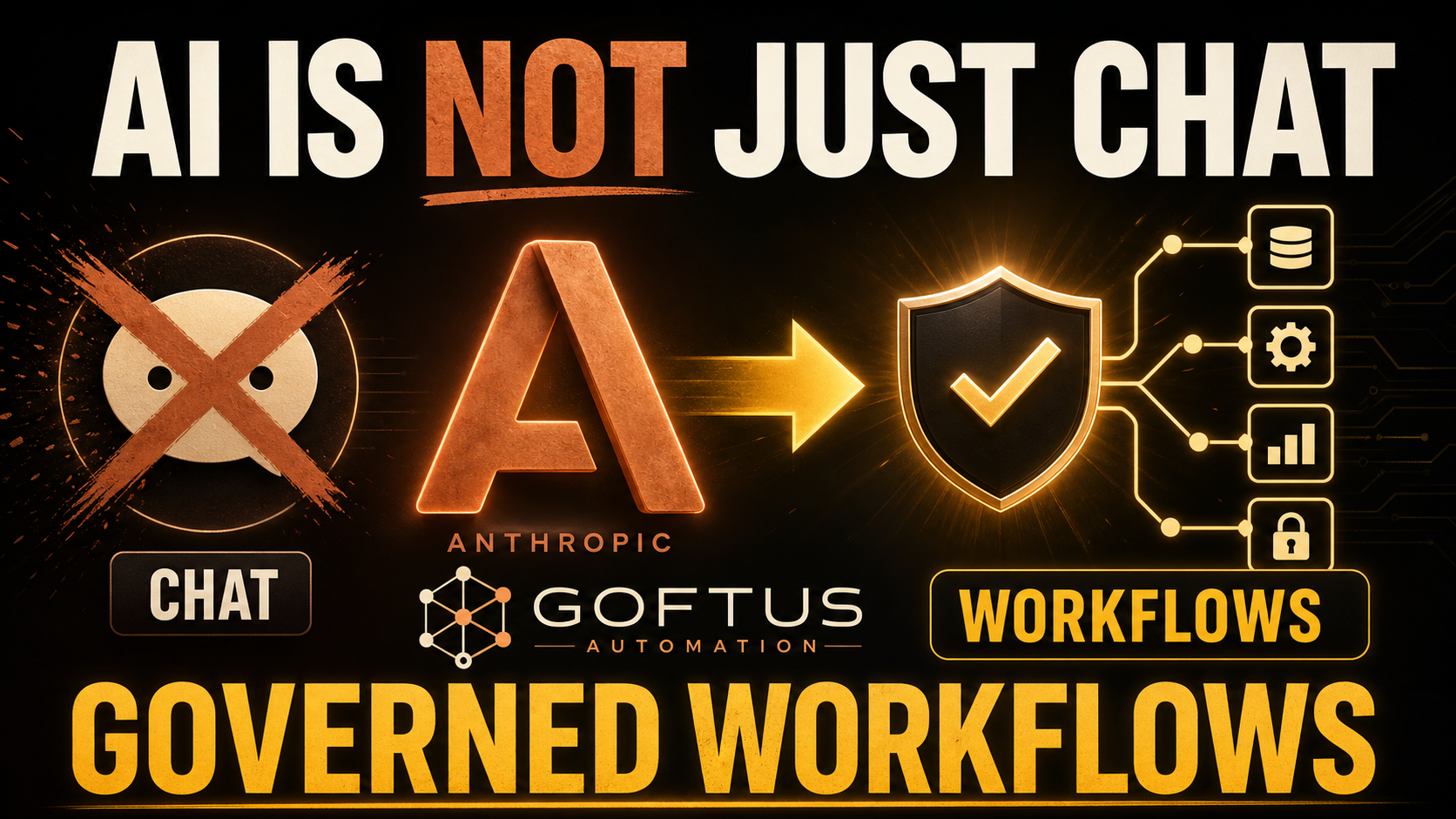
# Anthropic’s Latest Moves Show Enterprise AI Is Moving from Chat to Governed Workflows **Meta description (149 chars):** Claude Tag, Opus 4.8, and new enterprise partnerships show Anthropic is pushing AI from chat into
Anthropic’s Latest Moves Show Enterprise AI Is Moving from Chat to Governed Workflows
Meta description (149 chars): Claude Tag, Opus 4.8, and new enterprise partnerships show Anthropic is pushing AI from chat into governed, team-based workflows for regulated teams.
Anthropic’s latest wave of announcements is easy to read as a product refresh, but it is more important than that. Claude Tag, Claude Opus 4.8, and new partnerships with systems integrators like TCS and DXC point to the same strategic shift: enterprise AI is moving from isolated chat sessions into governed, team-based work.
That matters because the first wave of AI adoption proved something simple: people will use AI when it reduces friction. The second wave is proving something more valuable: organizations will standardize AI when it can operate inside real workflows, with permissions, context, and accountability.
Claude Tag is the clearest signal. Anthropic describes it as a new way for teams to work with Claude on Slack. Instead of a person opening a one-off chat and copying the result somewhere else, a team can tag @Claude into a channel, delegate work, and let the model build context over time. Anthropic says Claude can be granted access to selected channels, connect to approved tools and data, and even schedule tasks for itself over hours or days.
That is not just a convenience feature. It is a different operating model.
For founders and operators, the shift is from “AI helps me write” to “AI participates in the workflow.” That changes how value is created. It also changes how risk is managed. Once a model is part of a team channel, the important questions are no longer only about model quality. They become questions about access control, escalation, visibility, and task ownership.
Opus 4.8 reinforces the same story from a different angle. Anthropic says the new version improves benchmarks and is a more effective collaborator, with new controls over how much effort Claude puts into a task in claude.ai, and a new dynamic workflows feature in Claude Code for larger problems. The message is straightforward: the best AI tools are being built for longer tasks, not just faster answers.
That matters because longer tasks are where businesses feel the pain most. A support summary that saves two minutes is useful. A workflow that removes an entire handoff, closes the loop on a ticket, or accelerates a multi-step internal process is transformative.
The enterprise angle becomes even clearer in Anthropic’s new alliances. TCS will bring Claude to 50,000 employees across 56 countries and build Claude-powered products for financial services, healthcare, the public sector, and other regulated industries. DXC is training tens of thousands of Claude-certified engineers and embedding Claude into the systems banks, airlines, insurers, manufacturers, and government agencies already rely on.
That is a big deal for business leaders because it shows where the market is heading. The winners will not be the teams that simply “use AI.” The winners will be the teams that can deploy AI safely inside the operating environment they already have.
In practice, that means the center of gravity is shifting away from model demos and toward implementation layers:
Team context: Can the AI understand the work the way a teammate would, not just the way a prompt describes it?
Controlled access: Can you limit what the model can see and do by channel, role, or workflow?
Auditability: Can your team trace why a response was produced and what systems it touched?
Task ownership: Can the model carry a task forward asynchronously without losing the thread?
Partner delivery: Do you have a route from pilot to production that fits compliance, security, and change management?
This is where many companies get stuck. They start with a strong pilot, but the pilot never becomes an operating system for work because it lacks governance and implementation support. A model can be impressive in a sandbox and still be difficult to trust in production.
Anthropic’s latest announcements suggest the market is responding to that gap. Claude Tag is about persistent team context. Opus 4.8 is about better long-running collaboration. TCS and DXC are about getting Claude into regulated environments through partners who already understand the controls, workflows, and responsibilities that matter.
For GOFTUS clients, the practical takeaway is simple. Do not ask, “Which model should we buy?” Ask, “Which workflow should we redesign so AI can actually carry the work?”
A strong starting point is any process with these traits:
repeated requests or handoffs
clear inputs and outputs
an existing team channel or ticketing flow
a human reviewer already in the loop
measurable delay, rework, or resolution time
That could be support triage, lead routing, onboarding, internal research, policy checks, or operations coordination. The best first use case is rarely the flashiest one. It is the one where AI can reduce cycle time, remove coordination overhead, and keep quality high enough to trust.
If you are a founder, RevOps leader, CX leader, or ops executive, this is the moment to design the control plane around AI, not just add another assistant on top of it. That means defining permissions, logging, approval rules, and exception handling before you scale usage.
GOFTUS helps teams do exactly that: identify the right workflow, map the controls, and turn AI from a useful tool into a reliable operating layer. If your team is trying to move from experimentation to production-grade automation, book a GOFTUS consultation and we will help you build the path from pilot to rollout.