Anthropic's Claude Reflect Shows Why SMEs Need AI Usage Workflows
Claude Reflect shows why SMEs need AI usage workflows that track delegation, review, quiet hours, and business outcomes.
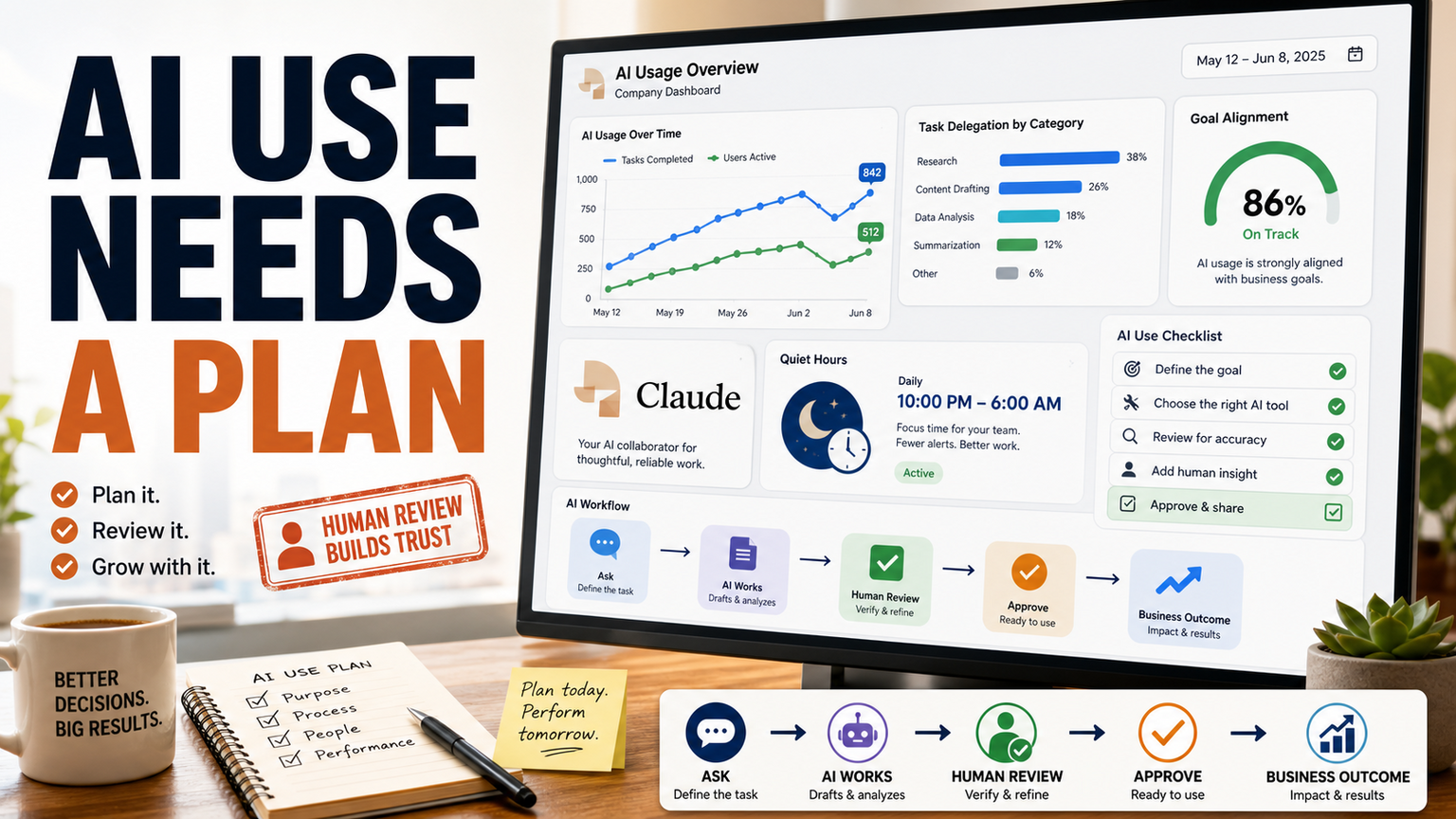
# Quick answer Anthropic has introduced a beta reflection dashboard for Claude that helps users see how they use AI across time, topics, and task types. For SMEs, the signal is bigger than a personal productivity featur
Quick answer
Anthropic has introduced a beta reflection dashboard for Claude that helps users see how they use AI across time, topics, and task types. For SMEs, the signal is bigger than a personal productivity feature. AI use now needs the same operating discipline as sales, support, finance, and delivery work.
Bharatvaj's view: the next AI advantage for SMEs will not come from asking more prompts. It will come from knowing which work should be delegated, which work should stay human, which outputs need review, and whether AI time is improving the business outcome.
What this means for SMEs
Anthropic says the Claude reflection feature can summarize key topics, usage patterns, and task types over 1, 3, 6, or 12 months. It can also show when someone uses Claude most, offer prompts about what they still want to do themselves, and support quiet hours or break nudges.
That matters because many SMEs are already using AI informally. Staff draft emails, summarize inboxes, clean spreadsheets, write code, prepare reports, and ask for customer responses. The risk is that nobody owns the usage pattern.
A practical SME AI workflow should answer five questions:
1. Which tasks are safe to delegate to AI?
2. Which tasks need human review before anything is sent, changed, or filed?
3. Which systems does the AI workflow touch, such as CRM, email, helpdesk, finance, or documents?
4. Which exceptions should be logged for manager review?
5. Which outcome is measured monthly, such as faster follow-up, fewer support backlogs, cleaner reporting, or lower admin time?
Claude Reflect is a consumer-facing signal, but the business lesson is operational. If AI usage is worth measuring for one person, it is even more important to measure it across a team workflow.
For UK and EU businesses, this also connects to governance expectations around privacy, employee oversight, and documented AI use. For US SMEs, the urgency is more commercial: teams need to show whether AI tools are saving time without lowering quality or increasing risk.
Competitor lens
Global SaaS automation tools such as Zapier, n8n, Make, Bardeen, Lindy, Gumloop, Relevance AI, and Stack AI make it easier to build task automations and agents. US and European AI consultancies such as LeewayHertz, Markovate, Addepto, Netguru, STX Next, and 10Clouds often explain AI agents, RAG, production AI, and vertical transformation. UK competitors such as Faculty AI, Deeper Insights, Waracle, and Brainpool AI often focus on AI safety, enterprise AI, public-sector use, and decision intelligence.
Those categories are useful, but many SME projects still fail at the same point: the automation exists, but the surrounding workflow is not owned.
Tools automate tasks. GOFTUS automates the workflow around the task.
That means GOFTUS designs the intake, system connection, human review, exception handling, reporting, monitoring, and monthly improvement loop. A Claude usage dashboard may show where AI is being used. A GOFTUS workflow turns that visibility into better CRM follow-up, support triage, document processing, reporting automation, and internal knowledge assistant routines.
How SMEs can respond this week
Start with one workflow rather than a full AI policy rewrite. Pick a repeatable process where AI is already being used informally. Good candidates are sales follow-up, customer support replies, weekly reporting, proposal drafting, document extraction, or internal knowledge search.
Map the current steps and mark where AI is allowed to help. Then define what must happen before the output becomes real business action. For example, a support triage agent can classify a ticket, suggest a response, and update a queue, but a human may still approve refunds, legal claims, angry-customer replies, and account changes.
The measurement layer should be simple. Track how many items entered the workflow, how many were handled by AI, how many needed review, how many were corrected, how many were escalated, and what outcome improved. This is the difference between AI activity and AI performance.
Summery for SMEs
| Area | SME question | GOFTUS workflow response |
| --- | --- | --- |
| Delegation | What should AI handle? | Define approved AI tasks by role and process. |
| Review | What must stay human? | Add approval gates for risky replies, changes, and decisions. |
| Measurement | Is AI improving work? | Track time saved, exceptions, corrections, and outcomes. |
| Systems | Where does AI connect? | Integrate CRM, inbox, helpdesk, documents, and reporting tools. |
| Improvement | Who owns the loop? | Review results monthly and tune prompts, rules, and handoffs. |
FAQ
Is Claude Reflect a business analytics product?
Not exactly. Anthropic describes it as a beta feature for reflecting on Claude usage. The SME lesson is that AI usage patterns are becoming visible and should be managed as workflow data.
Should SMEs track employee AI use?
SMEs should track workflow outcomes, review points, and risk controls, not turn AI adoption into surveillance. The useful question is whether AI is improving the process while keeping human accountability clear.
Where should an SME start with AI usage workflows?
Start with one high-volume process such as sales follow-up, support triage, reporting, or document processing. Define the AI task, the human approval point, the exception log, and the monthly improvement metric.
Practical GOFTUS CTA
If your team is already using Claude, ChatGPT, Copilot, or workflow agents informally, GOFTUS can help turn that activity into a governed operating workflow. We design AI automation around measurable outcomes: CRM follow-up, support triage, reporting automation, document processing, and internal knowledge assistants with review, monitoring, and monthly improvement built in.
Sources and source notes
Anthropic official announcement: "A new way to reflect on how you use Claude", published July 9, 2026. This was used as an adjacent community signal about AI tool usage management, not as confirmation of the Anthropic feature itself.
X/Twitter was not used because xurl is not installed in this cron environment.