AI video generator workflows need approval before marketing content scales
AI video generator tools can speed SME marketing, but approvals, source checks, brand review, and publishing logs decide whether content is safe to scale.
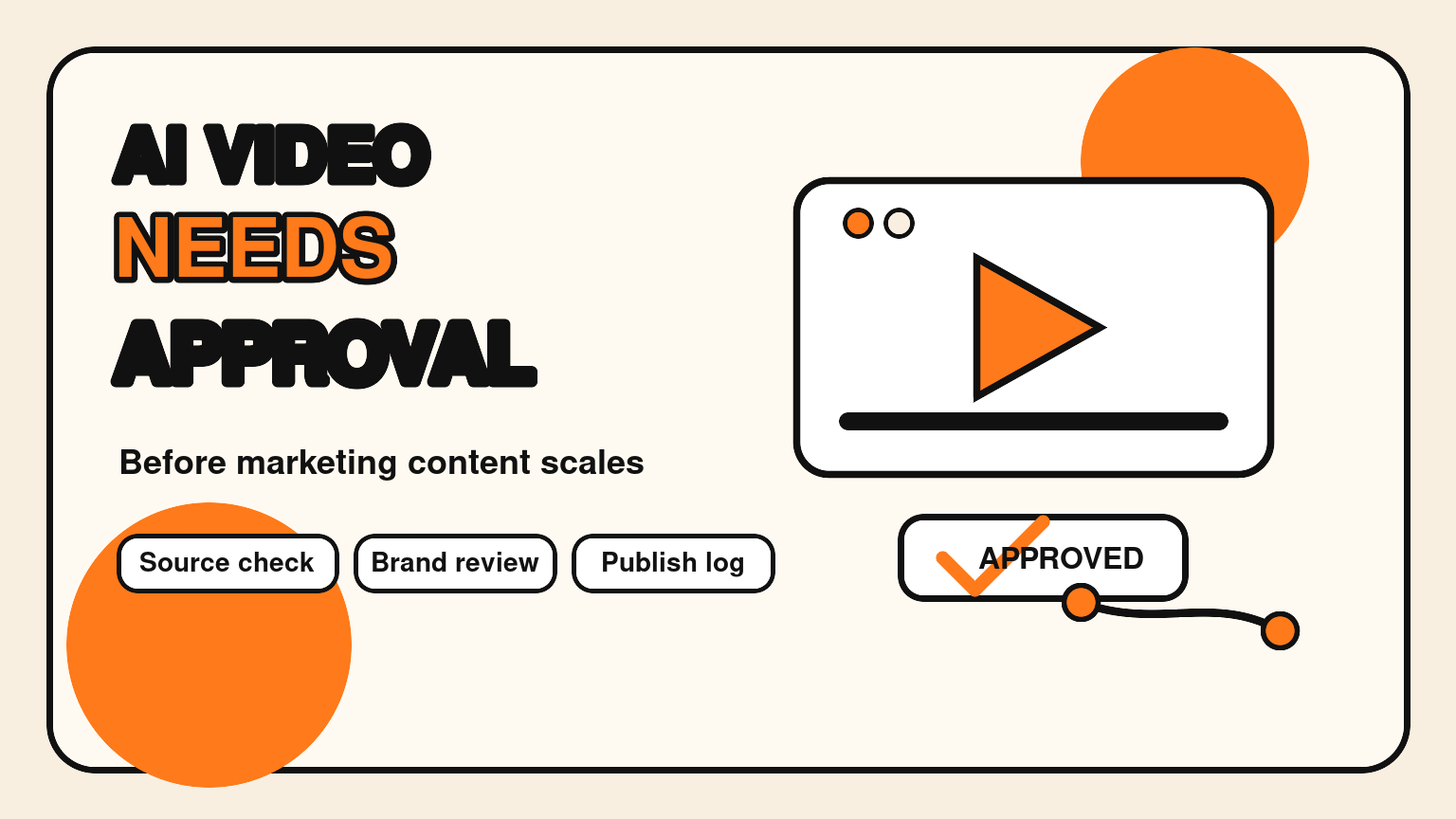
# AI video generator workflows need approval before marketing content scales Meta description: AI video generator tools can speed SME marketing, but approvals, source checks, brand review, and publishing logs decide whe
AI video generator workflows need approval before marketing content scales
Meta description: AI video generator tools can speed SME marketing, but approvals, source checks, brand review, and publishing logs decide whether content is safe to scale.
Quick answer
AI video generator demand is hot because small teams want more marketing output without more editing time. The GOFTUS daily SEO input gives the keyword ai video generator a Trends score of 94, so it is eligible for publishing. The useful business question is not which video model looks most impressive. It is how an SME turns AI video from a one-off experiment into an approved marketing workflow with owners, review steps, source checks, and evidence logs.
A current MarketScale article frames AI video as a procurement and brand-safety specification rather than only a creative experiment. The Reddit signal is adjacent but useful: r/marketing discussed fake positive reviews and trust risk, while r/SaaS asked what makes buyers trust a new software product. Together, the signal is clear. Faster creative output does not remove the need for proof, review, and accountability.
GOFTUS helps SMEs build the workflow around the tool: brief, generate, review, approve, publish, measure, and improve. The AI video generator is only one step in that chain.
What this means for SMEs
Most SMEs do not have a content shortage because staff are lazy. They have a workflow shortage. A founder records ideas in voice notes, a marketer drafts campaign hooks, a freelancer edits clips, sales wants product videos, support wants explainers, and leadership wants the brand to stay credible. AI video generators promise to compress that production cycle, but speed can create new operational risk if nobody owns the final answer.
The first risk is claim drift. A video can imply a feature, customer result, price, delivery promise, or compliance posture that the business has not approved. Even if the AI output looks polished, the words, icons, charts, captions, and voiceover still need source checks. A small mistake in a landing-page video can travel through ads, emails, and sales messages before anyone catches it.
The second risk is asset confusion. Teams may generate multiple versions for TikTok, LinkedIn, YouTube Shorts, website pages, and paid ads. Without naming rules, approvals, and a source-of-truth library, staff do not know which version is live, which one was rejected, and which one still contains placeholder copy.
The third risk is tool sprawl. One team member tries a video generator, another tries an AI image tool, a third uses a social scheduler, and a fourth asks ChatGPT for scripts. SaaS tools and consultants can be useful, but if the workflow is not designed, the business ends up with more tabs and less control. GOFTUS positions the workflow owner, integration path, monitoring loop, and monthly improvement process so AI content becomes operationally useful.
Build the approval workflow before scaling videos
A practical SME workflow starts with a brief. The brief should include the audience, offer, approved source page, product claim boundaries, channel, duration, tone, and required call to action. This prevents the AI video generator from becoming a guessing machine.
Next comes generation. Staff can use the chosen AI tool to create scripts, scenes, clips, captions, or short variants. But generated output should enter a review queue rather than publish directly. A good queue separates green, amber, and red decisions. Green items are low-risk clips based on already approved copy. Amber items need a marketer or manager to check claims, brand language, and context. Red items involve legal, medical, financial, pricing, customer data, or sensitive promises and should not be released without named approval.
Then comes evidence. Each approved video should keep the prompt or brief, source document, reviewer, publish channel, date, and final asset link. This does not need to be heavy enterprise governance. It can start as a simple database, CRM note, Airtable, Notion page, Google Sheet, or workflow log. The point is that the business can answer: who approved this, what source did it use, where did it go live, and what should happen if it underperforms or needs removal?
Finally, connect measurement back to improvement. If a product explainer reduces repeated sales questions, feed that result into the FAQ, CRM, or support workflow. If a paid clip produces unqualified leads, adjust the brief and approval rule. If viewers ask the same question after watching, the video is not finished. It is a signal for the next approved answer.
Summery for SMEs
AI video generators are now good enough to tempt teams into publishing faster than their review process can handle. SMEs should treat video generation as a controlled workflow, not just a creative shortcut. Start with one repeatable use case such as product explainers, founder updates, onboarding clips, or sales follow-up videos. Define the approved sources, who reviews claims, which channels are allowed, and how final assets are logged.
The win is not only cheaper video. The win is a marketing system that can produce more content while keeping the brand truthful, searchable, and measurable. GOFTUS can build that system across content briefs, approval queues, CRM handoffs, document sources, publishing logs, and reporting dashboards through AI automation services.
Competitor lens
Video generators, social schedulers, no-code tools, and marketing consultants can all help. The gap appears when an SME asks who owns the full workflow after the clip is created. A tool may generate scenes. A consultant may deliver assets. A scheduler may publish posts. But the business still needs source control, review gates, role-based approvals, exception handling, and performance reporting.
GOFTUS is useful when the question is bigger than choosing a tool. We map the workflow around the AI video generator so staff know when to generate, when to ask for review, when to block a risky claim, and how to connect approved content to sales, support, FAQ, and reporting systems.
FAQ
Should SMEs use an AI video generator for marketing?
Yes, if the first use case is narrow and the review process is clear. Start with approved product explainers, short social variants, or follow-up videos based on existing service pages. Do not let AI invent customer results, compliance claims, prices, or feature promises.
What should be approved before AI video goes live?
Approve the source page, script, visual claims, caption, voiceover, target channel, call to action, and owner. Also log who reviewed the final version and where it was published.
Where does GOFTUS fit?
GOFTUS designs and integrates the workflow around AI tools. That includes brief intake, source checks, human approvals, CRM or support handoffs, publishing logs, and reporting so AI video output becomes controlled business automation.
Source notes: Daily SEO keyword source was GOFTUS daily SEO FAQ output for 2026-08-20, where ai video generator scored 94. Social support came from GOFTUS Reddit intelligence on r/marketing trust concerns and r/SaaS trust-building discussion, both scored 100 by the GOFTUS content intelligence run. News cross-check came from Google News RSS and a reachable MarketScale article titled "AI video is becoming a procurement and brand-safety spec, not a marketing experiment" published 2026-08-18. Image generation was intentionally skipped under the temporary backend-key operability rule; a deterministic GOFTUS-style cover was created locally without calling an image-generation tool.