AI video generator workflows for SMEs: approve marketing content before it goes live
AI video generator workflows help SMEs approve marketing claims, brand rules, and publishing steps before campaign content goes live safely.
# AI video generator workflows for SMEs: approve marketing content before it goes live Meta description: AI video generator workflows help SMEs approve marketing claims, brand rules, and publishing steps before campaign
AI video generator workflows for SMEs: approve marketing content before it goes live
Meta description: AI video generator workflows help SMEs approve marketing claims, brand rules, and publishing steps before campaign content goes live safely.
Quick answer
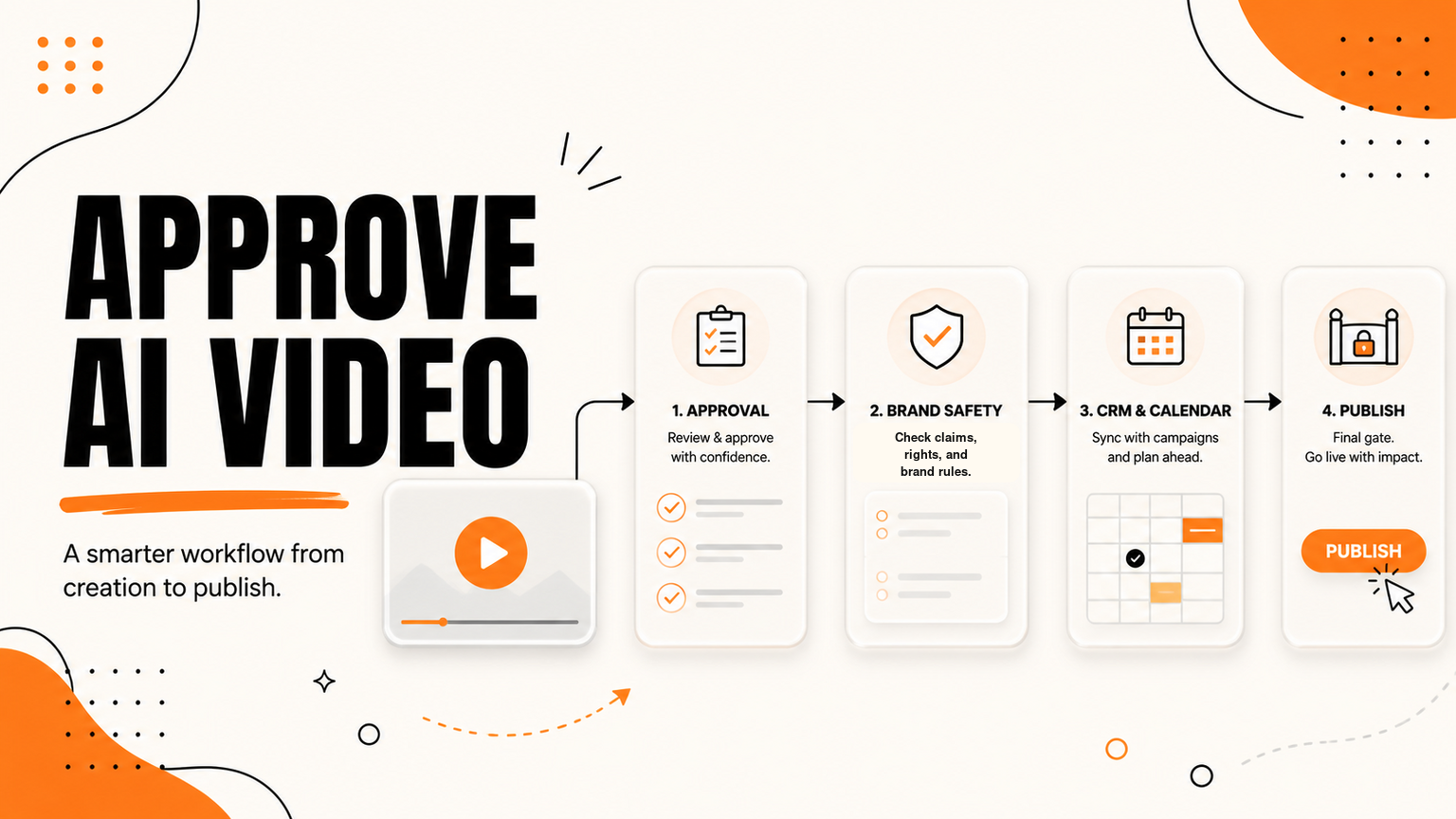
AI video generator tools are moving from novelty into everyday marketing work. That is why SMEs should not treat them as a shortcut from prompt to publish. The better use is an AI video generator workflow: a repeatable process where a team creates draft videos, checks claims and rights, routes approvals, logs decisions, and only then schedules content for ads, social posts, sales pages, or customer education.
The daily GOFTUS SEO signal highlights "ai video generator" as a 94 score keyword, mapped to approved marketing-content workflows. The fresh market signal is similar. Google News RSS is surfacing headlines about AI video becoming a procurement and brand-safety spec, while marketer-focused AI image and video generator lists keep expanding. A Reddit marketing discussion about fake positive reviews adds the social warning: when content gets easier to create, trust and proof matter more.
Thirumurugan's view: SMEs do not need another creative toy. They need a workflow that lets good AI-assisted marketing move faster without letting unsupported claims, off-brand examples, or risky edits reach customers.
What this means for SMEs
Most small and mid-sized businesses already have a content bottleneck. Someone needs a product explainer, a short ad, a webinar clip, a social proof video, a recruitment post, or a customer onboarding asset. AI video tools can speed up the first draft, but they also multiply the number of assets that need review.
The risk is not only copyright. It is everyday operational quality. Did the video claim a feature the product does not offer? Did it imply a guarantee? Did it use a customer example that nobody approved? Did the landing page, CRM campaign, and support team know this message was going live? Did anyone record which prompt, source material, and reviewer were used?
That is where GOFTUS positions AI video generator work as workflow automation, not just content generation. The draft video is only one task. The surrounding workflow includes intake, approved source material, brand rules, review queues, publish gates, campaign tracking, and follow-up actions. Businesses can explore this through GOFTUS AI automation services, especially when marketing content has to connect with CRM, sales, support, or reporting systems.
For UK, US, and EU SMEs, the safest starting point is not a company-wide creative free-for-all. Start with one content lane. For example: product FAQ clips, sales follow-up explainers, customer onboarding videos, or approved social ad variants. Define who can request a video, what source material the AI may use, who checks the output, what must never be claimed, and where the final asset is stored.
Build the workflow around the video, not after it
A practical AI video generator workflow has five lanes.
First, the request lane captures the business purpose. Is this video for a lead, a customer, a support article, an internal training page, or a paid campaign? That answer decides the review level.
Second, the source lane restricts what the AI can use. Approved product notes, pricing pages, service descriptions, screenshots, and brand guidance are safer than random staff memory. If the AI cannot trace a claim to an approved source, the claim should be removed or sent for review.
Third, the creation lane allows experimentation while keeping drafts separate from live assets. Staff can test hooks, visuals, and voiceovers, but the system should mark them as drafts until approval.
Fourth, the approval lane checks brand fit, factual accuracy, customer promises, accessibility, and channel suitability. Some videos may only need a marketing review. Others may need sales, support, legal, or founder sign-off.
Fifth, the publishing lane logs the approved asset, campaign, owner, landing page, and next action. This is where AI video becomes part of business operations rather than another file in a folder.
Competitor lens
Zapier, n8n, Make, Bardeen, Gumloop, Lindy, Relevance AI, and Stack AI can all help connect tools and trigger content workflows. Agencies and consultants such as Faculty AI, Deeper Insights, Waracle, Brainpool AI, LeewayHertz, Markovate, SoluLab, BairesDev, Addepto, STX Next, Netguru, and 10Clouds may support bigger strategy or implementation work.
The gap for SMEs is ownership. A SaaS automation can move a video file from one place to another. A consultant can recommend a process. But the business still needs practical decisions about review steps, exception handling, CRM handoff, reporting, and monthly improvement.
Tools automate tasks. GOFTUS automates the workflow around the task. That means the AI video output is connected to the approval record, source material, campaign owner, sales or support follow-up, and review loop.
What SMEs should do next
Pick one repeatable video use case and map it before buying more tools. A good first project is narrow enough to control and valuable enough to measure. For example, a B2B services company could automate approved explainer clips for common sales objections. An ecommerce team could create product education drafts that still require a human claim check. A SaaS company could turn help-centre answers into short onboarding clips, then route unanswered questions back into support and product notes.
For each lane, write down the owner, input, output, approval rule, and fallback. If the AI output is wrong, who fixes it? If the claim is unclear, who approves it? If a campaign performs well, how does the team reuse the lesson? If a video raises new customer questions, where do those questions go?
GOFTUS can help turn that map into an operational system. The goal is not to slow marketing down. The goal is to let teams use AI video faster because the rules, checks, and handoffs are already built in. For many SMEs, this can start with a focused diagnostic or the £100 Startup Kit conversation, then expand into CRM, support, reporting, and agent workflows when the first lane is stable.
Summery for SMEs
AI video generator tools can help SMEs create more marketing content, but the business value comes from approval workflows around that content. Use approved sources, clear owners, claim checks, publishing logs, and feedback loops before videos reach customers. If the workflow is designed well, AI video becomes a controlled marketing engine rather than a pile of risky drafts.
FAQ
Should SMEs use an AI video generator for marketing?
Yes, but only inside a defined workflow. Start with low-risk content such as explainer clips, onboarding snippets, or internal training. Then add source checks, brand review, and a publishing log before using AI video for paid campaigns or customer promises.
What is the biggest risk with AI video content?
The biggest everyday risk is unsupported messaging. A video can sound confident while making a claim that sales, support, or product teams cannot stand behind. Approval gates reduce that risk before content goes live.
How can GOFTUS help with AI video workflows?
GOFTUS designs the operational layer around AI tools: request forms, approved source libraries, review queues, CRM or support handoffs, campaign logs, and monthly improvement cycles. The tool creates the draft. The workflow protects the business.
Source notes
Daily SEO FAQ output, 2026-08-20: "ai video generator" scored 94 and mapped to AI video generator workflows for approved marketing content.
Google News RSS cross-check surfaced headline-level coverage that AI video is becoming a procurement and brand-safety spec, plus marketer-focused AI image and video generator coverage. Direct article access was mixed, so this post treats those as RSS and headline-level signals rather than full article-body verification.
Reddit intelligence context included a r/marketing social signal about fake positive reviews. It is used only as operator sentiment around marketing trust, not as verified factual evidence about any company.