AI tools need workflow ROI, not another hype dashboard
SMEs should choose AI tools by workflow ROI, owner visibility, and measurable handoffs instead of buying another dashboard because the market is loud.
# AI tools need workflow ROI, not another hype dashboard Meta description: SMEs should choose AI tools by workflow ROI, owner visibility, and measurable handoffs instead of buying another dashboard because the market is
AI tools need workflow ROI, not another hype dashboard
Meta description: SMEs should choose AI tools by workflow ROI, owner visibility, and measurable handoffs instead of buying another dashboard because the market is loud.
Quick answer
The general AI signal today was a familiar one: people are surrounded by model names, tool demos, and benchmark claims, yet they still ask what is actually useful. Reddit intelligence surfaced r/ArtificialInteligence discussion about raising the signal level, r/LocalLLaMA chatter about switching tools, and posts about model harnesses where the setup matters as much as the model. Treat that as sentiment, not proof. The business lesson is clear enough: SMEs do not need another hype dashboard. They need AI tools tied to a workflow result.
What this means for SMEs
The daily SEO layer points to ai tools at a 100 Trends score. That makes the buyer problem simple. Before buying, ask which business workflow the tool improves this month. Does it reduce missed follow-up? Does it shorten support triage? Does it prepare reports earlier? Does it help staff find the correct document without exposing the wrong file? If the answer is only that the tool looks advanced, the business has not chosen a workflow yet.
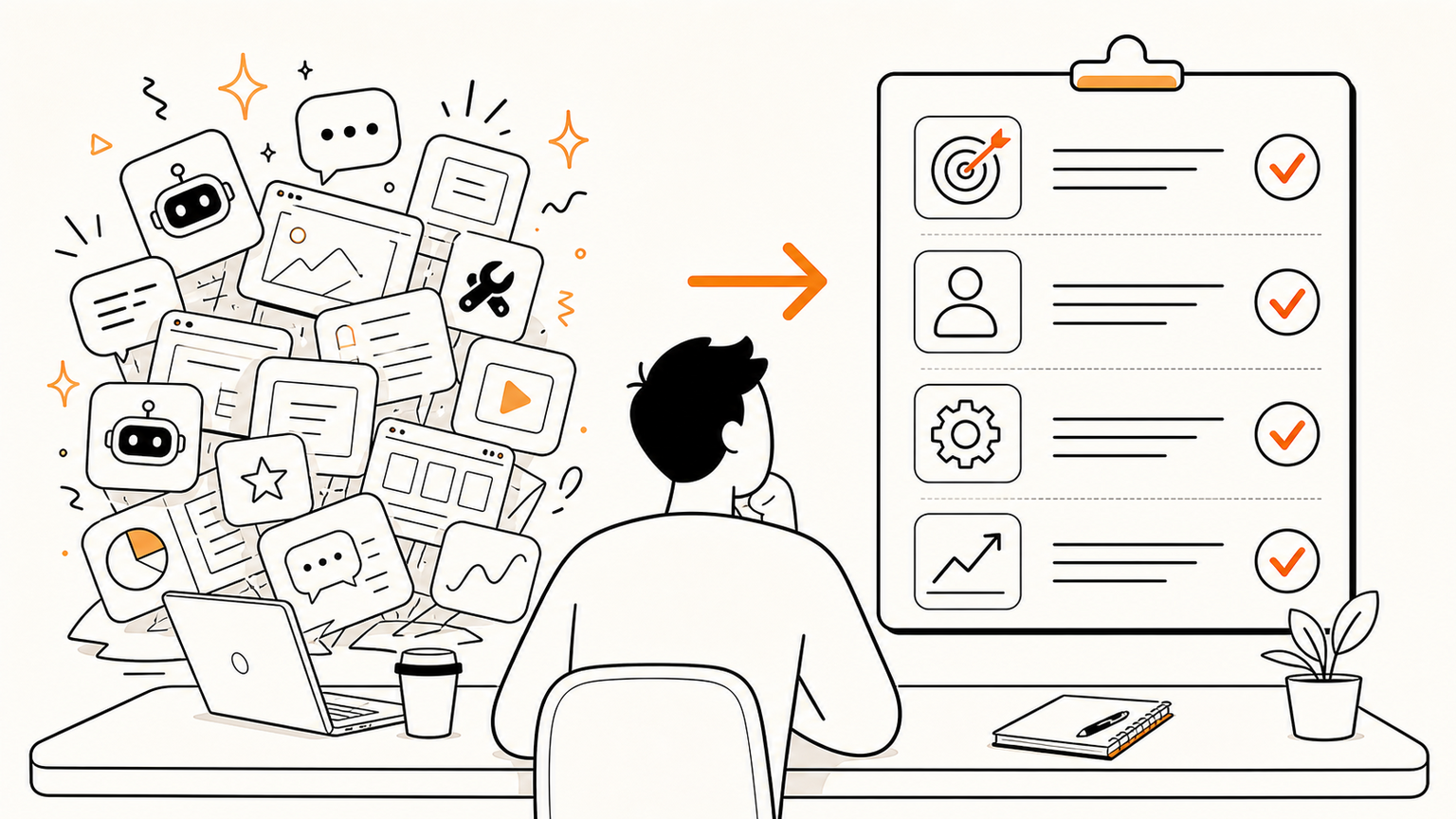
A useful AI tool map has four columns: input, decision, action, and evidence. Inputs are the emails, forms, calls, tickets, files, or CRM records the workflow sees. Decisions are classifications, drafts, calculations, and recommendations. Actions are the things that change the business, such as sending, updating, assigning, approving, or escalating. Evidence is the audit trail that lets a manager check what happened. GOFTUS uses that map before connecting tools, because it prevents scattered AI experiments from becoming shadow operations.
What competitors are missing
Competitors often frame this as tool selection or consulting strategy. Both have value. SaaS vendors can provide strong components, and consultants can help prioritise. The missing piece is usually operating ownership after launch. GOFTUS designs the workflow, integrates it with existing systems, monitors exceptions, and improves the rules as staff use it. That matters because AI tools rarely fail only at the model layer. They fail when nobody owns the handoff after the model speaks.
Workflow GOFTUS would implement
ROI becomes measurable when the team reviews before-and-after workflow counts. Track minutes saved per ticket, number of customer questions routed correctly, percentage of drafts approved without rewrite, and exceptions that reached a human before damage was done. Keep the first use case narrow. If it works, expand the lane. If it fails, the log should show whether the data, prompt, tool permission, or approval rule needs fixing.
AI tool selection checklist
A GOFTUS implementation would start by inventorying the tools staff already use and the work they still repeat by hand. The team would choose one buyer-visible outcome: faster response, cleaner CRM records, fewer missed documents, better support triage, or more reliable reporting. Then each candidate AI tool is tested against that outcome rather than against a generic feature list. The workflow should show who owns the input, what the AI prepares, who reviews the result, where the final record lives, and how exceptions are reported. This also prevents tool sprawl. If two tools solve the same step, pick the one that integrates cleanly and logs decisions. If a tool is impressive but cannot be monitored, it stays in experiment mode. The result is a smaller AI stack with clearer ROI, not another disconnected dashboard that staff ignore after launch.
Rollout plan
A safe rollout should move in four short phases. First, observe the existing process for a week and capture the real inputs, rework, waiting time, and exceptions. Second, prepare the automation in a limited lane where AI can draft, classify, summarise, or route but cannot make irreversible changes. Third, approve the risky steps with named owners and simple review screens. Fourth, review the log and improve the workflow every month. This is deliberately less dramatic than buying a large platform and hoping staff adapt. It is also more reliable for SMEs because it respects the tools, habits, and constraints already inside the business.
The first version should be narrow enough that one manager can explain it in plain English. If staff cannot say when the workflow starts, where the output goes, who approves exceptions, and how to stop it, the automation is not ready. GOFTUS would rather ship a controlled lane that saves a few hours every week than an impressive demo nobody trusts. Once the log proves the workflow is safe, the business can widen the scope with confidence.
Summery for SMEs
The Reddit signal points to a practical operating lesson: AI tool selection for measurable SME workflow ROI. GOFTUS would turn that into a controlled workflow with a named owner, clear inputs, approval gates for risky actions, logs for review, and a monthly improvement loop. The internal path for this topic is /agents, with supporting Q&A on /questions.
FAQ
What should an SME do first? Start with one workflow that already creates delays or risk, then define the trigger, owner, allowed AI step, review gate, and log before adding more tools.
Where does GOFTUS fit? GOFTUS designs and manages the workflow around the tool: integrations, approval screens, exception routing, audit logs, and improvement after staff use it.
Sources and signal
Reddit/social signal: r/ArtificialInteligence and r/LocalLLaMA signals showed operator frustration with noisy AI discussion, tool switching, model harnesses, and questions about useful automation beyond chat.
News/source cross-check: Google News RSS returned headline-level context from Small Business & Entrepreneurship Council, BizTech Magazine, and Salesforce on AI tools and startup use cases.
Source note: Reddit is used as operator sentiment and social heat only. Google News RSS results are cited at headline level where direct article retrieval was not available during the unattended run.