AI tool selection needs ROI gates before SMEs chase every model
AI tool selection needs ROI gates before SMEs chase every model for SMEs means clear owners, review steps, logs, budget rules, and workflow outcomes before
# Quick answer AI tool selection needs ROI gates before SMEs chase every model because teams can test many AI tools without deciding which workflow, owner, or business outcome each tool is supposed to improve. Today’s GO
Quick answer
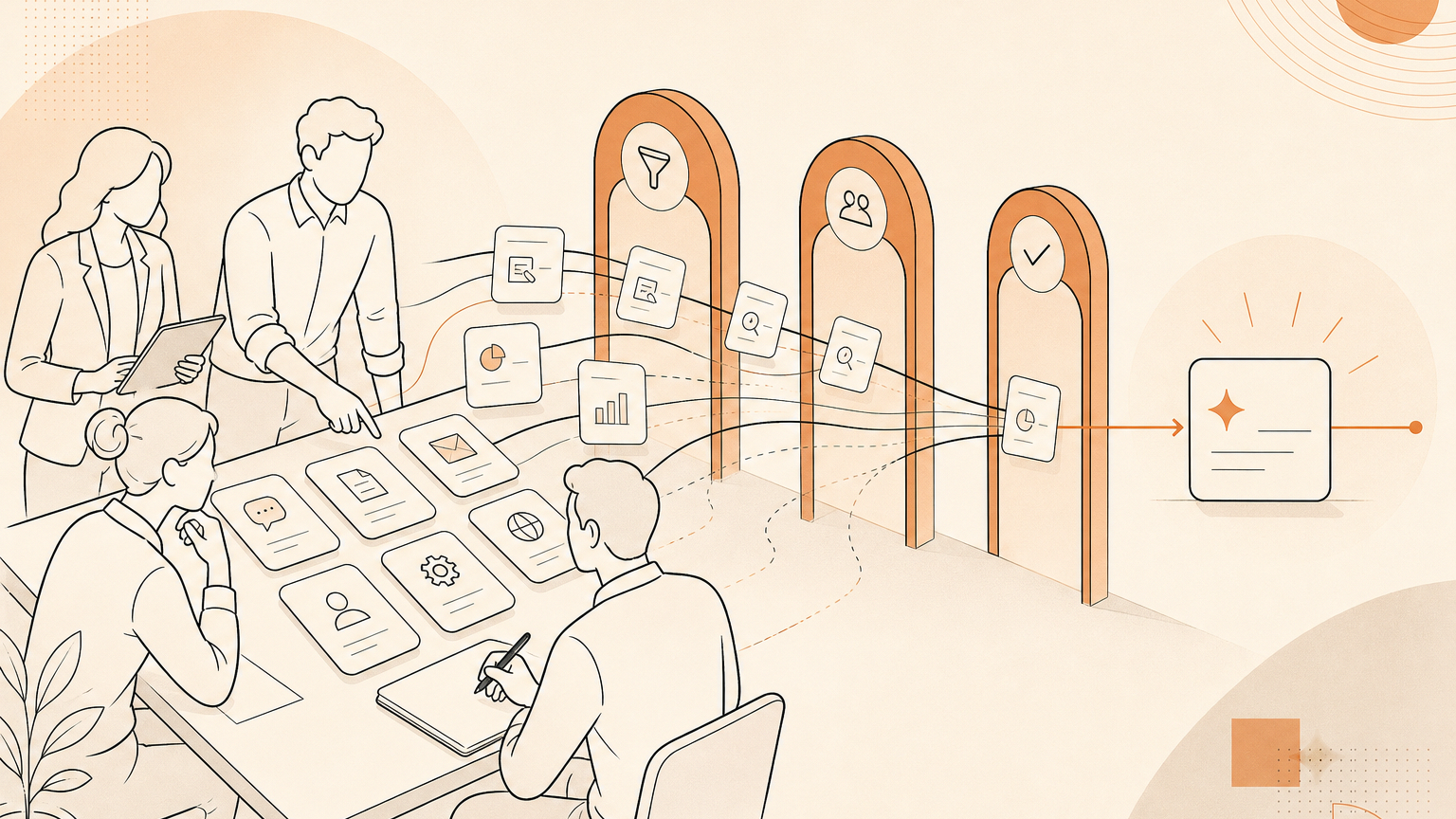
AI tool selection needs ROI gates before SMEs chase every model because teams can test many AI tools without deciding which workflow, owner, or business outcome each tool is supposed to improve. Today’s GOFTUS SEO layer gave `ai tools` a 100 Google Trends relative score and mapped it to AI tool selection for SME workflow automation. The Reddit signal is not treated as verified fact. It is a demand signal showing what operators are worried about right now. The business answer is a workflow with owners, budgets, action lanes, review steps, and improvement loops. GOFTUS would connect that workflow to /agents so the AI tool supports sales, support, marketing, documentation, security, or operations instead of becoming another unmanaged experiment.
The practical rule is simple: AI can prepare more work than a small team can safely approve. A useful SME system separates observe, prepare, approve, act, and review. It also defines what the model can see, which tools it can use, when a human must decide, and how the outcome is logged. That is where Reddit social heat becomes useful. It points toward the business process that needs ownership.
What this means for SMEs
The signal for this post came from GOFTUS Reddit intelligence scored r/singularity and r/artificial model-comparison chatter at 100, including hype about next-generation models and operators comparing ChatGPT, Claude, and Gemini. Google News RSS surfaced small-business AI tools and AI adoption coverage from the Small Business and Entrepreneurship Council, SUCCESS Magazine, U.S. Chamber of Commerce, and Forbes. These sources are used carefully. Reddit shows operator mood, while RSS and news items provide current headline-level context. GOFTUS does not claim that a Reddit post proves a market fact. The value is in the pattern. SMEs are seeing AI move from chat and content drafts into actions that touch customers, systems, files, campaigns, spend, and internal knowledge.
That shift changes the buying question. Instead of asking which tool is smartest, owners should ask which workflow is safest to improve first. A support team may need approved customer replies. A founder may need proof before trusting a customer service bot. A marketer may need claim checks before AI images or review-style copy leaves the business. An IT operator may need permission boundaries and evidence logs. A regional team may need local policy review. In each case, the useful AI system is not just a prompt. It is an operating path from request to approved action.
A practical setup starts with one high-friction process. GOFTUS maps where the request begins, what data the AI can use, what output it may draft, who reviews it, and where the result must be written back. That keeps the AI close to measurable work. It also makes tool selection easier because the workflow requirements decide whether ChatGPT, Claude, OpenAI tooling, Gemini, n8n, a specialist SaaS app, or a custom script is the right fit.
Summery for SMEs
For this group, the business pain point is that teams can test many AI tools without deciding which workflow, owner, or business outcome each tool is supposed to improve. GOFTUS would implement tool shortlist, use-case score, owner assignment, before-and-after baseline, data boundary, pilot log, exception review, and keep-or-cut decision. That design gives the team a path from signal to business outcome: tool spend moves toward saved time, faster handoffs, cleaner replies, or reduced rework instead of novelty-driven subscriptions. The workflow should include a small scorecard before launch. What is slow today? Who owns the decision? What customer or internal record changes? Which step must pause for review? What evidence will be kept?
The first version should be intentionally narrow. Let the AI observe and prepare. Let people approve risky outputs. Let the system act only after the owner has set rules for customer communication, CRM updates, browser actions, spend, document changes, or system access. Review the log weekly until the exceptions are understood. Then expand the workflow. This is slower than a demo, but it is faster than cleaning up a bad automation that customers or staff no longer trust.
Competitor lens
SaaS comparison sites help teams pick features and consultants can recommend stacks, but GOFTUS designs the control layer that proves whether a tool changed the workflow. The difference is ownership. A tool can generate, classify, summarize, or route. A consultant can advise. GOFTUS designs the controlled path that decides when the AI is allowed to move work forward. That includes integrations, approvals, monitoring, exception handling, and monthly improvement.
This is where ROI becomes visible. Savings do not come from saying AI is installed. They come from fewer missed replies, less duplicated admin, faster handoffs, cleaner evidence, safer campaigns, clearer cost decisions, better browser boundaries, or less time spent rechecking AI output. For SMEs, the winning system is usually modest, connected, and reviewed. It should feel like a dependable workflow, not a magic assistant with unclear authority.
FAQ
What should an SME automate first for ai tools?
Start with a repeatable process that already has a clear owner and visible pain. Good candidates include lead follow-up, support triage, approved content drafts, document routing, reporting checks, security intake, or regional support handoffs. Avoid processes where no one agrees on the decision rule.
How does GOFTUS keep the workflow safe?
GOFTUS separates preparation from action. AI can draft, summarize, classify, or recommend, but customer-facing sends, CRM changes, browser submissions, spend, sensitive document updates, or system access should pass through rules and approval until the business is ready for more autonomy.
Where should this connect internally?
Most workflows should connect back to /agents, plus the systems the team already uses: CRM, support inbox, shared documents, spreadsheets, reporting dashboards, marketing channels, or browser-based portals. The point is to reduce handoff loss, not create another disconnected AI workspace.
Source notes: Reddit and Composio results are treated as social heat only, not verified fact. Google News RSS was used for headline-level cross-checking where direct articles were not needed or were not fully fetched.