AI security workflows need backup lanes before systems go quiet
AI security workflows need backup lanes, alert owners, and SOP evidence before outages or connectivity gaps leave small teams guessing.
# AI security workflows need backup lanes before systems go quiet Meta description: AI security workflows need backup lanes, alert owners, and SOP evidence before outages or connectivity gaps leave small teams guessing.
AI security workflows need backup lanes before systems go quiet
Meta description: AI security workflows need backup lanes, alert owners, and SOP evidence before outages or connectivity gaps leave small teams guessing.
Quick answer
SMEs should treat this Reddit signal as a prompt to build a controlled ai security workflow, not as a reason to buy another disconnected AI tool. Start with one repeated task, define the owner, set approval and exception rules, connect the result to /services, and review the outcome monthly.
What this means for SMEs
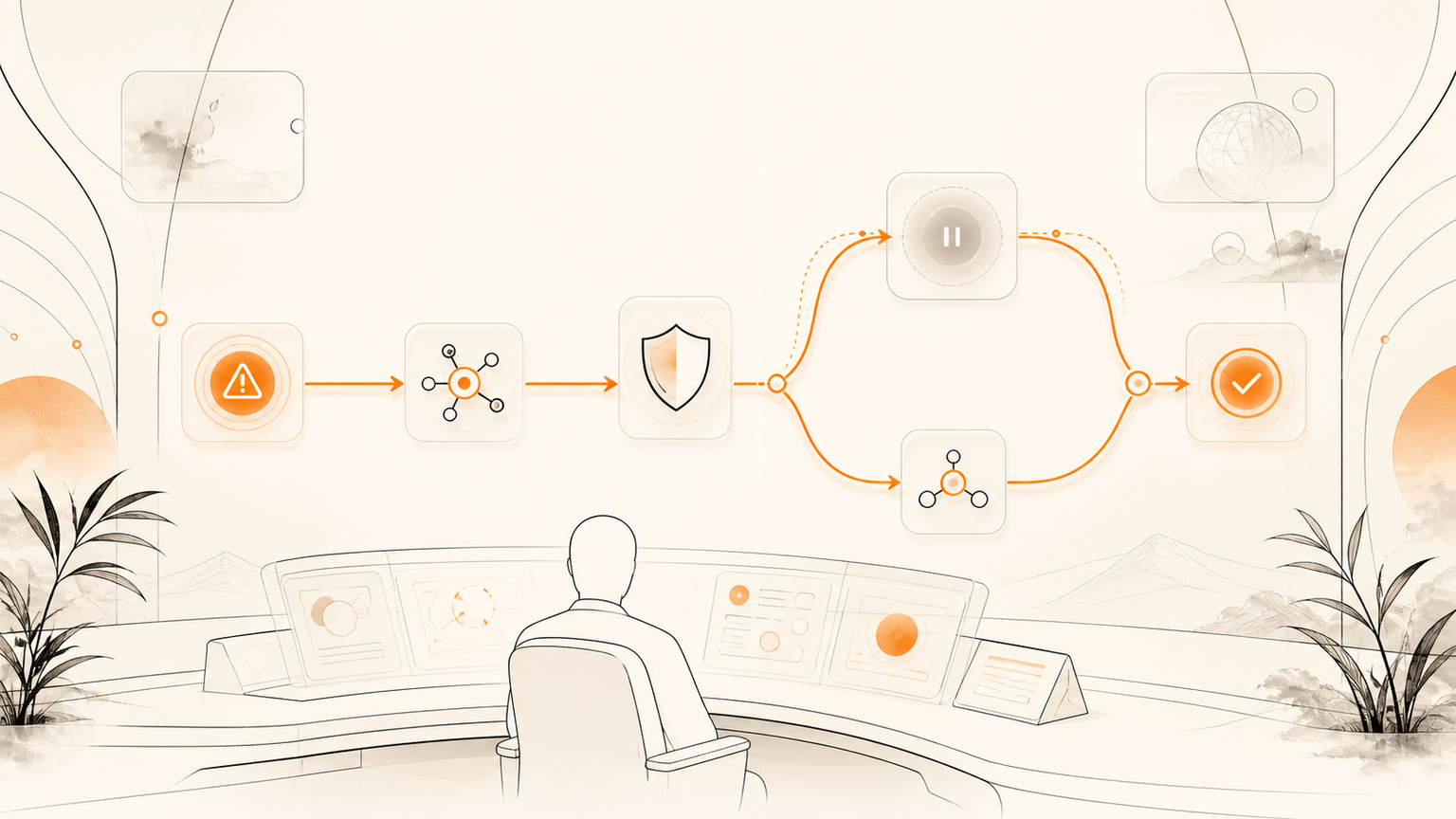
r/sysadmin backup-connectivity discussion is a practical reminder that small teams need fallback lanes before systems go quiet. is useful as social heat, not as proof that every business has the same problem. The useful pattern for SMEs is narrower: security and IT work often depends on one alert channel, one person, or one undocumented recovery step. GOFTUS would turn that into an AI security workflow with alert triage, SOP retrieval, backup communication lanes, and owner escalation, then review whether the work saved time, reduced rework, protected customers, or improved follow-up. The keyword target for this post is ai security, but the practical goal is not ranking for a phrase alone. It is helping an owner see which step should be automated, which step needs a named human owner, and where the result should land in CRM, support, documents, browser actions, or reporting. That is why this workflow points back to /services: the service page matters only when it turns the signal into a controlled operating system.
The mistake is to treat the Reddit thread as a feature request list. A founder, operator, or IT lead needs to ask a more commercial question: which repeated decision is slowing the team down, and what evidence would make automation safe enough to use every week? If the answer is not visible, the next AI tool will usually create more tabs, more prompts, and more manual checking.
A practical GOFTUS build starts with a short map. First, capture the trigger: a customer question, a support ticket, a marketing draft, a model update, a security alert, or a regional request. Second, define what the AI may prepare. Third, separate low-risk execution from steps that change money, customer records, public content, permissions, or external websites. Fourth, keep logs that show source, owner, approval, action, exception, and result.
That structure is where ROI becomes measurable. Instead of asking whether AI is impressive, the team can count fewer missed follow-ups, shorter response cycles, cleaner handoffs, faster draft review, or fewer unsupported claims leaving the business. The same pattern also makes tool changes less risky. ChatGPT, Claude, Gemini, n8n, scripts, SaaS products, and consultants can all help, but they should sit inside one workflow design rather than each becoming a separate mini-system.
For a first implementation, GOFTUS would avoid a broad transformation project. The better first step is one workflow with one owner, one approval rule, one exception path, and one review date. If the workflow touches web portals or browser-based systems, it should include browser controls: allow-lists, login boundaries, human review before submit, and a record of what the AI prepared versus what a person approved.
The control layer also makes internal conversations easier. Sales can see what support promised. Support can see which source the AI used. Marketing can see whether a claim was approved. Finance or operations can see when spend, access, or customer impact requires review. That shared evidence is often the difference between a clever AI demo and a weekly workflow the business can trust.
Summery for SMEs
Use the Reddit signal as a warning light, not a blueprint. Pick one repeated workflow, define the safe AI preparation step, and keep risky action behind an owner review. Connect the output to /services or the right GOFTUS path so the automation has a home, not just a prompt. The measurable win should be a business result: faster follow-up, fewer missed tasks, cleaner review, better evidence, or lower tool waste.
Competitor lens
Generic SaaS tools are useful when the process is already clear. Consultants are useful when the strategy is still vague. The gap for many SMEs is the middle: workflow design, integration, monitoring, review, and improvement. GOFTUS positions the build around that middle layer. We do not need to replace n8n, ChatGPT, Claude, Gemini, or existing CRM tools. We connect them into a controlled operating flow with owners, approvals, exception logs, and monthly tuning.
FAQ
How should an SME start with ai security?
Start with one workflow where delays or rework are already visible. Define the trigger, expected output, approval owner, exception rule, and destination system before choosing another tool.
When should AI be allowed to act automatically?
Allow automatic action only for low-risk steps with clear rollback. Keep customer-facing, financial, permission, browser-submit, and public-content actions behind human review until the logs prove the process is stable.
Where should this connect inside GOFTUS?
Use /services as the internal route for implementation planning, and use /questions for product-focused answers that support the same SEO cluster.
Source notes
Reddit/social signal used as operator sentiment: r/sysadmin 5G backup modem discussion from 2026-08-20 intelligence. Cross-checks were gathered through Google News RSS or accessible publisher feeds and are treated as headline-level context where direct pages are blocked.
What is agentic AI in cybersecurity? - Microsoft (Microsoft): https://news.google.com/rss/articles/CBMimwFBVV95cUxNcTlWem56SDhXd001Y3ZCcjV5ZDVuUDJxTkxKNW1YeXQxRGk1d0JYVFZLVFB3ZWtjbEU2a2RpR29JUGNIZkNMZk01c1FTUlYwOUlqaXJneFVib2szNm5CVUk5UFQ5ZGVuMEdJM2hpM01FU3o5TkZtX09xVXhVa2JFOW1TMGhPT0xUTGg5NzlYZHREQUJoX0trZnZoQQ?oc=5
AI Security Operations Center Market Set To Hit $47.07 Billion By 2031, Driven By MSFT, CRWD and PANW - foreignpolicyjournal.com (foreignpolicyjournal.com): https://news.google.com/rss/articles/CBMi4AFBVV95cUxOWXNicU5SanpFNDhRbm5kV096NUNpZDVNOVJEMEhIdmNxa1VxMmFRbWpVakxEQnpLaXZGb1AtUnJzQ0xfY2JSQWJEcUZOZFRHX0ZtdXBPbHJGcGJPajFJX0xacm1HaTZLOFBadHFadDZIUmp1ZGpBOUF1MUpTNGQ4UHZWLXIwMHJzb2FKcHlLRWV1aGxLMTVCSUxmMXAzd3owNG84YTB5djJnZEYtdWx1R1RyTnpyRndjV0JwSHVtT2JYNzNQdDdTWktWclpSbGdjaTlWMFBNYkFNWVlNdkRxNw?oc=5
ESET announces integration with Sekoia - ESET (ESET): https://news.google.com/rss/articles/CBMie0FVX3lxTE5OSnRyNG8wRVAyQ3JtRllkVHdRSXdQZGNwV1AwbU83dW9JVWxFQi1uSkg5UXJ2aU9mdE00T09XbGpLNGJXbC1fVUNzTmxZdnhRek53RHRCU1hsYmp4MFpDa0hYVnY5X1FnWVRPTjhVSTNKWUtwQWdpLWhDYw?oc=5