AI image generator workflows need approval before marketing content ships
AI image generator workflows for SMEs need brand review, approval logs, and publish controls before marketing content reaches customers.
# Quick answer AI image generator workflows need approval before marketing content ships because the risky step is not creating a graphic. It is letting generated assets move from a prompt into ads, landing pages, socia
Quick answer
AI image generator workflows need approval before marketing content ships because the risky step is not creating a graphic. It is letting generated assets move from a prompt into ads, landing pages, social posts, proposals, or email campaigns without a clear owner. The latest GOFTUS daily SEO run flagged the 95-score keyword `ai image generator`, with a recommended business angle around approved marketing content. The Reddit intelligence run added a 100-score r/marketing signal about alleged fake review activity, which is a useful reminder that marketing trust can be damaged by distribution shortcuts as much as by bad creative.
For SMEs, the practical answer is a controlled workflow. Let AI draft concepts quickly. Then route every asset through brand review, claim review, channel approval, and a publish log. GOFTUS builds those lanes so teams can use AI image tools without turning marketing into an unmanaged reputation risk.
What this means for SMEs
AI image tools are now cheap enough for sales, support, operations, and founders to use directly. That is useful. A small team can test campaign concepts, resize a product explainer, create event graphics, or make a first draft for a newsletter without waiting days for a designer. The problem starts when the tool is treated as the workflow rather than one step inside the workflow.
A prompt can create a polished image that includes a fake badge, an invented customer quote, a logo-like mark, a misleading product screen, or a claim nobody approved. Even when the picture looks harmless, the surrounding workflow can fail. Someone downloads the wrong version. A sales rep posts a draft. A contractor reuses an asset in a paid ad. A founder approves a campaign in chat, but there is no evidence trail when a customer asks who checked the claim.
The news cross-check points in the same direction. MarketScale framed AI video as moving from a marketing experiment into a procurement and brand-safety specification, citing the need for verification, metadata, and vendor controls. That is video rather than still images, but the operating lesson is the same for SME marketing: generation speed creates value only when review and evidence keep pace.
GOFTUS would not tell a business to stop using image generators. The stronger move is to define what each role may do. A marketer can request drafts. A designer or brand owner can approve style. A product owner can approve claims. A manager can approve spend or channel release. The workflow stores the final asset, source prompt, reviewer, decision, and publication target.
Summery for SMEs
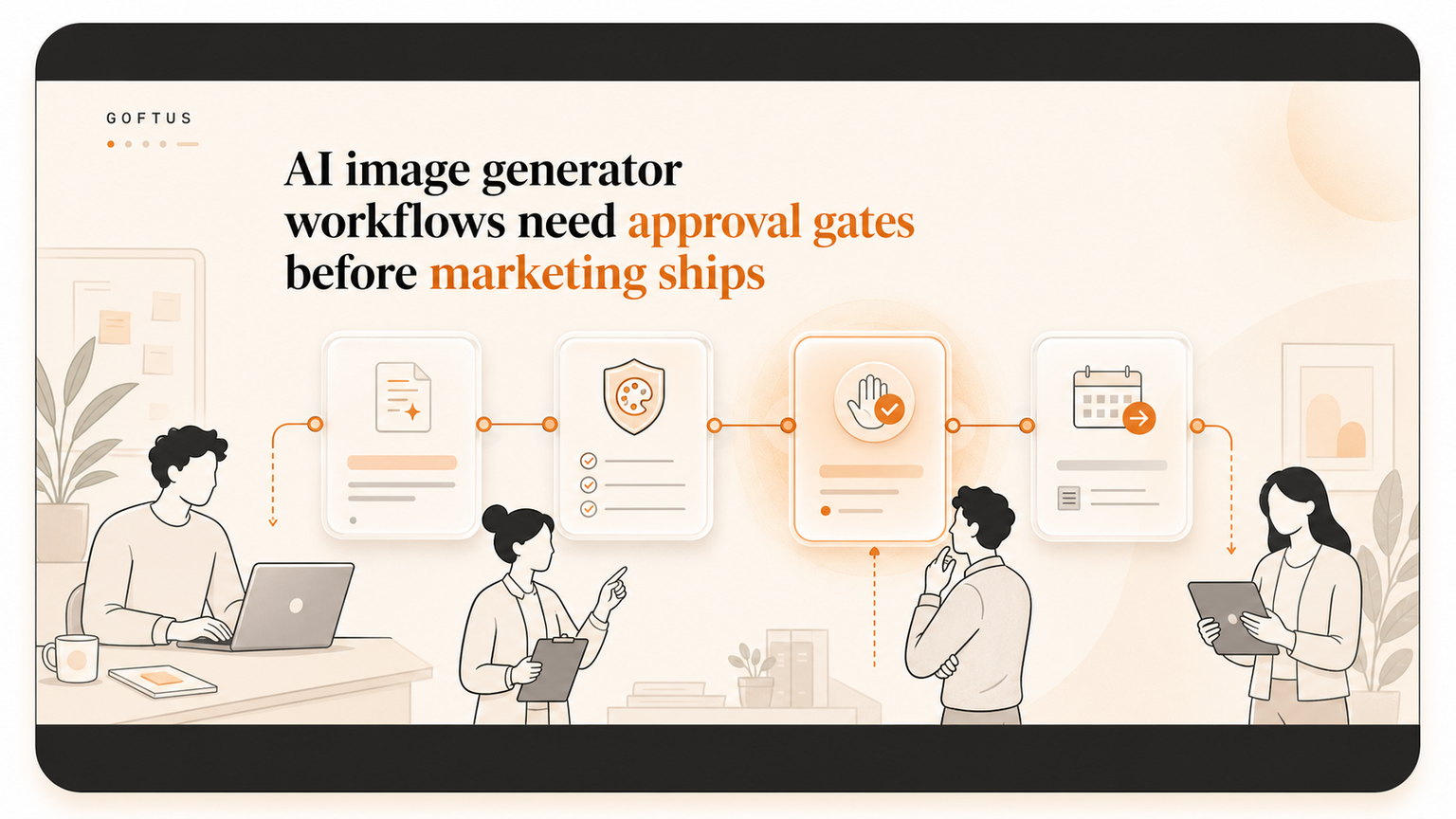
If your team uses an AI image generator, treat it like a production input, not a public output. The safe path is request, generate, review, approve, publish, and log. Each lane should have a named owner and a simple rule for what happens when the image contains unclear text, brand marks, product claims, customer examples, legal promises, or sensitive data.
Start with a short intake form. Ask who the asset is for, which campaign it supports, what channel it will appear on, and which claims it must avoid. Then let AI create several drafts. Keep the best draft inside the workflow, not scattered across personal downloads. Add a brand check for colors, tone, logos, and visual consistency. Add a claim check for prices, delivery promises, testimonials, guarantees, awards, compliance language, and product screenshots. Add a final publish check before the asset reaches Meta, LinkedIn, Google Ads, email, a landing page, or a proposal.
This is where GOFTUS helps. We connect the AI tool to the real business process around it. That can include forms, shared folders, CRM records, approval queues, Slack or email notifications, n8n automations, human review gates, audit logs, and reporting. The goal is not more bureaucracy. The goal is to let creative work move faster while stopping the few risky assets before they become public.
Competitor lens
Standalone AI image generator tools are useful for speed. Marketing platforms and SaaS suites can also add templates, asset libraries, and campaign scheduling. Consultants can help with brand rules or creative direction. Those pieces matter, but they often stop before the operational handoff.
GOFTUS focuses on the workflow layer that sits around the tools. We define who can request an asset, who checks it, what gets logged, when a human must approve, and how the final version moves into CRM, support, document, or campaign systems. That matters because most SME failures are not caused by one bad prompt. They are caused by unclear ownership after the prompt succeeds.
If a SaaS tool says an asset is ready, GOFTUS still asks ready for what channel, approved by whom, based on which source, and stored where. If a consultant creates guidelines, GOFTUS turns those guidelines into repeatable operating steps. If an internal team wants freedom, GOFTUS gives them green, amber, and red lanes. Green assets can move quickly. Amber assets require review. Red assets stop until a named person approves or rejects them.
FAQ
Should SMEs use AI image generators for marketing?
Yes, if the generator is inside a controlled workflow. Use it for drafts, variations, resizing, and campaign concepts. Do not let generated content go straight to customers without brand and claim review.
What should be reviewed before an AI generated image is published?
Review logos, claims, product details, pricing, testimonials, compliance language, customer examples, sensitive data, and channel fit. Also check that the asset is saved with the final approval record.
How does GOFTUS help with AI image generator workflows?
GOFTUS designs the intake, review, approval, publishing, and audit trail around the creative tool. We connect the workflow to the systems your team already uses.
Can approval workflows slow marketing down?
They should not. A good workflow separates low-risk creative drafts from high-risk public assets. The result is faster production with fewer last-minute corrections.
Source notes: GOFTUS daily SEO FAQ run on 2026-08-22 identified `ai image generator` with a 95 Trends score and the angle "AI image generator workflows for approved marketing content". GOFTUS Reddit intelligence on 2026-08-22 provided a 100-score r/marketing signal about alleged fake review activity by AppsFlyer accounts, used here as social sentiment about marketing trust and not as a verified legal finding. Google News RSS surfaced MarketScale, "AI video is becoming a procurement and brand-safety spec," which was directly reachable and used as the news cross-check for brand-safety and approval-control context. Internal GOFTUS link: /services.