AI Is Hitting Entry-Level Jobs First: Why SMEs Need an Apprenticeship Layer, Not Just Automation
A viral Reddit thread around AI and entry-level jobs matches wider reporting from Fortune and The Hill. The real business risk is not fewer juniors. It is losing the training layer that creates future operators.
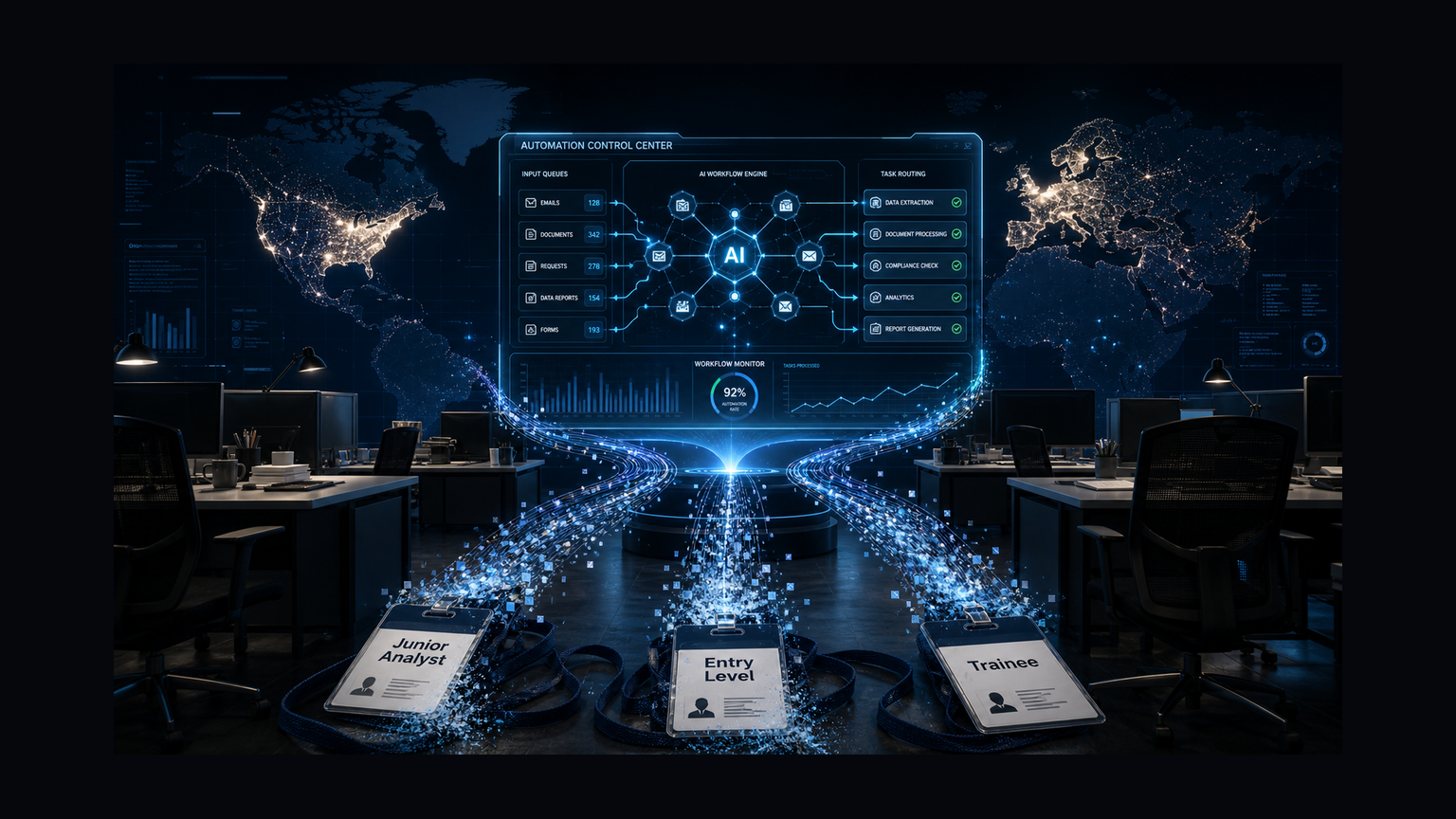
A hot Reddit discussion pointed to a Stanford economist warning that the AI pressure on entry-level jobs is not going away. Fortune has also covered the entry-level jobs concern, while The Hill framed the broader risk as AI creating a new underclass. For business owners, this is not only a labour-market debate. It is an operating model problem. If AI absorbs junior work, companies must decide how people learn the business.
What happened
The Reddit thread focused on evidence that AI is affecting entry-level roles first. These are often the jobs that involve research, drafting, checking, admin, support, reporting, and coordination. Those are exactly the areas where AI tools are easiest to plug in.
That makes the debate emotional, but also practical. Businesses do not automate in a vacuum. They automate tasks that used to teach people how the company works.
The hidden risk
Entry-level work is not just cheap labour. It is the apprenticeship layer. A junior employee learns by cleaning data, handling tickets, preparing reports, checking customer details, updating CRMs, and watching how senior people make decisions.
If AI removes that layer without replacing the learning path, the company may save money this quarter and create a talent gap next year.
Why SMEs should be careful
Small businesses are under pressure to do more with less. AI is attractive because it can remove manual admin quickly. But if every junior task becomes a black-box workflow, the business loses visibility, resilience, and succession.
A founder cannot scale by being the only person who understands the process. A business cannot grow if AI runs the workflow but no human team member understands why it works.
Thirumurugan’s view
The answer is not to reject AI. The answer is to build an apprenticeship layer around AI. Let AI handle the repetitive work, but require juniors to review samples, explain decisions, improve prompts, tag exceptions, and document patterns.
That turns automation into a training environment. People learn faster because they are not buried in copy-paste work, but they still touch the logic of the business.
A better operating model
For SMEs, every AI workflow should have an owner, a reviewer, and a learning loop. The AI does the first pass. A human checks edge cases. The team records what changed. The process improves.
This is especially important in sales ops, customer support, finance admin, recruitment, and operations reporting. These areas look simple until something breaks.
What to do now
Audit the junior tasks you want to automate. For each task, ask: what does this teach a new employee? If that lesson matters, do not remove it. Redesign it.
Create AI-assisted checklists. Give juniors exception queues. Let them review AI outputs against source data. Reward people for improving the workflow, not just completing tickets.
The future team is not human versus AI. It is AI doing the repetitive work while humans learn the judgement layer faster.
Sources and signal
Reddit discussion from r/technology; cross-checked with Fortune reporting on AI and entry-level roles plus The Hill commentary on AI underclass risk.
Quick answer
AI may reduce some entry-level tasks, but SMEs should not remove the learning layer completely. The stronger model is an AI-assisted apprenticeship layer where juniors review outputs, handle exceptions, document patterns, and learn judgement while AI handles repetitive admin.
What is an AI-assisted apprenticeship layer?
An AI-assisted apprenticeship layer is a workflow design where AI does the first pass on repetitive tasks, while junior team members review exceptions, validate sources, improve process notes, and learn how the business makes decisions. It keeps training inside the company instead of hiding work inside black-box automation.
Summery for SMEs
| Question | Direct answer |
|---|---|
| Will AI remove all junior roles? | Not all, but it can remove many junior tasks if companies automate without redesigning training. |
| What is the business risk? | SMEs may lose the pipeline that teaches people how operations, customers, and decisions work. |
| What should founders do? | Turn junior work into AI review, exception handling, documentation, and workflow improvement. |
| Which teams are affected first? | Sales ops, support, finance admin, recruitment, research, reporting, and operations coordination. |
FAQ
Should SMEs replace entry-level work with AI?
SMEs should automate repetitive parts of entry-level work, but keep structured human review so new employees still learn judgement, context, and company process.
How can AI help junior employees learn faster?
AI can prepare first drafts, summaries, and classifications. Juniors can then compare outputs with source data, correct mistakes, document edge cases, and learn why decisions are made.
What happens if companies automate all junior tasks?
They may save time in the short term but create a future skills gap, because fewer people understand the workflow deeply enough to improve or repair it.