AI Bosses and ChatGPT Directives: The SME Workflow Governance Lesson
A Reddit and Futurism signal on bosses using AI for decisions shows why SMEs need workflow governance before automation scales.
# Quick answer A hot r/technology Reddit thread is discussing a Futurism headline about bosses becoming obsessed with AI, using it for decisions, sending ChatGPT directives to employees, and even asking it who to fire.
Quick answer
A hot r/technology Reddit thread is discussing a Futurism headline about bosses becoming obsessed with AI, using it for decisions, sending ChatGPT directives to employees, and even asking it who to fire.
Bharatvaj's view: the business issue is not whether managers should use AI. The issue is whether AI advice is entering the workplace through governed workflows, or through random prompts that create confusion, risk, and poor accountability.
For SMEs, the practical lesson is simple. Do not let AI become an invisible manager. Use it as a controlled workflow layer with clear inputs, human approval, logging, and feedback loops.
What this means for SMEs
AI can help owners and managers summarise documents, prioritise follow-ups, route support tickets, prepare reports, and spot operational exceptions. But when leaders use chat outputs to direct staff without process design, three risks appear quickly.
First, instructions become inconsistent. One manager asks a model for a sales process, another asks for a redundancy plan, and the team receives conflicting guidance with no source of truth.
Second, accountability becomes blurred. If a customer, employee, or supplier challenges a decision, the business needs to know who approved it, what data was used, and what policy guardrails applied. A pasted ChatGPT answer is not a governance system.
Third, automation quality decays over time. Prompts that worked once can become outdated when pricing, compliance rules, CRM fields, staffing, or customer expectations change.
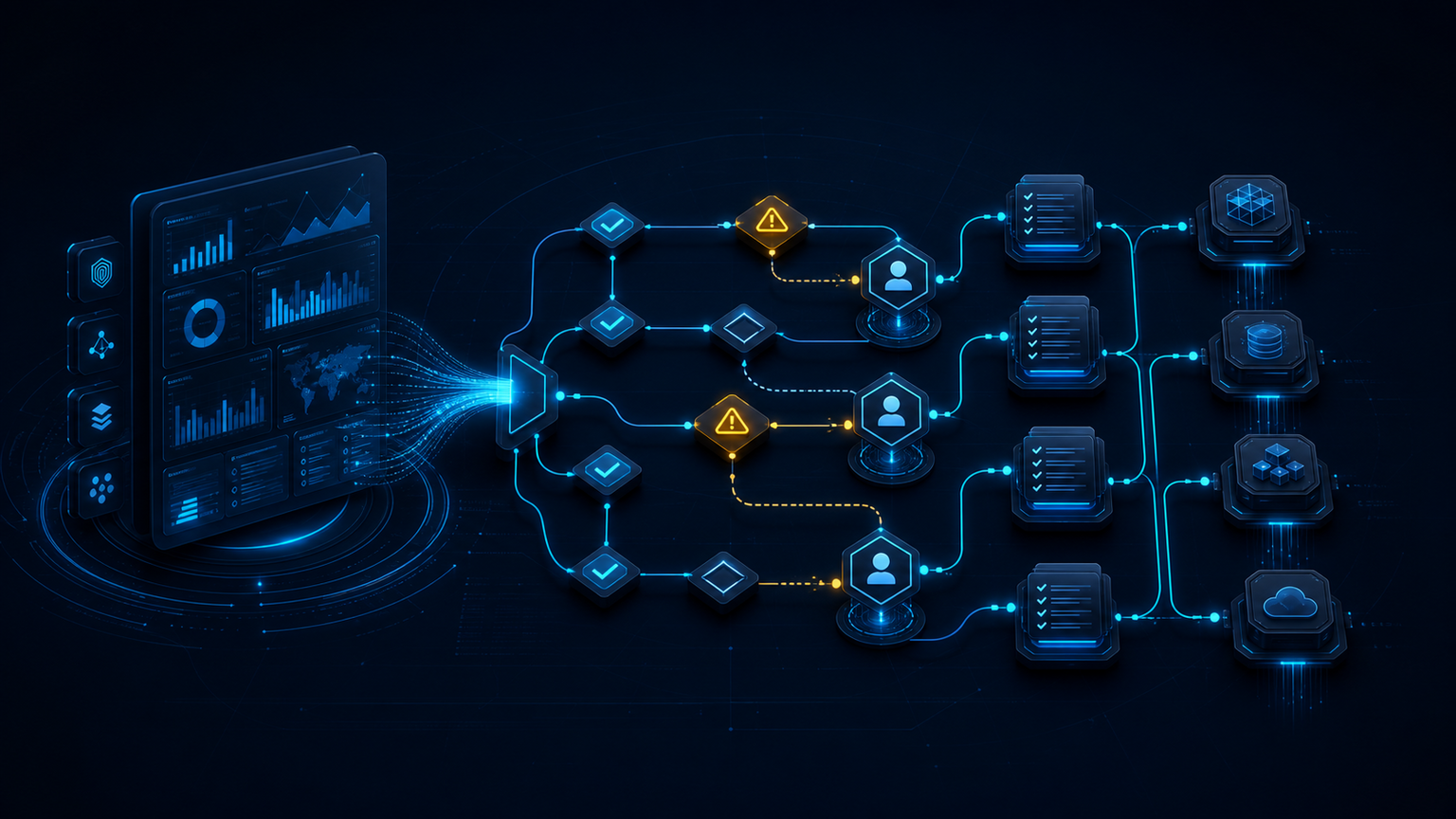
The better SME pattern is a workflow-first pattern:
1. Define the decision or task clearly.
2. Connect the right systems, such as CRM, inbox, support desk, finance, or document storage.
3. Let AI draft, classify, summarise, or recommend.
4. Add human review for high impact actions.
5. Log every action and decision.
6. Review performance monthly and improve the workflow.
That is where AI moves from workplace noise to operational leverage.
Competitor lens
This topic overlaps with the global SaaS automation category, including Zapier, n8n, Make, Lindy, Relevance AI, Gumloop, Bardeen, and Stack AI. Those tools are useful for connecting apps and building agents, and many SMEs should absolutely use them where they fit.
It also overlaps with US and European AI consulting content from firms such as LeewayHertz, Markovate, Addepto, Netguru, STX Next, and 10Clouds, where the conversation often centres on AI agents, RAG, production AI, and industry use cases.
What competitors are often missing is the messy layer between a tool and a business result. A manager does not need another disconnected AI answer. A manager needs a safer operating rhythm for decisions, exceptions, approvals, and monitoring.
Tools automate tasks. GOFTUS automates the workflow around the task.
That means GOFTUS frames AI adoption around workflow design, system integration, human review, measurable outcomes, monitoring, and monthly improvement. For US SMEs, this is especially relevant because workplace AI decisions can quickly touch HR, privacy, employment risk, customer experience, and operational resilience.
Summery for SMEs
| SME question | Practical answer | GOFTUS workflow angle |
|---|---|---|
| Should managers use AI for decisions? | Yes, for support and analysis, not as an unreviewed authority. | Build approval gates for sensitive actions. |
| What is the main risk? | Random AI instructions can create confusion and weak accountability. | Connect AI outputs to policies, logs, owners, and review steps. |
| Where should SMEs start? | Pick one recurring workflow with measurable pain. | Automate the workflow around the task, then improve it monthly. |
| What should be avoided? | Using pasted AI advice as a substitute for management judgement. | Keep humans in the loop for HR, finance, legal, security, and customer impact. |
FAQ
Can SMEs use ChatGPT for management decisions?
Yes, but it should be used as a decision support tool. For hiring, firing, finance, compliance, customer disputes, or security decisions, SMEs should require human review, clear policy checks, and audit logs.
What is the safest first AI workflow for a small business?
Start with a low risk, high volume workflow such as support triage, CRM follow-up, meeting summaries, reporting packs, or document intake. These create measurable time savings without letting AI make final high impact decisions alone.
How does GOFTUS make AI automation safer?
GOFTUS designs the workflow around the task. That includes the trigger, data source, AI step, review gate, system update, alerting, measurement, and monthly improvement cycle.
If your team is experimenting with ChatGPT, agents, or workflow builders, GOFTUS can help turn scattered prompts into governed workflows that save time without losing control. Book a practical AI workflow review with GOFTUS.