AI agent security starts with owned identity workflows
AI agent security starts with owned identities, lifecycle rules, approval logs, and clear stop rules for every non-human account.
# Quick answer AI agent security starts with owned identity workflows. The Reddit signal is not proof of a market fact, but it is useful operator heat: r/sysadmin discussed a Microsoft Entra advisory reversal and r/cybe
Quick answer
AI agent security starts with owned identity workflows. The Reddit signal is not proof of a market fact, but it is useful operator heat: r/sysadmin discussed a Microsoft Entra advisory reversal and r/cybersecurity discussed unmanaged non-human identities; treated as security-operator heat. For GOFTUS, the buyer problem is AI agent security through owned identity and lifecycle workflows. SMEs should turn that signal into a practical workflow with owners, limits, review gates, and logs before scaling another AI tool.
What this means for SMEs
The risk is not that AI tools are useless. The risk is that a team treats a visible AI trend as permission to automate without a workflow. In this case, the pain point is that service accounts, workload identities, and agents can accumulate permissions without owners, renewal dates, or evidence that anyone knows what they can change. A founder, ops lead, or marketing manager may see a quick win, but the business still needs to know who requested the work, what data was used, who approved the output, where the final action landed, and how exceptions are reviewed.
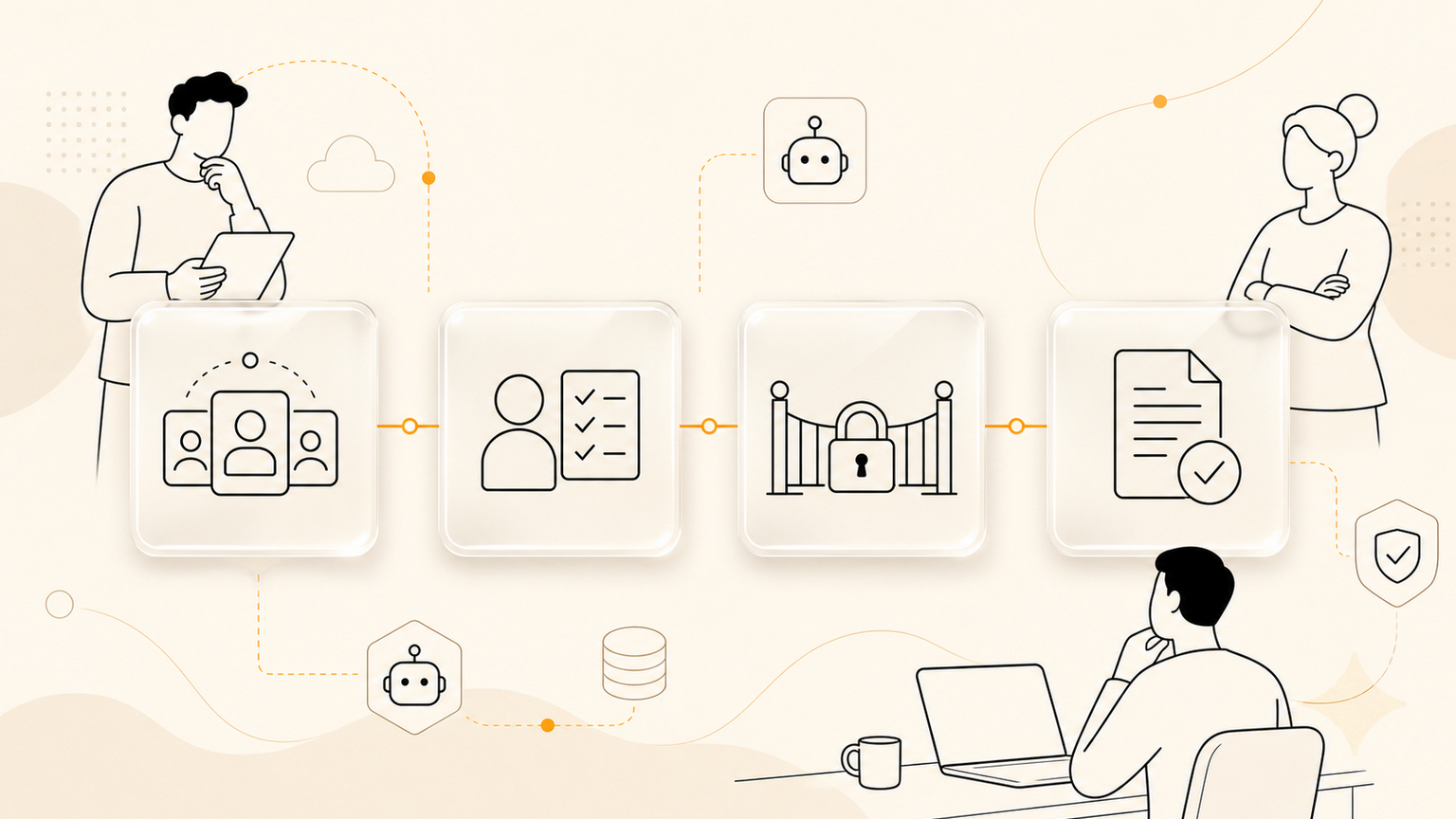
That is where ai agent security becomes an operating system problem. A chatbot, generator, no-code workflow, or agent can prepare work quickly, but it should not silently change customer records, publish assets, spend budget, grant access, or send outreach. GOFTUS would first map the workflow on paper: trigger, inputs, owner, review lane, approved action, blocked action, fallback route, and monthly improvement review. Then the automation can be built around the real business path instead of around the newest feature.
Summery for SMEs
The simple summary is this: use the Reddit signal as a warning light, not as a strategy. AI agent security through owned identity and lifecycle workflows should start with one repeated workflow, one accountable owner, and one measurable result. The measurable result might be faster response time, fewer missed follow-ups, lower tool waste, cleaner approvals, safer access, or more consistent customer communication. If the result cannot be measured, the automation is probably still a demo.
A practical GOFTUS implementation would inventory non-human identities, assign owners, set time-limited permissions, require approval before risky actions, log every agent action, and review dormant access monthly. That design keeps the team in control while still using AI where it helps: preparing drafts, extracting context, routing tasks, checking policy, summarising records, or recommending next actions. The output should then pass through review if it affects a customer, a public channel, a payment, an account, a document of record, or a system permission. That is how SMEs get lower identity drift, faster audits, safer agent rollout, and clearer accountability when an AI workflow touches systems or customer data.
Competitor lens
SaaS tools, consultants, and no-code templates can all be useful. A tool may provide the model, the interface, or the connector. A consultant may help define the first process. The gap appears after launch: who monitors failures, updates prompts, checks logs, trains staff, and improves the workflow when the business changes? GOFTUS is positioned around that ownership layer. The value is not only building a ai agent security workflow. It is designing the integration, review, reporting, and improvement rhythm so the automation keeps working after the first impressive demo.
Workflow GOFTUS would implement
For this topic, GOFTUS would start with a short discovery of the repeated work and the systems involved. Next comes a workflow map that separates observe, prepare, approve, act, and review lanes. The AI can observe incoming requests, prepare a draft or recommendation, and enrich the record. A person approves high-impact steps. The system then acts only inside allowed boundaries and writes an audit trail. The workflow can connect to CRM, support, documents, marketing tools, identity systems, or reporting, depending on the use case. For implementation paths, start with /agents.
FAQ
Is this Reddit post a verified source?
No. It is treated as social heat only. The article uses it to identify an operator pain point, then cross-checks the broader topic with reputable RSS or news sources.
What should an SME do first?
Pick one workflow where the failure mode is visible, the owner is clear, and the result can be measured. Do not automate the whole function at once.
Where should this link internally?
The most relevant GOFTUS path for this post is /agents, with supporting discovery and search-style answers on /questions.
The main discipline is sequence. Prepare before act. Review before publish or update. Log before declaring the workflow reliable. When that sequence is visible, AI tools can help a small team move faster without hiding risk inside a chat window or a brittle connector.
Source notes
Reddit/social signal: r/sysadmin discussed a Microsoft Entra advisory reversal and r/cybersecurity discussed unmanaged non-human identities; treated as security-operator heat. Reddit is used as social heat, not verified fact.
News or article cross-check: Google News RSS listed Redmond Channel Partner, Security Info Watch, and Redmondmag coverage of AI-agent identity visibility in Microsoft Entra ID. If direct article pages were unavailable or mixed, Google News RSS/headline-level context was used and labelled accordingly.
SEO layer: keyword `ai agent security` with Trends score 94 from the 2026-08-24 GOFTUS daily SEO FAQ run.