AI Agent Governance Is Becoming an Identity Problem, Not Just a Tool Problem
AI agents are becoming non-human identities. SMEs need approvals, access rules and audit trails before connecting them to workflows.
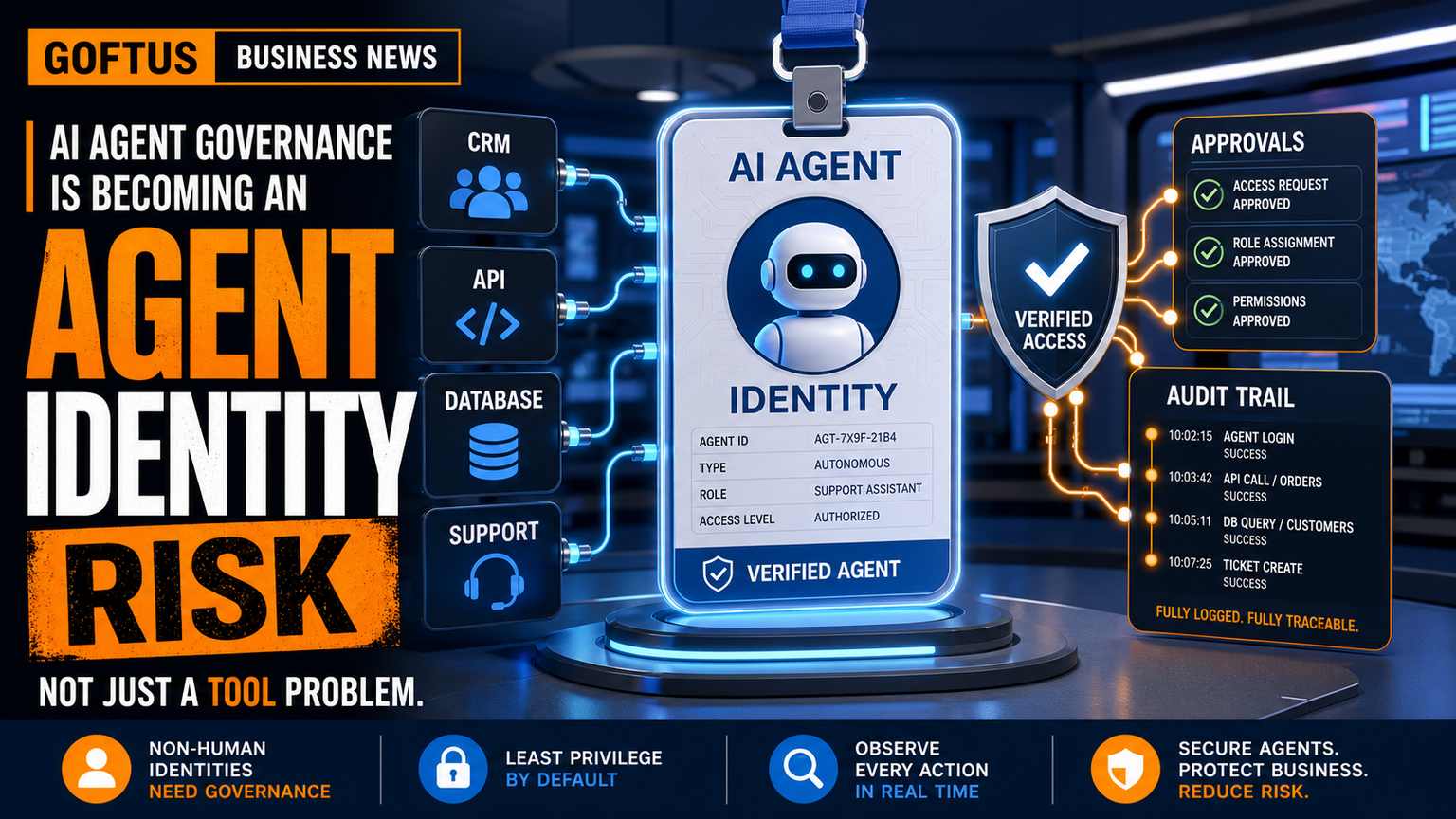
# AI Agent Governance Is Becoming an Identity Problem, Not Just a Tool Problem AI agents are no longer just clever chat windows. They are starting to act like non-human workers that can connect to CRMs, APIs, databases,
AI Agent Governance Is Becoming an Identity Problem, Not Just a Tool Problem
AI agents are no longer just clever chat windows. They are starting to act like non-human workers that can connect to CRMs, APIs, databases, documents, calendars and support systems. That shift is useful for UK, US and EU SMEs, but it also changes the risk model.
The fresh signal this week is a cluster of AI agent security and governance coverage. MeriTalk highlighted identity-first governance for AI agents, describing agents as a growing class of non-human identity. Google News also surfaced AWS coverage about authenticating legitimate AI agent traffic with AWS WAF Bot Control. Kong's security article on AI agent platforms being attacked added a developer-community signal through Hacker News, although that discussion was light rather than a major social surge.
Thirumurugan's view: the next practical question is not whether an SME should use agents. It is whether the business can prove which agent acted, what it accessed, who approved it and what happened when something went wrong.
Quick answer
AI agent governance means treating every agent like a controlled business identity. Each agent should have a job, owner, approved tools, permission limits, logs, escalation rules and review process.
For SMEs, the safest path is to connect agents only after the workflow has been designed. GOFTUS can help map that through AI automation services, agentic workflow builds and practical support routes for teams that need a starting audit through /contact.
Why identity now matters for AI agents
A human employee already has an identity model. They sign in, receive permissions, follow a role and leave an audit trail in key systems. An AI agent needs the same discipline, but many businesses are tempted to skip that step because the agent sits inside a tool they already trust.
That is where risk appears. A support agent might read customer records. A sales agent might update CRM fields. A finance assistant might pull invoice data. A document agent might summarize sensitive contracts. If those actions are not tied to approved access and a visible log, the business cannot easily answer basic questions.
Who gave the agent access? Which system did it call? Did it use the right knowledge base? Was a human approval required? Did it create a ticket, update a record or send a message? If the answer is unclear, the automation is not operationally ready.
What this means for SMEs
SMEs do not need enterprise theatre. They need a simple operating model that makes agents useful without making the business fragile.
Start by naming the workflow, not the tool. A customer support triage agent, lead qualification agent or document intake assistant is easier to govern than a vague company-wide AI helper.
Next, define allowed actions. Reading a public FAQ is low risk. Updating a CRM deal stage, emailing a customer or accessing contract files is higher risk. Higher-risk actions should require stricter permissions, clear logs and sometimes human approval.
Then connect the agent to review loops. Managers should see unresolved requests, failed handoffs, unusual access patterns and questions the agent could not answer. The goal is not to block automation. The goal is to make it measurable and improvable.
This is where workflow design matters. A good AI system routes exceptions, records decisions and keeps humans in control of sensitive moments.
Competitor lens
The market gives SMEs plenty of options. UK consultancies such as Faculty AI, Deeper Insights, Waracle and Brainpool AI can support large programmes. US firms such as LeewayHertz, Markovate, SoluLab and BairesDev can build custom AI systems. European teams such as Addepto, STX Next, Netguru and 10Clouds can deliver strong engineering projects.
SaaS tools also help. Zapier, n8n, Relevance AI, Lindy, Gumloop, Bardeen, Make and Stack AI can connect apps quickly and give teams a fast way to test agent workflows.
The gap is not that these options are bad. The gap is that task automation alone does not decide who owns the workflow, what access is safe, when a human reviews, how incidents are logged or how the system improves each month.
Tools automate tasks. GOFTUS automates the workflow around the task.
For agent governance, that means GOFTUS focuses on the operating layer: role design, approvals, integrations, exception routing, audit logs, reporting and practical monthly improvement.
What SMEs should do next
Before giving an AI agent access to live business systems, run a short agent identity audit.
List each planned agent and its business owner. Write its allowed actions in plain English. Separate read-only access from write access. Mark any action that touches customers, money, legal documents, HR data or sensitive operations. Decide which actions need human approval.
Then design the evidence trail. The business should be able to see what the agent did, why it did it, which source it used and where the handoff went. If the tool cannot provide enough evidence, keep the workflow narrower or add a review layer.
GOFTUS often starts with one controlled workflow, such as FAQ automation, CRM follow-up, support triage, document processing or internal knowledge support. Once that works, the agent can take on more steps safely.
Summery for SMEs
AI agents are becoming business actors, not just assistants. Treat them like non-human identities with defined roles, limited permissions, approval gates and audit trails.
The practical win is not slower automation. It is safer automation that a founder, operator or manager can actually trust.
If your team is considering agents inside CRM, support, documents or reporting, GOFTUS can help scope the workflow, permissions and review process before the tools are connected. Start with /agents, review broader /services or use /contact for a practical diagnostic.
FAQ
Should a small business give AI agents access to CRM?
Yes, but only with limits. Start with read-only or tightly scoped updates, then add approvals for sensitive actions such as changing deal stages, sending customer messages or handling complaints. The agent should have a named owner and visible logs.
Is agent governance only for large enterprises?
No. SMEs often have fewer people checking the process, so clear rules matter even more. A simple access matrix, approval flow and review dashboard can prevent confusion without adding heavy bureaucracy.
What is the first safe AI agent workflow to build?
Choose a repeated, measurable workflow such as FAQ automation, support triage, CRM follow-up or document intake. Avoid starting with broad autonomous access across every system.
Source notes
Direct AWS URL resolution was unavailable during this run, so this is treated as headline-level corroboration.
Kong article: "AI Agent Platforms Are Getting Hacked. Here's What's Missing", fetched directly.