Agentic Observability Is the Missing Layer in AI Automation
AI agents are moving into production workflows, and the next bottleneck is observability: routing, cost, guardrails, and human handoffs.
# Agentic Observability Is the Missing Layer in AI Automation **Meta description (149 chars):** AI agents are shifting from demos to production. To scale safely, teams need observability, routing, guardrails, and human
Agentic Observability Is the Missing Layer in AI Automation
Meta description (149 chars): AI agents are shifting from demos to production. To scale safely, teams need observability, routing, guardrails, and human handoffs—not just prompts.
The latest wave of AI updates is pushing the market in one direction: away from isolated chat experiences and toward production workflows where agents actually do work.
That shift is showing up in official AI messaging and in practitioner conversations at the same time. OpenAI’s recent piece on how agents are transforming work frames agents as tools for longer, more complex tasks rather than one-off demos. On Reddit, the conversation is moving from “Can agents do this?” to “How do we run them safely, reliably, and at scale?” Threads about traditional SDLC vs. agentic SDLC, plus ongoing debate about enterprise AI budgeting, show that business users are thinking in systems, not prompts.
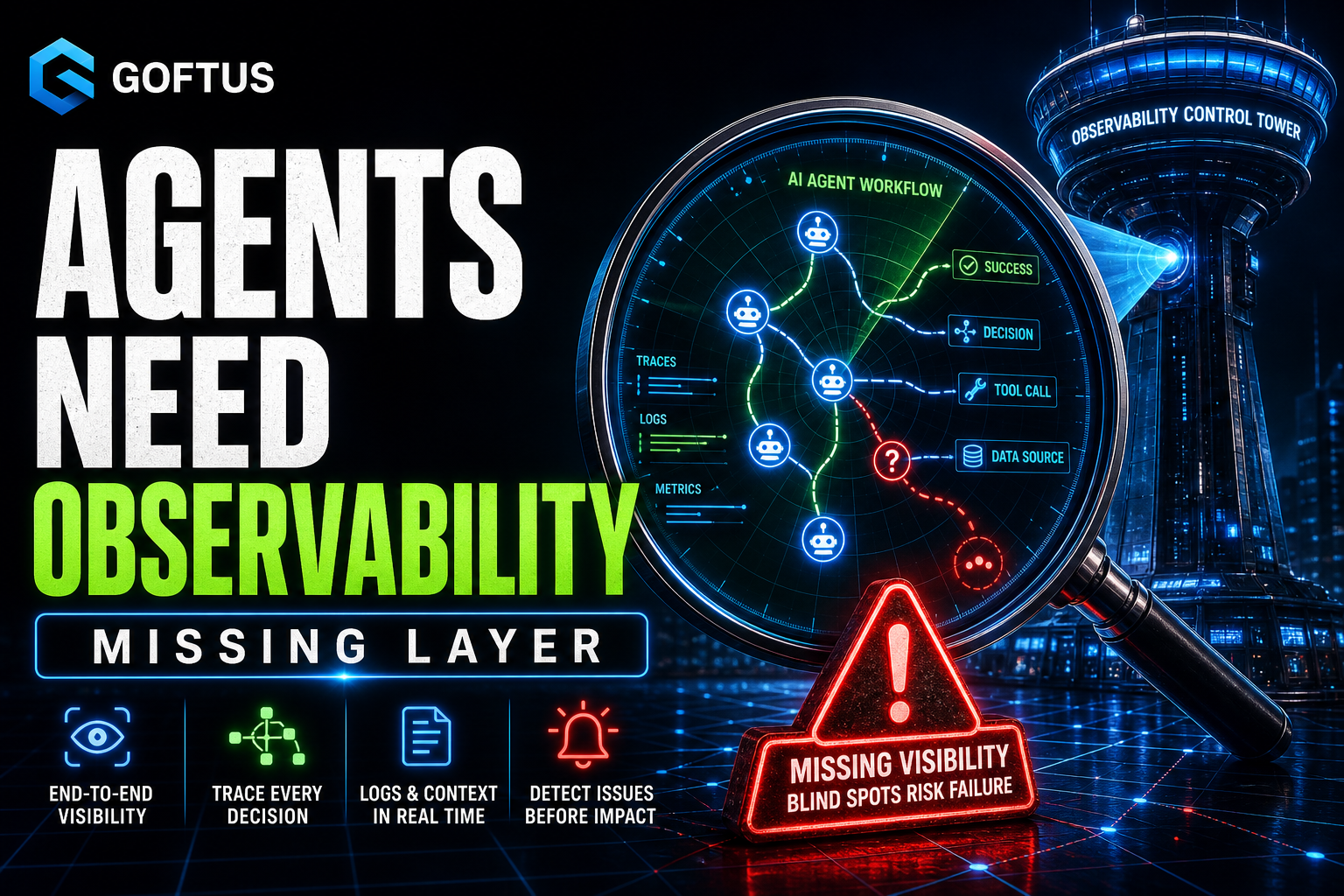
A related theme is emerging in cloud and infrastructure conversations: agentic observability. That phrase sounds technical, but the business meaning is simple. If an AI agent is going to route a ticket, update a CRM record, generate a proposal, trigger a workflow, or call an internal tool, leaders need visibility into what happened, why it happened, how long it took, what it cost, and where human review should step in.
That is the missing layer in many AI projects right now.
Why this matters for business leaders
Most companies already know the first part of the AI journey: identify a use case, connect a model, and automate a task. The harder part starts after the demo.
Once an agent is placed into a real workflow, it stops being a novelty and becomes part of the operating system. At that point, the questions change:
Which tool did the agent call?
Did it choose the right path?
What happened when confidence dropped?
How do we stop expensive retry loops?
Where is the audit trail for QA and compliance?
Who approves edge cases before they reach a customer?
Those questions matter to founders, RevOps teams, operations leaders, and CX leaders because the cost of a bad automation is not just a failed output. It can be a broken customer experience, a wasted sales cycle, or an internal process that quietly gets slower as volume grows.
That’s why the next phase of AI adoption is not only about model quality. It is about workflow quality.
What agentic observability includes
Think of agentic observability as the control plane for AI work. It should let your team see and manage the whole lifecycle of an agentic task, not just the final response.
A practical stack usually includes:
Routing visibility
Where did the task go? Did the agent send it to the correct tool, system, or teammate? If an agent is choosing between support macros, CRM actions, database lookups, and escalation paths, you need to see that decision tree.
Latency and cost tracking
AI workflows are not free. A task that is technically “automated” can still be slow, expensive, or unreliable if it loops, retries, or calls too many tools. Leaders should watch time-to-complete and cost-per-task the same way they watch conversion rates or handle times.
Guardrails and approvals
Not every task should be fully autonomous. Good systems define what the agent can do alone, what needs review, and what must always be escalated. That matters in finance, legal, customer communications, and anything customer-facing.
Human handoff logic
The best automation is not “no humans.” It is “humans where they matter most.” If a workflow detects uncertainty, missing data, or a high-value customer, it should hand off cleanly instead of pretending confidence it does not have.
Audit-ready logs
If the system is going to touch a record, send an email, modify a deal, or trigger an action, you need a durable trail. That matters for internal QA, compliance, and post-incident review.
Where this creates immediate business value
This trend is especially relevant in three areas GOFTUS works around most often:
RevOps: Lead enrichment, qualification, routing, follow-up, and pipeline hygiene are ideal agentic workflows. But they only work when the team can see every branch and override every risky step.
CX and support: Agents can summarize tickets, suggest replies, and resolve common cases. Observability becomes essential once the workflow must preserve tone, avoid policy mistakes, and escalate when the issue is sensitive.
Internal operations: Finance ops, HR ops, procurement, and admin workflows are full of repetitive steps with predictable exceptions. That makes them good candidates for agentic automation, provided the organization can trace decisions and keep humans in control.
A simple rollout model
If you are considering an agentic workflow this quarter, use a small, controlled rollout:
1. Pick one workflow with clear volume and clear pain.
2. Map every decision point before adding automation.
3. Define success metrics beyond completion: accuracy, latency, cost, and escalation rate.
4. Set approval thresholds for sensitive actions.
5. Instrument everything so your team can see routing, retries, and handoffs.
The goal is not to prove that an AI can do everything. The goal is to prove that it can do one important thing reliably enough to become part of the business process.
What this means for GOFTUS clients
For founders and operators, the message is straightforward: the market is moving past AI experimentation and into AI operations.
That means your competitive advantage will not come from simply “having agents.” It will come from having the right workflow design, the right guardrails, and the right observability layer to keep those agents useful under real business pressure.
If you are planning AI automation for sales, support, internal ops, or custom enterprise workflows, GOFTUS can help you design the system end to end: use case selection, tool integration, workflow controls, human handoff logic, and rollout planning.
Want to turn one process into a reliable AI workflow? Book a GOFTUS consultation and we’ll help you map the right first automation.